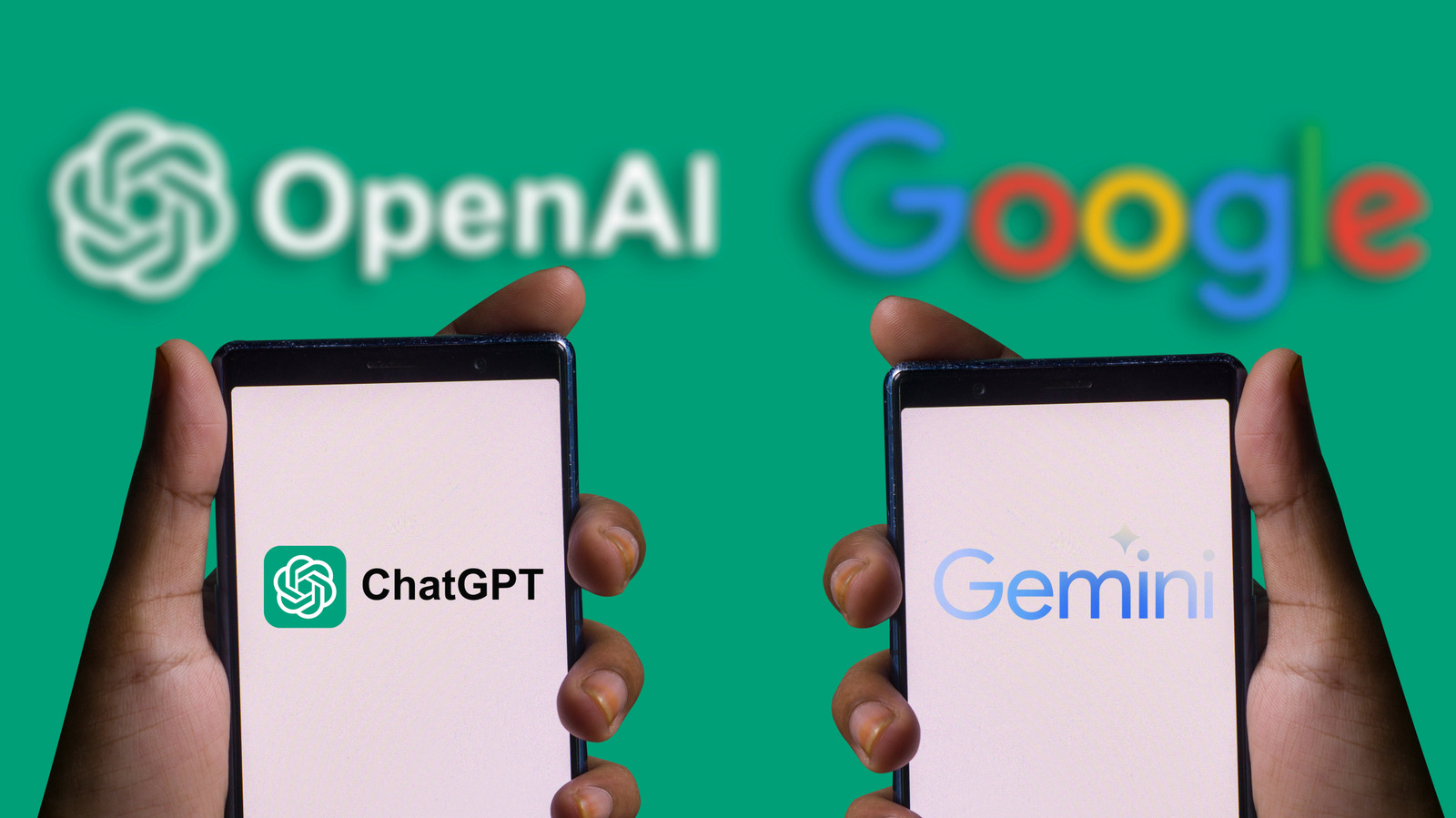
In a recent evaluation of artificial intelligence capabilities, ChatGPT has demonstrated superior performance over Gemini in several key benchmarks. The comparison highlights significant differences in reasoning, problem-solving, and abstract thinking, particularly in the latest iterations of these AI systems, ChatGPT-5.2 and Gemini 3. As the landscape of AI technology evolves, understanding these distinctions is crucial for users and developers alike.
Benchmark Insights: ChatGPT vs. Gemini
Artificial intelligence products have proliferated in recent years, yet few are as prominent as OpenAI’s ChatGPT and Google’s Gemini. Evaluating their performance isn’t straightforward due to the rapid advancements in technology. For example, in December 2025, speculation surrounding OpenAI’s competitiveness shifted dramatically with the release of ChatGPT-5.2, which has since regained its position at the top of the AI leaderboard.
Recent evaluations reveal that while both ChatGPT and Gemini can perform a wide range of tasks, ChatGPT excels in specific benchmarks. A notable assessment is the GPQA Diamond, which tests PhD-level reasoning in subjects such as physics, chemistry, and biology. This benchmark strives to pose complex questions that require deep understanding and the ability to navigate through misleading information. Currently, ChatGPT scores 92.4%, just slightly ahead of Gemini’s 91.9%. For context, a typical PhD graduate is expected to score around 65%, while non-expert individuals achieve approximately 34%.
Another benchmark, the SWE-Bench Pro (Private Dataset), assesses AI’s capability to tackle real-world software engineering challenges. This test involves tasks from actual issues found on the GitHub developer platform. ChatGPT-5.2 successfully resolved 24% of the issues presented, surpassing Gemini, which managed to resolve only 18%. While these figures may seem modest, they reflect the complexity of the tasks involved, with human engineers achieving a success rate of 100% on similar challenges.
Abstract Reasoning and Future Implications
The ARC-AGI-2 benchmark evaluates AI’s ability to apply abstract reasoning to unfamiliar problems. This test requires identifying patterns and relevant aspects while overlooking distractions—skills that humans typically excel at but which can be challenging for AI. In this benchmark, ChatGPT-5.2 Pro achieved a score of 54.2%, while Gemini models scored lower, with Gemini 3 Pro at 31.1%. This suggests that ChatGPT not only leads over Gemini but also outperforms many of its competitors in this area.
As AI technologies continue to advance, benchmark results can change rapidly, reflecting ongoing developments from both OpenAI and Google. The current focus on paid subscription models like ChatGPT-5.2 Pro and Gemini 3 Pro highlights their higher performance in recent evaluations. While there are numerous benchmarks available, this analysis concentrated on three that effectively showcase distinct AI capabilities: knowledge and reasoning, problem-solving, and abstract thinking.
Though Gemini demonstrates strong performance in various areas, such as user preference on platforms like LLMArena, this article specifically examined instances where ChatGPT currently outperforms its counterpart. Additionally, both ChatGPT and Gemini are continuously evolving, meaning that future iterations may shift the balance of capabilities once again.
As AI applications become increasingly integrated into daily life and professional settings, understanding the strengths and weaknesses of these leading systems will be vital for users looking to maximize their technological resources. The ongoing competition between OpenAI and Google is likely to yield further advancements, making it an exciting period for artificial intelligence development.