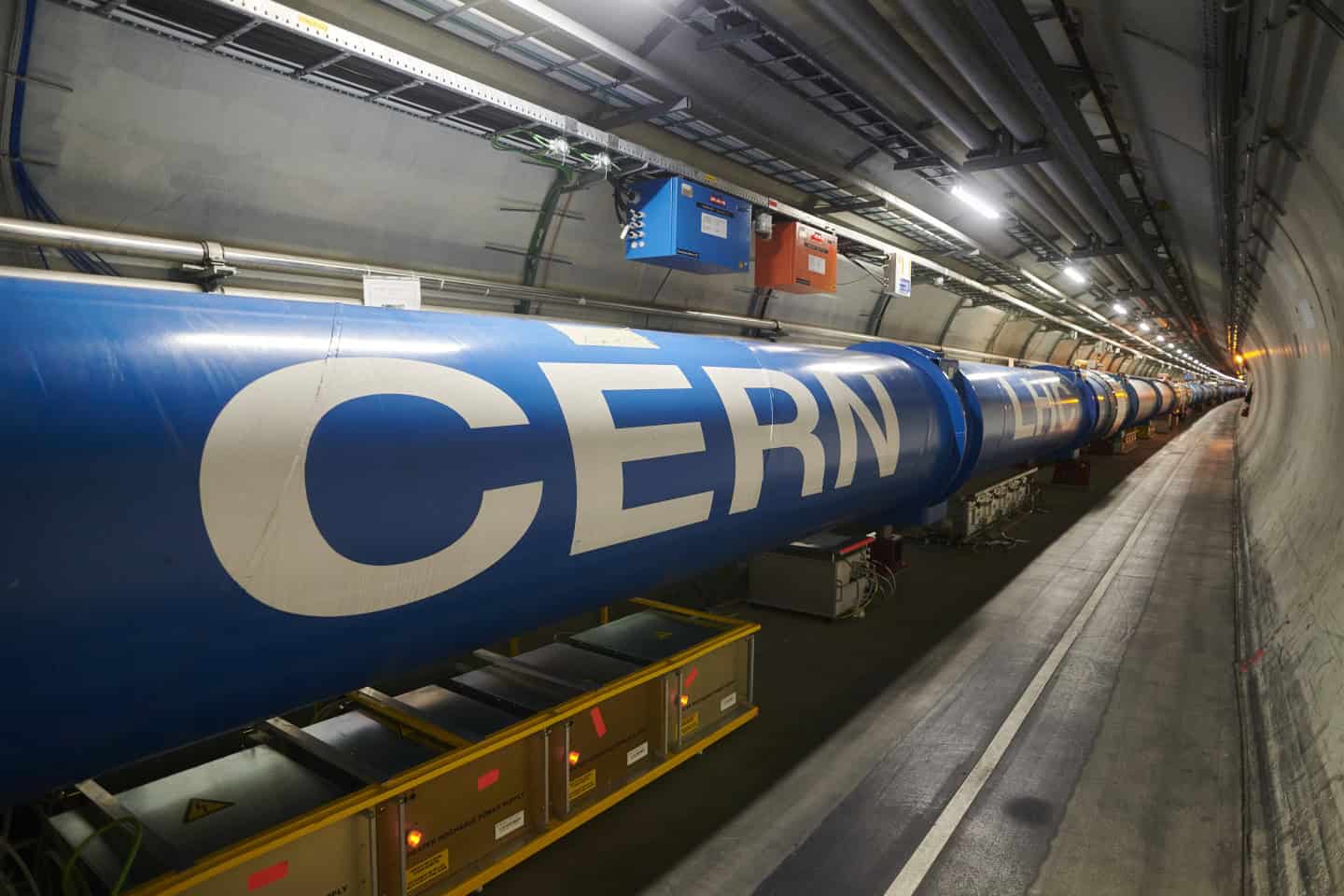
The CERN particle-physics laboratory, located near Geneva, has successfully secured $1 billion in private funding for the Future Circular Collider (FCC) project. This unprecedented financial support marks the first instance in CERN’s 72-year history where private donors have contributed to a major CERN initiative. The FCC is poised to succeed the Large Hadron Collider (LHC), famous for the discovery of the Higgs boson.
The FCC is envisioned as a substantial upgrade, featuring a tunnel approximately 90.7 kilometers in circumference—around three times longer than the LHC. Planned to be constructed around 200 meters underground, the FCC aims to enhance particle physics research significantly. The project has been recommended as the preferred option for CERN’s next flagship collider, as part of the ongoing revision of the European Strategy for Particle Physics, which is scheduled for submission to the CERN Council in May 2026.
If the CERN Council approves the project in 2028, construction of the FCC’s electron-positron machine, known as FCC-ee, could commence in 2030, with operations anticipated to begin in 2047. This machine would focus on producing a million Higgs particles, allowing physicists to examine its properties with precision far exceeding that possible with the LHC. Following the FCC-ee, a hadron collider, dubbed FCC-hh, is planned to operate in the same tunnel, aiming for high-energy proton collisions to discover new particles. The FCC-hh is projected to begin operations in 2073 and continue until the end of the century.
The estimated construction cost of the FCC-ee is around $18 billion, with funding expected to derive primarily from CERN’s 24 member states. The remaining funds will need to be sourced externally. The significant private donations received in late December have come from various organizations, including the Breakthrough Prize Foundation and the Eric and Wendy Schmidt Fund for Strategic Innovation, alongside contributions from entrepreneurs John Elkann and Xavier Niel.
Costas Fountas, president of the CERN Council, expressed gratitude for this influx of funding, stating, “This once again demonstrates CERN’s relevance and positive impact on society.” Eric Schmidt, co-founder of Google, highlighted the project’s potential, asserting that the FCC could greatly enhance humanity’s understanding of the universe and lead to advancements in various fields, from medicine to sustainable energy.
Outgoing CERN director-general Fabiola Gianotti praised the commitment of private donors, noting, “It’s the first time in history that private donors wish to partner with CERN to build an extraordinary research instrument.” She expressed her deep appreciation for their generosity and vision.
The funding announcement comes in the wake of discussions surrounding the Circular Electron-Positron Collider (CEPC), a competing project that also involves constructing a large tunnel to study the Higgs boson. Recent decisions in China have led to uncertainties regarding the CEPC’s future, as it was not included in the country’s next five-year plan from 2026 to 2030.
Although the CEPC’s status remains in question, some experts suggest that China’s involvement in the FCC could yield substantial benefits. Particle theorist John Ellis from Kings College London remarked that China’s decision simplifies the FCC discussions but noted the potential loss of growth for the global particle physics community. He welcomed the prospect of China’s participation, suggesting that the country could contribute valuable technical expertise if political barriers are overcome.
Mark Thomson, who assumed the role of CERN director-general on January 1, 2024, faces a pivotal period ahead. His immediate responsibilities include securing additional funding for the FCC-ee while preparing for the shutdown of the LHC in June. This shutdown will facilitate upgrades for the High Luminosity LHC (HL-LHC), which aims to install advanced superconducting magnets and enhance detection capabilities. Approximately 90% of the current LHC infrastructure will undergo modifications, significantly improving its performance.
Thomson expressed enthusiasm for the upcoming projects, stating, “It’s an incredibly exciting project,” emphasizing the importance of advancing particle physics research. The future of particle physics at CERN appears bright, with the FCC poised to play a crucial role in expanding the frontiers of human knowledge.