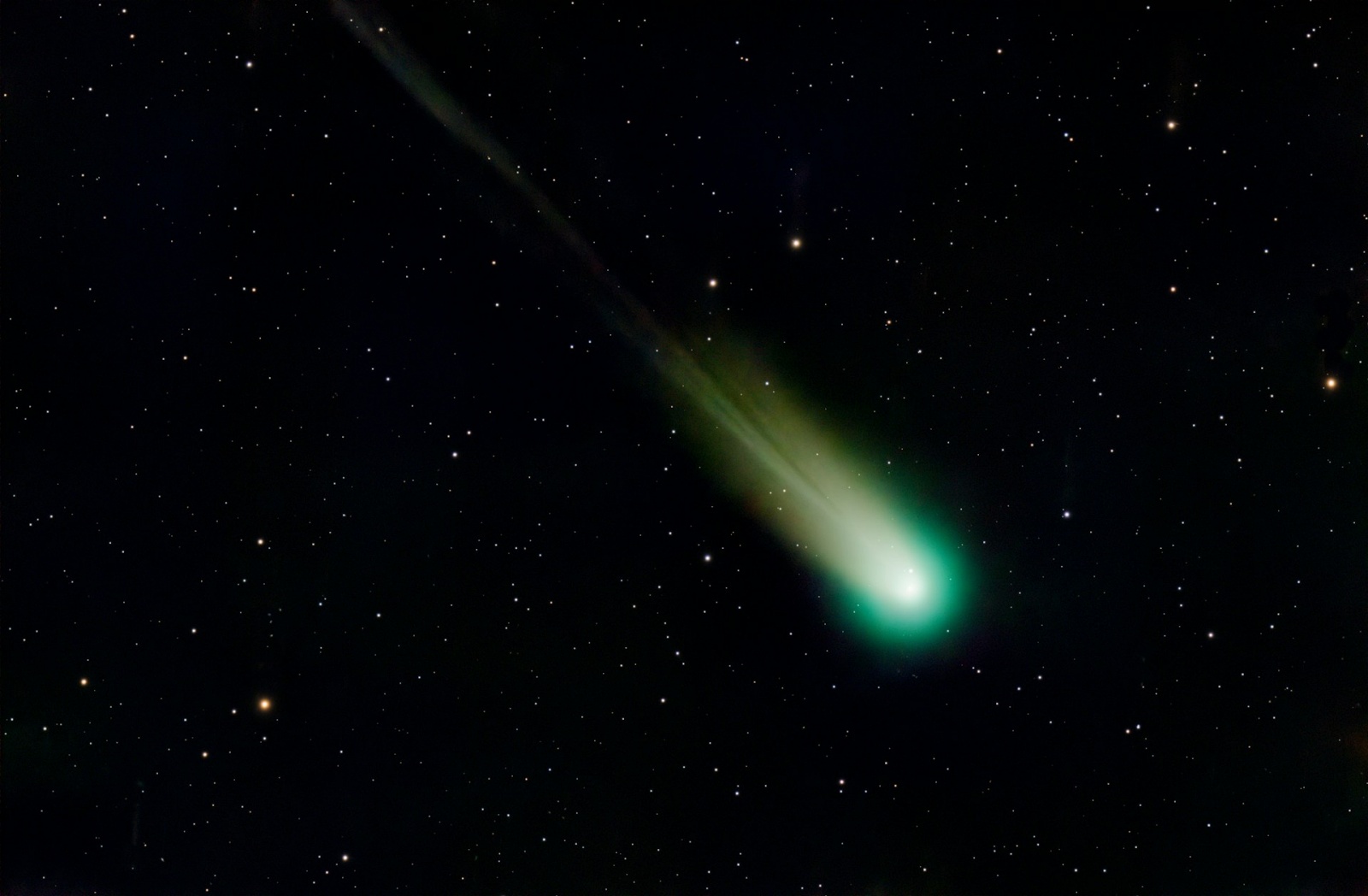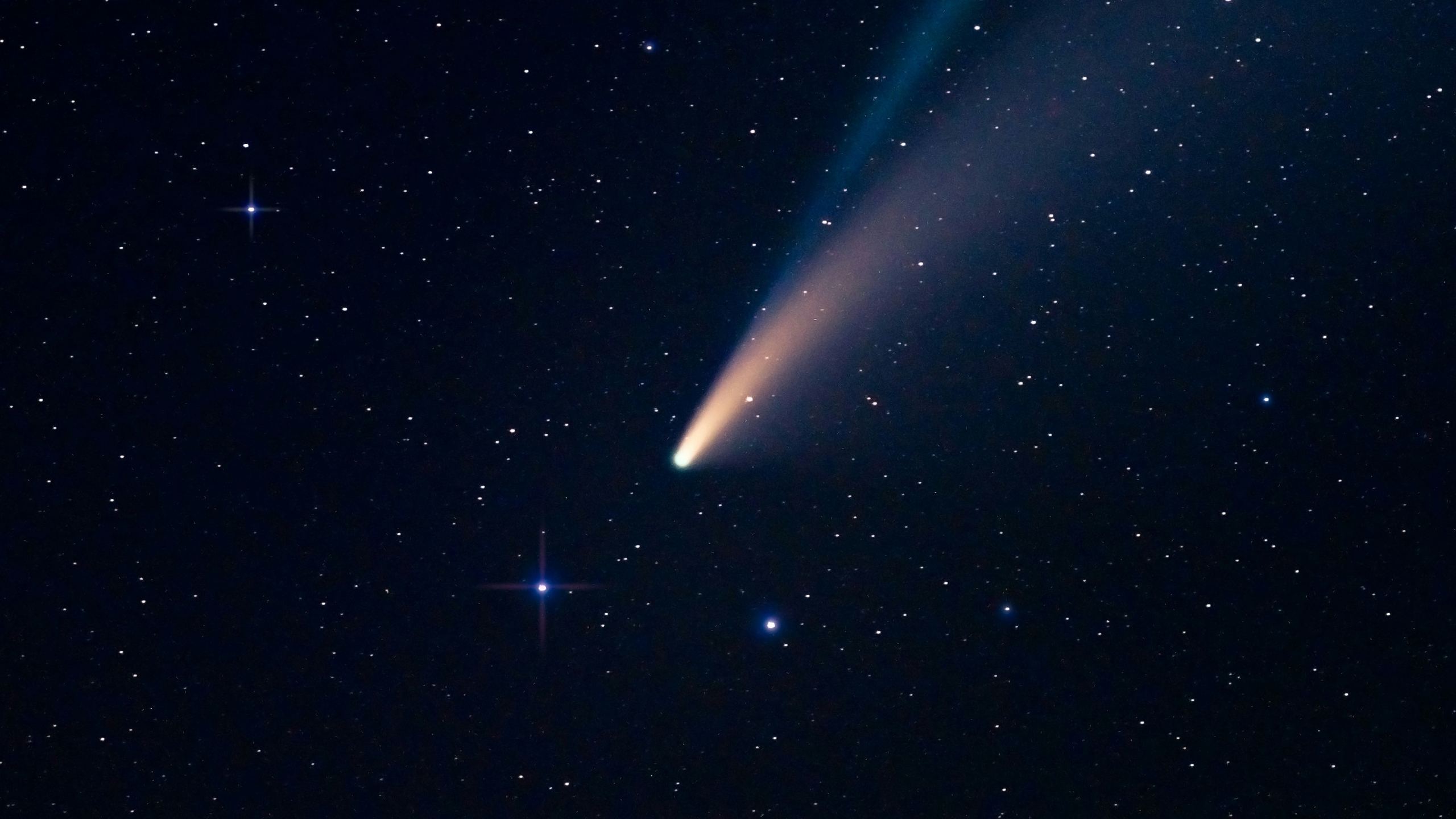
Interstellar object 3I/ATLAS has garnered significant attention from astronomers since its accidental discovery by the ATLAS telescope in Chile in July 2025. Measuring between 20 and 40 kilometres, this object is travelling on a hyperbolic orbit at speeds exceeding 50 kilometres per second, confirming its extrasolar origin. This marks the third known interstellar visitor, following 1I/’Oumuamua in 2017 and 2I/Borisov in 2019. However, 3I/ATLAS presents a puzzling phenomenon that has left scientists questioning its true nature: a jet directed towards the Sun.
Typically, comets exhibit tails that develop away from the Sun due to solar radiation and the solar wind. In contrast, observations of 3I/ATLAS reveal a small jet aimed directly at the Sun, with its nucleus located approximately 6,000 kilometres from the jet’s origin. This unusual behaviour has led Avi Loeb, a Harvard astrophysicist, to challenge conventional cometary physics.
Loeb’s analysis suggests that, if 3I/ATLAS were a standard comet, its antitail jet should not be able to emit gas beyond 5,000 kilometres. His findings highlight the need for further investigation into the object, as the scientific community grapples with the implications of its jet.
Some researchers speculate that this anomaly may stem from atypical outgassing patterns or unique compositional elements of the object. The orientation and magnitude of the jet could hint at processes in interstellar comets that have not been previously observed. Loeb has identified eight distinct anomalies in 3I/ATLAS, including its trajectory and spectral signatures, prompting both curiosity and caution among astronomers.
In August 2025, images captured by the Two-Meter Twin Telescope in the Canary Islands provided evidence of the sunward jet. A series of 159 images showcased a purple jet extending towards the Sun, while a yellow line indicated where a typical comet tail would be expected. Additionally, data from the ESA XMM-Newton spacecraft revealed low-energy X-ray emissions resulting from gases interacting with the solar wind, further supporting the notion of active outgassing.
The peculiarities of 3I/ATLAS underscore the complexities involved in studying interstellar objects. Each encounter offers a rare chance to explore theories about planetary system formation and the characteristics of bodies discovered in the icy expanse of outer space. The sunward jet raises significant questions about the composition and internal structure of 3I/ATLAS. If the jet is propelled by materials not typically found in solar system comets, it could offer insights into the diversity of interstellar matter. Alternatively, if the jet’s direction is influenced by rotation or other forces, it may enhance our understanding of cometary physics.
Despite speculations regarding a non-natural origin, the mainstream scientific community maintains a sceptical stance. Astronomers caution that anomalous behaviour does not automatically imply extraordinary explanations. Instead, they stress the importance of gathering additional data, particularly as 3I/ATLAS approaches perihelion and moves further from the solar system.
Loeb himself emphasizes that the jet and antitail should not exhibit gas streaming beyond 5,000 kilometres, highlighting the necessity of comparing existing models with new evidence before drawing conclusions. The case of 3I/ATLAS illustrates how interstellar visitors can challenge established astronomical frameworks. Its sunward jet stands as a striking anomaly that may clarify its true nature—whether as a comet with unconventional traits or as part of a broader class of interstellar bodies that remain poorly understood.
As the scientific community continues to observe and study 3I/ATLAS, each interstellar encounter represents an opportunity to deepen our understanding of the universe and the myriad phenomena it holds.