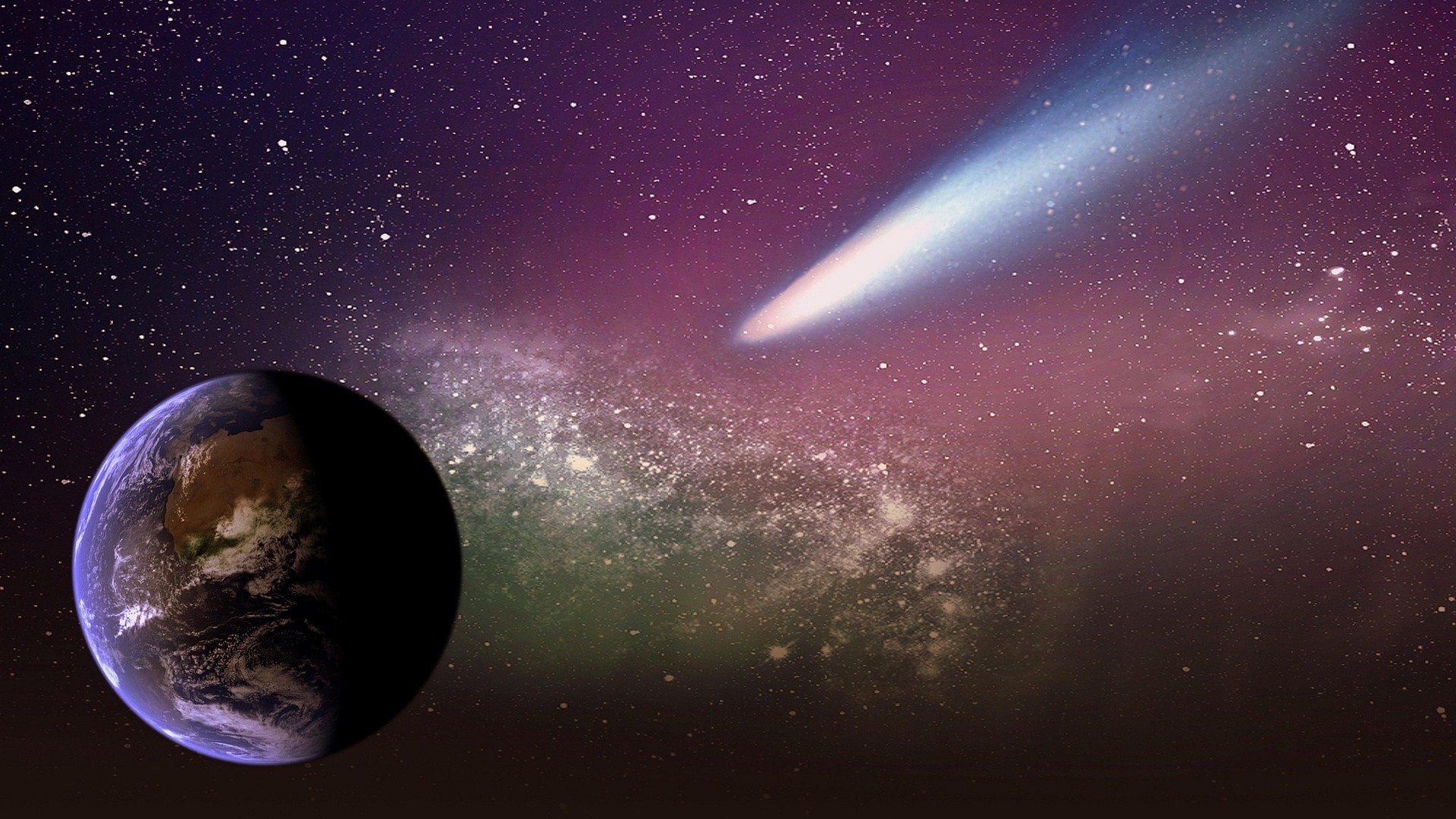
Astronomers are grappling with the identity of the interstellar object known as 3I/ATLAS, which recently made headlines as it passed within approximately 170 million miles of Earth. This unusual object has sparked international debate regarding its origins, with some scientists proposing that it could be a sophisticated piece of alien technology, while others argue it is simply a comet exhibiting extraordinary characteristics.
The discussion gained momentum following the object’s closest approach to our planet earlier this week. Despite initial speculation about its potential as a scout ship from another civilization, noted astrophysicist Avi Loeb has revised his view. Loeb, who has long championed the notion that 3I/ATLAS is more than a natural celestial body, acknowledged during an interview with Elizabeth Vargas Reports that the object did not demonstrate any artificial behavior as it neared Earth.
“So far, so good,” Loeb stated, emphasizing the absence of any unusual activity during the flyby. While he recognizes its behavior aligns with that of a natural object, he remains intrigued by its unique features, particularly a jet of material that points directly towards the sun. This characteristic challenges conventional cometary models and leaves many questions unanswered.
Exploring the Object’s Origins
As the scientific community continues to scrutinize 3I/ATLAS, theoretical physicist Michio Kaku has offered an alternative perspective. He suggests that the object’s remarkable composition and age may hold the key to understanding its mysteries. Kaku postulates that 3I/ATLAS could be around 7 billion years old, significantly older than most comets typically observed within our solar system, which generally range between 3 to 4 billion years.
“This is a very old object,” Kaku explained in an interview with NewsNation. He argues that its extensive journey through a variety of interstellar environments has given it time to accumulate diverse elements and gases, contributing to its unusual chemical makeup, including its notably high nickel content. “Over 7 billion years, it’s had plenty of time to accumulate different gases, different elements,” he noted, highlighting how this prolonged exposure could explain the object’s distinctive properties.
The Scientific Community’s Shift in Perspective
The ongoing investigation into 3I/ATLAS is particularly pressing as it will soon fade from view, leaving scientists with limited opportunities to study its peculiarities. While the notion of it being an alien artifact may be losing traction, interest in the object remains robust. Loeb has indicated that further study could yield valuable insights, even as he aligns more closely with the prevailing consensus among his peers regarding its natural origins.
The debate surrounding 3I/ATLAS serves as a poignant reminder of the vast unknowns that still exist in our universe. Whether it is an ancient relic from a bygone era or an extraordinary anomaly, its passage through our solar system emphasizes the importance of continued exploration and inquiry. As the scientific community races against time, the secrets held by this solitary traveler remain tantalizingly out of reach, challenging our understanding of the cosmos.