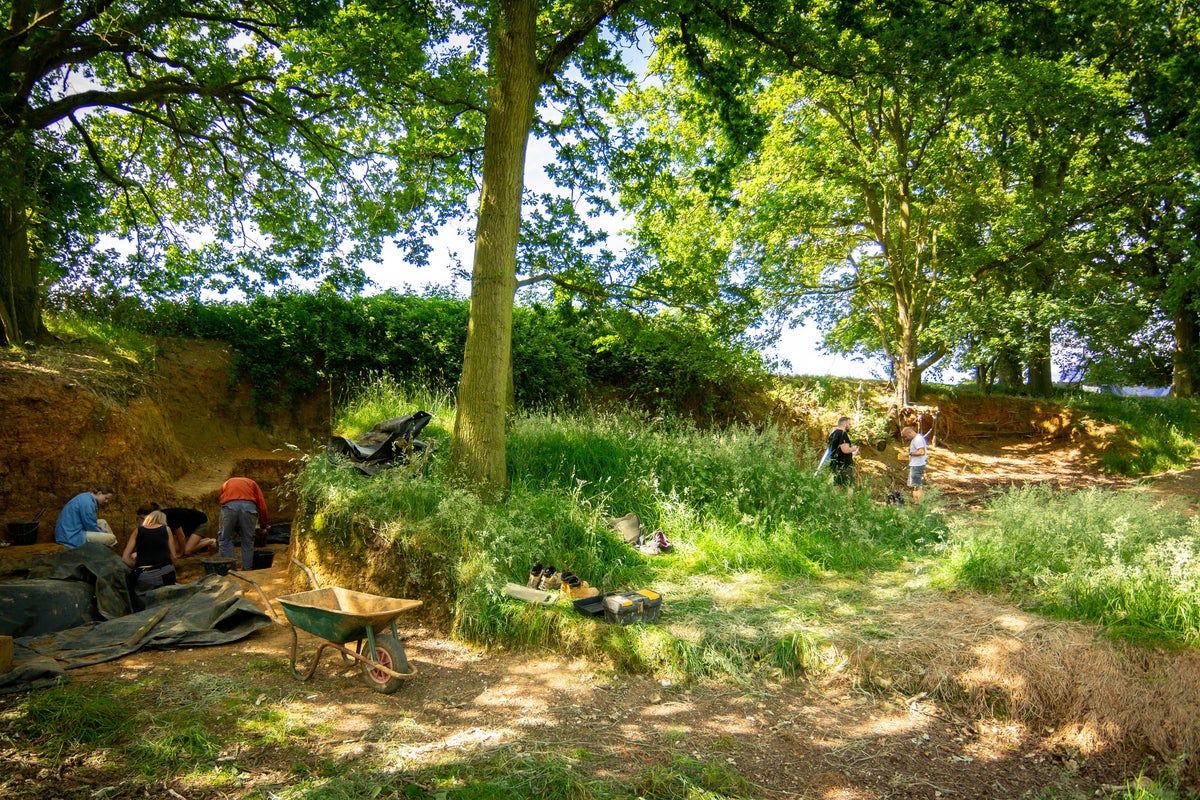
A fascinating archaeological discovery has emerged from the castle of Zorita de los Canes in Guadalajara, Spain. The ArchaeoSpain research team uncovered human remains that provide insight into a knight from the Order of Calatrava, who died in battle over 600 years ago. Among the remains, researchers found a strikingly narrow and elongated skull, measuring 23 centimeters in length and just 12 centimeters in width, indicating the presence of Crouzon syndrome.
The dig at Zorita de los Canes, specifically at a site known as the Corral de los Condes, has revealed the skeletal remains of several knights. It is within this context that the atypical skull was discovered, sparking interest among anthropologists and historians alike. Crouzon syndrome is a genetic disorder characterized by the premature fusion of skull bones, leading to a distinctive cranial shape.
This discovery is significant not only for its rarity but also for the information it provides about the health and conditions of individuals in the medieval period. The presence of such a condition in a knight raises questions about how it may have affected their life, including their role in battles and their physical capabilities.
Researchers are currently conducting further studies to understand the implications of this find. The team aims to analyze DNA samples and other skeletal features to gain a deeper understanding of the individual’s life and the social dynamics of the time. The findings could contribute to the broader knowledge of medieval health issues, particularly in relation to hereditary conditions.
Archaeological discoveries like this often illuminate the human experience in ways that historical texts cannot. The remains of this knight not only serve as a window into the past but also challenge preconceived notions about the lives of those who lived during the era of the Order of Calatrava.
As the ArchaeoSpain team continues its work, the potential for new insights into medieval society remains promising. This remarkable find highlights the importance of ongoing archaeological research and its capacity to uncover the complexities of human history.