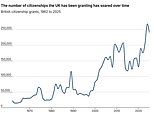
The number of citizenship grants in the United Kingdom reached an unprecedented peak in 2024, with nearly 270,000 applications approved under the Labour government. This surge has sparked significant debate about the efficacy and integrity of the citizenship process, which many critics describe as a mere “box-ticking” exercise.
Critics argue that the Home Office has implemented a system that inadequately vets applicants, leading to accusations that the citizenship process has become overly lenient. The increase in citizenship grants is particularly noteworthy when compared to historical data; in the early 1960s, only around 15,000 grants were made annually. The current figures are almost double those seen a decade ago, prompting calls for an immediate review of how citizenship is awarded.
Controversial Citizenship Case Raises Questions
The situation has come under further scrutiny due to the case of Alaa Abd El-Fattah, an Egyptian dissident who was granted British citizenship in 2021. El-Fattah, who has made inflammatory statements against Jews and white people, has recently returned to the UK after being freed from prison in Egypt. His citizenship application was approved while he was incarcerated, based on his mother’s British birth.
Prime Minister Keir Starmer initially celebrated El-Fattah’s arrival in the UK, stating he was “delighted” to welcome him. However, this sentiment quickly faced backlash as critics highlighted El-Fattah’s history of anti-Semitic rhetoric and calls for violence. The backlash intensified when Starmer faced pressure to revoke El-Fattah’s citizenship, with some arguing that the process for granting citizenship lacks proper safeguards.
Robert Bates from the Centre for Migration Control expressed concern, stating, “The value of a British passport has been cheapened and awarded to those who are, quite frankly, not British.” He emphasized that the current citizenship laws are more permissive than those of many other nations and contribute to significant risks for public safety.
Calls for Policy Change Amidst Rising Concerns
The statistics have ignited a debate regarding the criteria for citizenship. Alp Mehmet from Migration Watch UK noted that the UK granted more citizenships in a single year than Japan has in nearly 60 years. He criticized the lack of stringent vetting processes, suggesting that many applicants do not demonstrate a genuine commitment to British values.
El-Fattah’s case has highlighted broader concerns about the citizenship process. Critics point to the ease with which individuals can obtain citizenship without passing rigorous background checks. The situation is compounded by the legal intricacies surrounding the revocation of citizenship, particularly under European human rights laws. These laws prevent the Home Office from denying citizenship based on a lack of “good character” if the applicant has a familial connection to the UK.
In response to the increasing scrutiny, Home Secretary Shabana Mahmood has faced calls for action, including a review of El-Fattah’s citizenship status. Existing legal frameworks complicate the process of revocation, particularly as El-Fattah may be at risk of statelessness if Egypt withdraws his citizenship.
The Labour government has announced plans to reform the citizenship process. These proposed changes aim to extend the minimum qualifying period for settled status from five to ten years, reflecting a growing concern about the implications of rapid citizenship grants. As the government grapples with these challenges, the controversy surrounding El-Fattah’s case continues to fuel a wider discussion about immigration policies and national security.
This ongoing debate underscores the importance of a balanced approach to citizenship, one that ensures both compassion for those seeking refuge and the protection of national values and security. With the citizenship grants at an all-time high, the UK is at a critical juncture regarding its immigration policies and the future of its citizenship process.