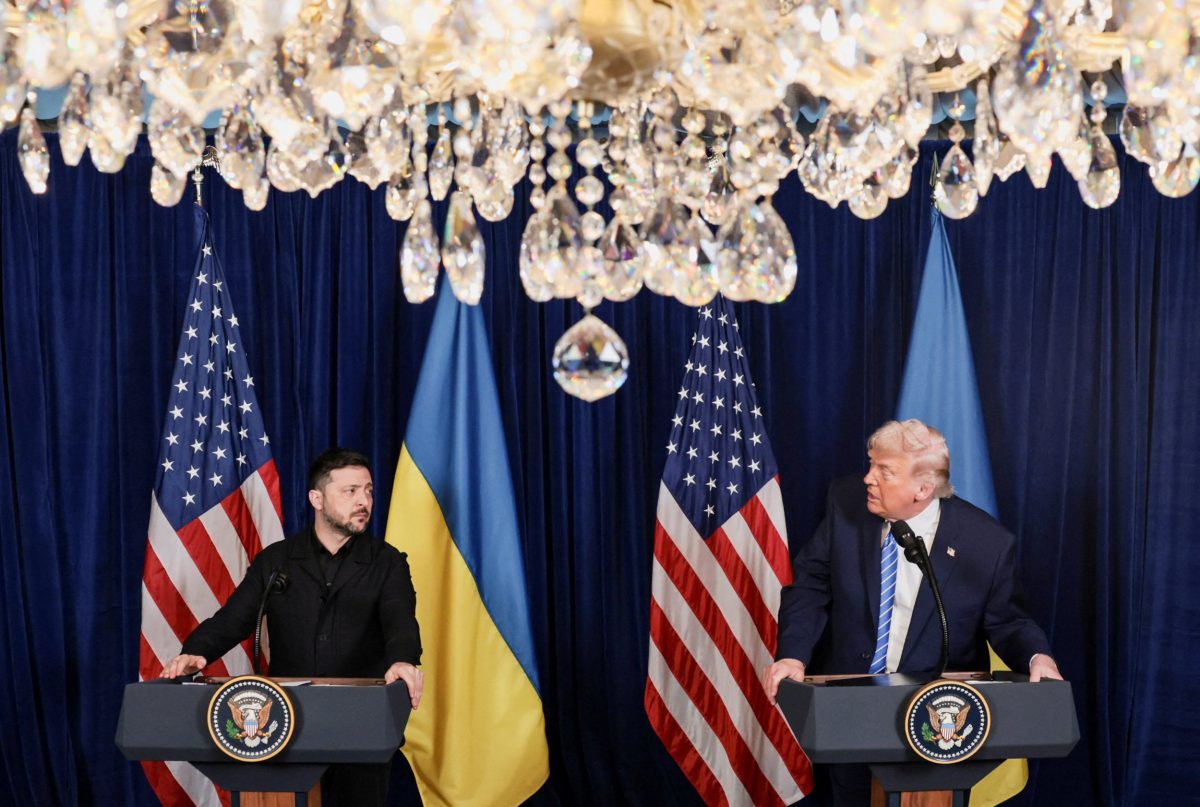
Efforts to establish a peace deal for Ukraine gained momentum as former President Donald Trump and Ukrainian President Volodymyr Zelensky engaged in crucial discussions at Trump’s Mar-a-Lago resort in Palm Beach, Florida, on December 10, 2023. Following an earlier phone call with Russian President Vladimir Putin, Trump characterized the talks as having made “a lot of progress,” although he acknowledged that “thorny issues” remain unresolved.
Zelensky arrived in Miami after a meeting with Canadian Prime Minister Mark Carney in Halifax, Nova Scotia. His visit came on the heels of another night of Russian drone and missile strikes across Ukraine, which underscores the ongoing challenges faced by his administration. While both leaders expressed cautious optimism about reaching an agreement, Zelensky noted that the peace plan is still “90 percent” ready, echoing a sentiment from previous discussions.
During the meeting, Trump highlighted that “one or two thorny issues” need to be addressed, specifically mentioning territorial disputes in the Donbas region. This area remains a focal point of contention, with Russia seeking to assert control while Ukraine insists on maintaining its sovereignty over the territory. Trump avoided offering specific details, but his remarks indicate a complex negotiation process ahead.
Security Guarantees and Diplomatic Engagements
Zelensky reported that discussions on security guarantees for Ukraine have made headway, with Trump stating they are “95 percent” of the way to a solid agreement. Both leaders expect European nations to play a significant role in these guarantees, supported by the United States. Zelensky aims to negotiate a more favorable stance regarding the demands for Ukrainian troop withdrawal from the Donbas, a key Russian condition that would require Ukraine to concede territory.
The dialogue extended beyond the two leaders, as Sir Keir Starmer, the leader of the UK Labour Party, participated in a separate hour-long call involving Trump, Zelensky, and European leaders. According to a Downing Street spokesperson, this call emphasized the urgency of establishing robust security guarantees and reiterated the need to end the ongoing conflict swiftly.
European Commission President Ursula von der Leyen joined the conversation, expressing satisfaction with the progress made. She stated, “There was good progress, which we welcomed. Europe is ready to keep working with Ukraine and our US partners to consolidate this progress.” The collaborative effort aims to ensure that security guarantees are firmly established from the outset of any peace deal.
Challenges Ahead and Future Steps
Despite the optimism surrounding the talks, significant hurdles remain. The Kremlin has indicated a need for Ukraine to make unilateral decisions regarding the Donbas region without delay, opposing any European or Ukrainian initiatives for a ceasefire ahead of a settlement. Trump, who has been vocal about his desire to end the conflict, acknowledged the complexities involved, labeling it the most challenging of the eight wars he has previously mediated.
In a recent interview, Russian Foreign Minister Sergei Lavrov characterized the current geopolitical landscape, stating that Europe has emerged as a primary obstacle to achieving peace following Trump’s re-election. This assertion highlights the intricate dynamics at play not only between the involved nations but also among global powers as they navigate their respective interests.
As the situation unfolds, Zelensky plans to update Western allies post-discussion with Trump. He has expressed hope that “many decisions can be made before the New Year,” contingent on cooperation from international partners. The ongoing negotiations reflect a broader commitment from both leaders to strive for a resolution, even as they confront deeply entrenched disagreements.
The outcome of these discussions will likely shape the future of Ukraine and its relationships with global allies, as the quest for peace and stability in the region continues.