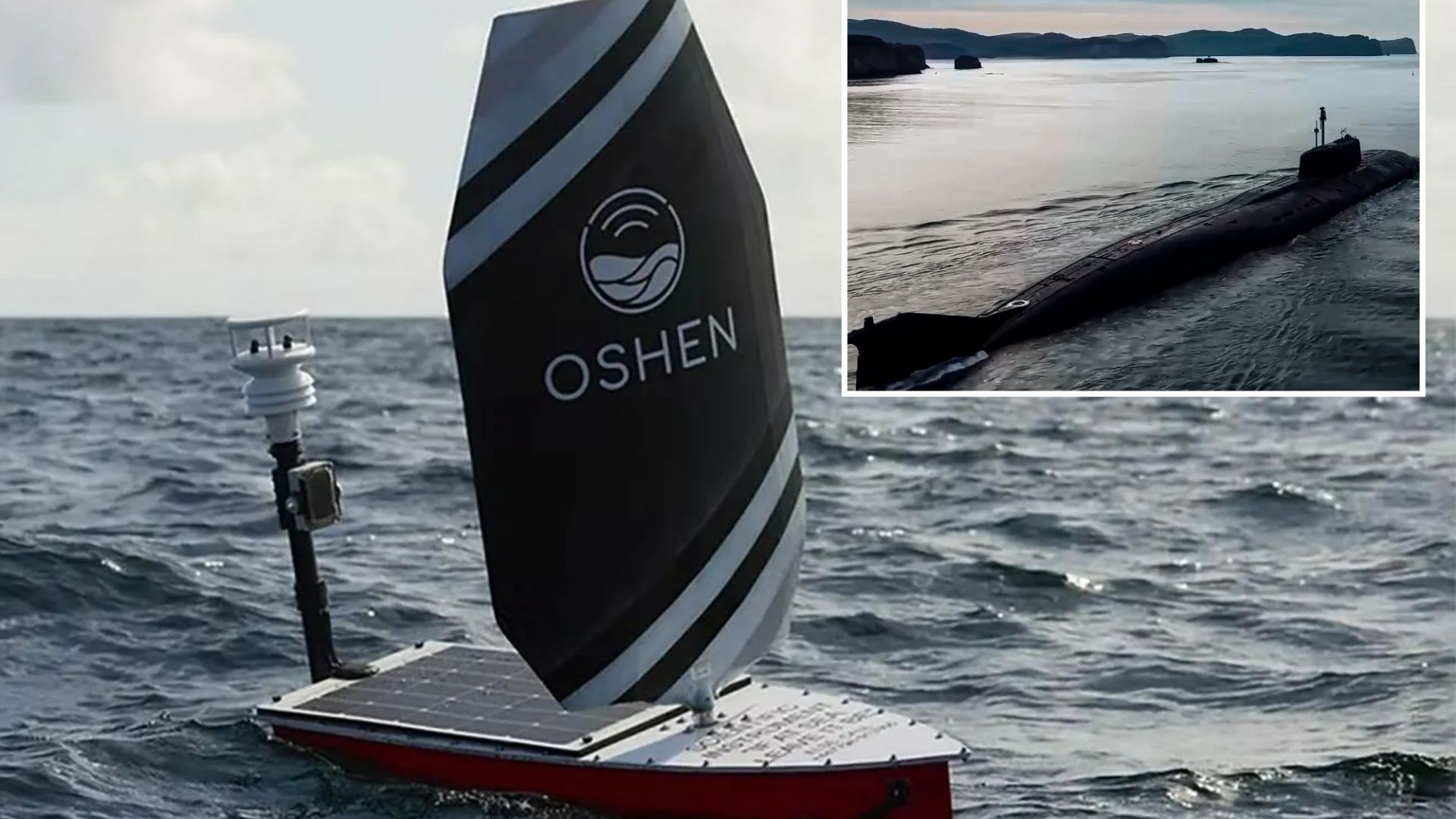
The Royal Navy is testing a fleet of drones designed to patrol waters for Russian submarines, aiming to establish a surveillance “picket line” between the United Kingdom and Greenland. If successful, these drones could become essential tools for maritime security, enhancing the Navy’s ability to monitor strategic areas in the North Atlantic.
Developed by the drone company Oshen, the C-Star drones are compact, approximately the size of a bicycle, and can be mass-produced at a relatively low cost. Estimates suggest that a fleet of 1,000 drones would require an investment of between £10 million and £20 million. This cost-effective approach allows for easy replacement of individual units if they are damaged during operations.
The C-Star drones are engineered to detect Russian nuclear submarines, which are significantly larger than the drones themselves, with the potential to operate undetected in vital maritime corridors. Their small size makes them challenging to detect, and they are capable of enduring missions lasting several months. A fleet of ten drones can be launched from a small fishing vessel, facilitating flexible deployment.
Enhanced Maritime Security
As part of the broader Atlantic Bastion initiative, the C-Star drones are one of multiple prototypes being tested to support conventional naval forces. Oshen co-founders Anahita Laverack and Ciaran Dowds emphasize the importance of this technology in anti-submarine warfare. Laverack noted, “We could be the early warning system, peppering the area with this long-endurance monitoring system. When we hear something, these tiny little robots will then pass that message along. We could be the first line of defence… the eyes and ears in the sea.”
The urgency of developing these drones has been heightened by recent discoveries of Russian spy sensors in UK waters. Some devices were found washed ashore, while others were detected by Royal Navy minehunter vessels. Defence officials suspect these devices were planted to gather intelligence on the UK’s four Vanguard-class submarines, which are equipped with nuclear missiles and designed for covert operations.
The Ministry of Defence has raised concerns that these spy systems are part of a broader campaign of “greyzone” warfare, targeting critical undersea assets, including cables and pipelines. This increased activity comes on the heels of a significant defence agreement signed between the UK and Norway, aimed at protecting undersea cables in the North Atlantic, which are considered vulnerable to Russian interference.
Growing Threats in the North Atlantic
The Ministry of Defence reported a remarkable 30 percent increase in Russian vessels sighted in UK waters over the last two years. This surge in activity has prompted the UK and NATO allies to heighten their vigilance and preparedness against potential threats to underwater infrastructure. The National Security Strategy Committee has warned that attacks on these assets could lead to “catastrophic disruption” of essential financial and communication systems.
Labour leader Sir Keir Starmer emphasized the importance of international cooperation to safeguard national security. “At this time of profound global instability, as more Russian ships are being detected in our waters, we must work with international partners to protect our national security,” he stated. He highlighted that the agreement with Norway not only strengthens border protection but also supports thousands of jobs in the UK while showcasing the nation’s shipbuilding capabilities on a global scale.
The Royal Navy’s initiative to incorporate drone technology into its operations represents a significant step forward in modern maritime defence strategy. By enhancing surveillance capabilities and addressing emerging threats, the Navy aims to ensure the safety of its waters and critical infrastructure in an increasingly complex geopolitical landscape.