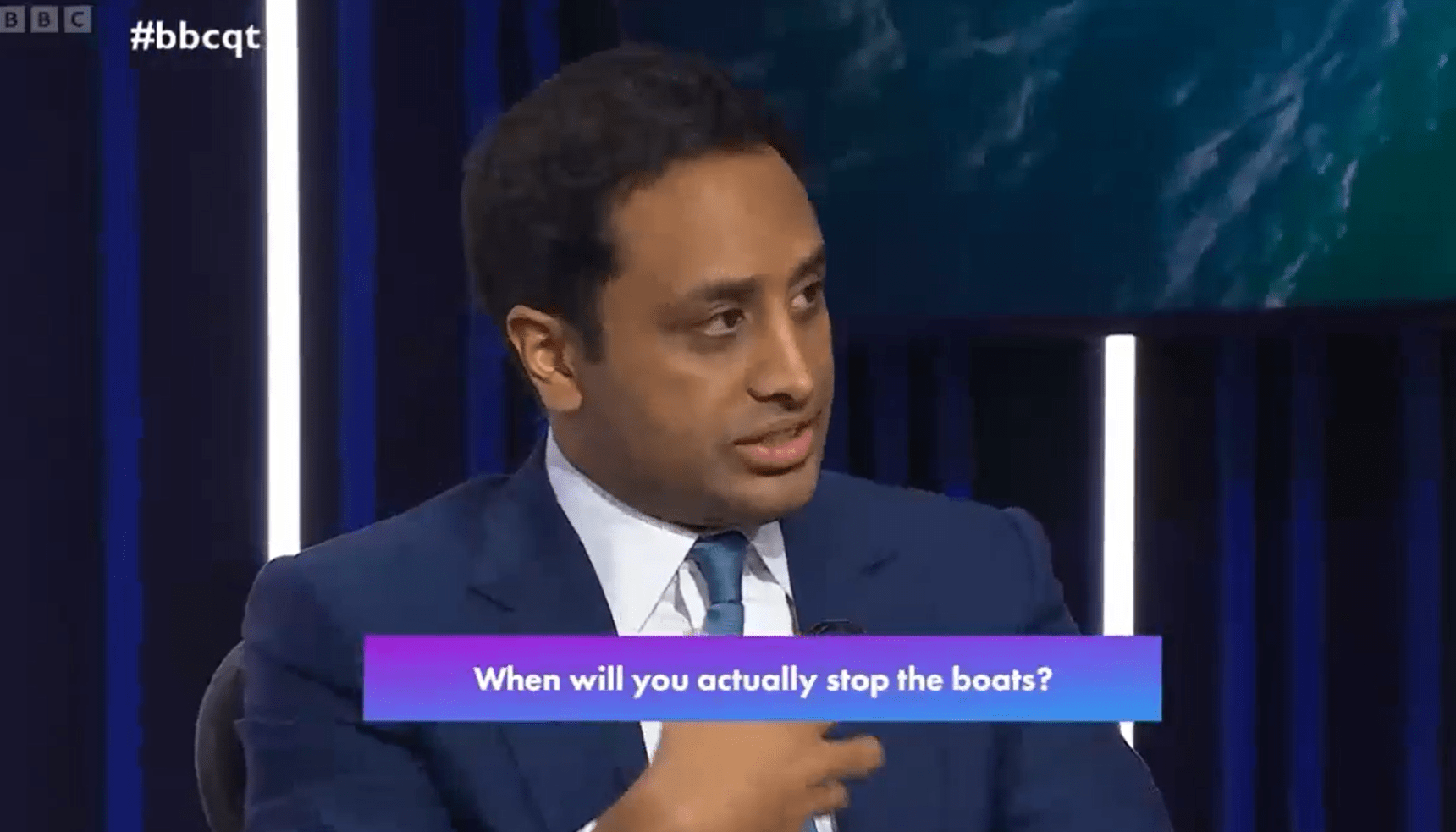
Reform UK has publicly condemned the BBC for featuring illegal migrants in the audience of its flagship programme, Question Time. The party’s policy chief, Zia Yusuf, expressed disbelief that two individuals who arrived in the UK via small boats were given a platform to voice their opinions during the episode broadcast from Dover.
The episode included questions from an Afghan man who had his asylum claims rejected by six countries and an Iranian migrant who passionately defended the European Convention of Human Rights. Yusuf stated, “It is a scandal that licence fee money is being paid to bring to air an ‘immigration special’ where people who literally broke into this country are getting to air their views.” He further questioned the appropriateness of allowing illegal migrants a seat at the discussion table, suggesting it undermines the legitimacy of the show.
Reform UK’s chairman, David Bull, echoed these sentiments, labelling the BBC’s actions as “outrageous.” He remarked that both illegal immigration and the national broadcaster have become “completely out of control.” This incident has intensified the ongoing tension between Reform UK and the BBC, which has faced criticism for perceived bias.
The controversy surrounding the BBC was magnified further by remarks from Nigel Farage, leader of Reform UK, who criticized the broadcaster for what he called “double standards.” Referring to a recent interview on BBC Radio 4, he expressed frustration over being questioned about historic antisemitism allegations while highlighting the BBC’s own problematic past. Farage stated, “I’m done with you. Until you apologise, I’m not speaking to you,” following a heated exchange about his past comments during his teenage years.
The issue arose after Richard Tice, Reform’s Deputy Leader, was redirected from discussing Labour’s governance to allegations concerning Farage’s alleged comments about Hitler. These claims, supported by accounts from a former classmate, have drawn significant media attention. Farage pointed out the hypocrisy of the BBC, asserting that the broadcaster’s past programming choices, including the controversial black and white minstrels show, undermine its credibility in questioning him today.
As tensions continue to escalate, the BBC’s editorial decisions are under scrutiny, raising questions about the balance between free speech and accountability in media representation. Both Yusuf and Bull assert that the public deserves to know how the BBC prioritizes its guests and the narratives it promotes, especially concerning sensitive topics like immigration.
This latest incident reflects broader societal debates regarding immigration policy, media responsibility, and the role of public broadcasters in shaping public discourse. As Reform UK continues to challenge the BBC’s practices, the outcome of this confrontation may influence future discussions on immigration and media ethics in the UK.