The political landscape in Montenegro has become increasingly contentious following a recent initiative that seeks coordinated assistance from the European Union (EU) to address longstanding issues with voter registration lists in Montenegro, Serbia, and Bosnia and Herzegovina. The proposal has sparked a mixed response from political and expert circles, highlighting deep divisions over the capacity of Montenegrin politicians to manage the electoral process effectively.
During a parliamentary session, Andrija Nikolić, head of the parliamentary club for the Democratic Party of Socialists (DPS), announced a plan to present this initiative at the EU headquarters early next year. He stated that the aim is to allow for a thorough examination and alignment of the voter lists across the Western Balkan states. “Each country, including Serbia, Bosnia and Herzegovina, and Montenegro, needs to open its lists and facilitate mutual exchange to prevent electoral tourism,” Nikolić asserted.
The initiative has been met with skepticism from various political analysts. Stefan Đukić, an analyst, described the proposal as evidence that Montenegro’s political elite either cannot or do not want to resolve their internal issues. He remarked, “This sends a negative message. It shows we are not capable of governing our state.”
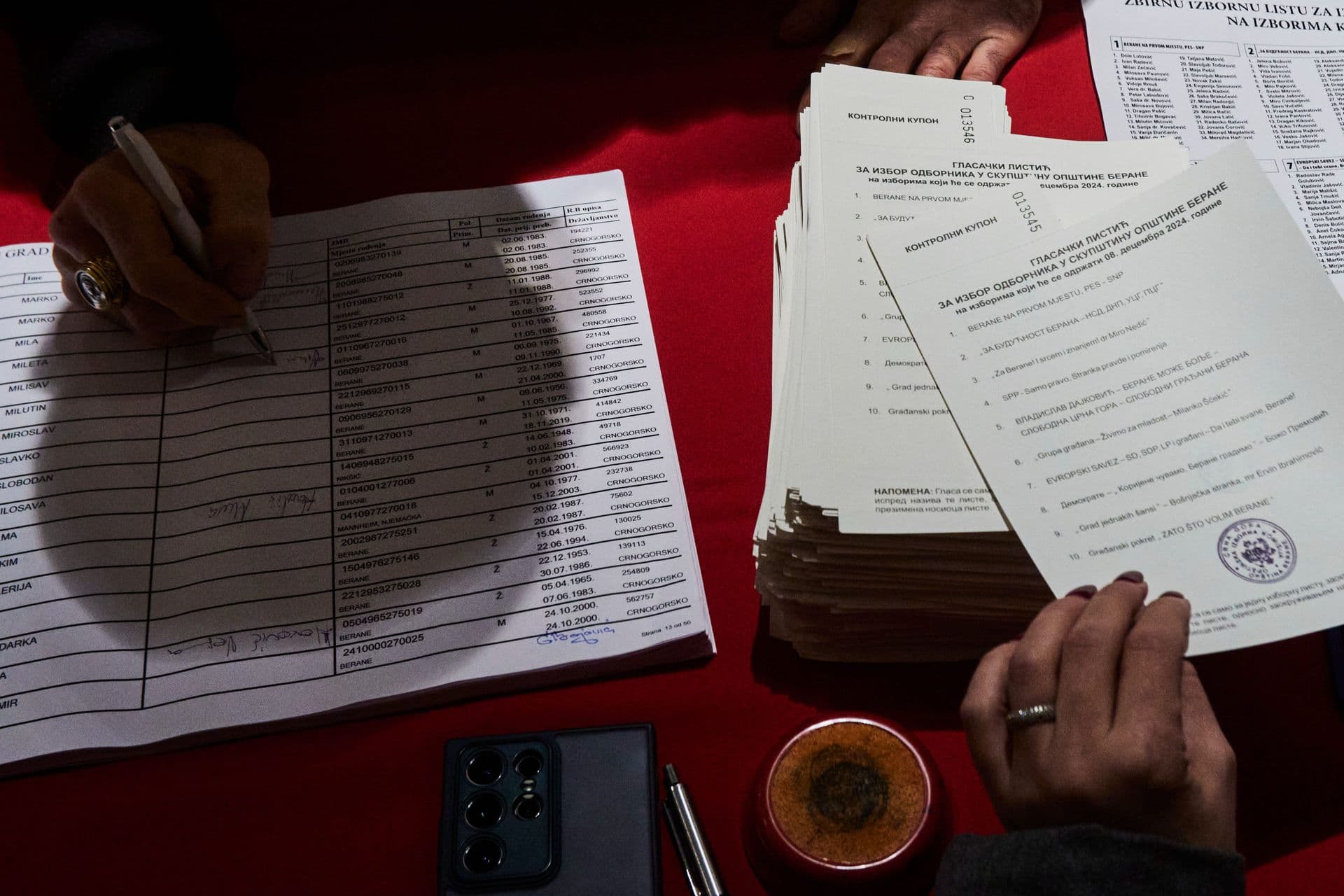
The debate around the voter lists has been contentious, with accusations of “phantom voters”—individuals who are registered but do not reside in the country—surfacing frequently. Đukić pointed out the irony in the current political discourse, noting that while the DPS has faced criticism over the integrity of the voter lists in the past, the opposition now similarly deflects blame on the electoral system.
The disparity in the number of registered voters compared to the actual adult population has raised alarms. Zoran Mikić, a deputy from the Civic Movement URA, highlighted that the last census indicated approximately 470,000 to 490,000 eligible voters, yet the voter list for the 2023 elections contained over 542,000 names. He described the difference of 60,000 to 70,000 as alarming, suggesting that in some municipalities there are more registered voters than adults residing there.
Mikić emphasized the need for legislative reform, asserting that cleaning up the voter lists is one of the most significant tasks facing Montenegro. He argued that the discrepancies noted in the voter registration process are largely attributable to the DPS and its governing partners over the years. He mentioned that in August 2020, there were 540,026 registered voters, further underscoring the inconsistencies in the system.
The potential involvement of the EU in this process has also been met with caution. Đukić expressed doubts about the feasibility of the EU conducting a cleanup of Montenegro’s voter lists, pointing out that each country has different rules regarding voter registration. He stated, “I do not see a methodology by which the EU could implement a cleanup of our voter list. It would require a specific condition tied to EU accession, but that would set a precedent.”
In response to the DPS initiative, Mikić acknowledged the regional approach to the issue as a potentially effective model. However, he cautioned about whether neighboring countries would be willing to participate in the EU-coordinated process. He stated, “Without the involvement of their relevant institutions, this process cannot be carried out effectively.”
Mikić reiterated that the initiative from the DPS has not yet been formally presented, and further discussions will take place once details are finalized. He emphasized the importance of achieving consensus among political entities to avoid potential manipulation and ensure that the voter list cleanup is executed transparently and effectively.
Inquiries made to ruling parties in the Montenegrin Parliament regarding their stance on the initiative have so far yielded limited responses, with an unofficial statement from the Europe Now Movement indicating that they would provide their position following the official announcement of the initiative.
As Montenegro grapples with these electoral challenges, the call for EU assistance underscores a pressing need for reforms and a commitment from all political actors to ensure the integrity of the electoral process.