The National Police Chiefs’ Council has announced a significant policy shift, deciding to no longer record “non-crime hate incidents.” This change comes in response to increasing concerns regarding police resources and the trivial nature of many reported incidents. With approximately 8,000 cases of shoplifting occurring daily, critics argue that police should prioritize serious crimes over minor grievances, which have historically consumed valuable time.
For over a decade, forces across the United Kingdom logged approximately 250,000 non-crime hate incidents, many of which involved trivial matters that should not have warranted police attention. The records of these incidents could have lasting repercussions for individuals, potentially impacting their employment opportunities, particularly in sensitive fields such as childcare.
Several examples illustrate the absurdity of past investigations. In one notable instance, a man faced police scrutiny for singing “Flower of Scotland” at an English railway station, which was interpreted as a slight against the English. Another case involved a man being visited by police for using an Indian accent while ordering food. Incidents also included a Christian preacher in Rotherham having his fingerprints and DNA taken after a brief conversation about the Koran, and a grandmother in Cleobury Mortimer being investigated for displaying a photograph of Enoch Powell in her shop window.
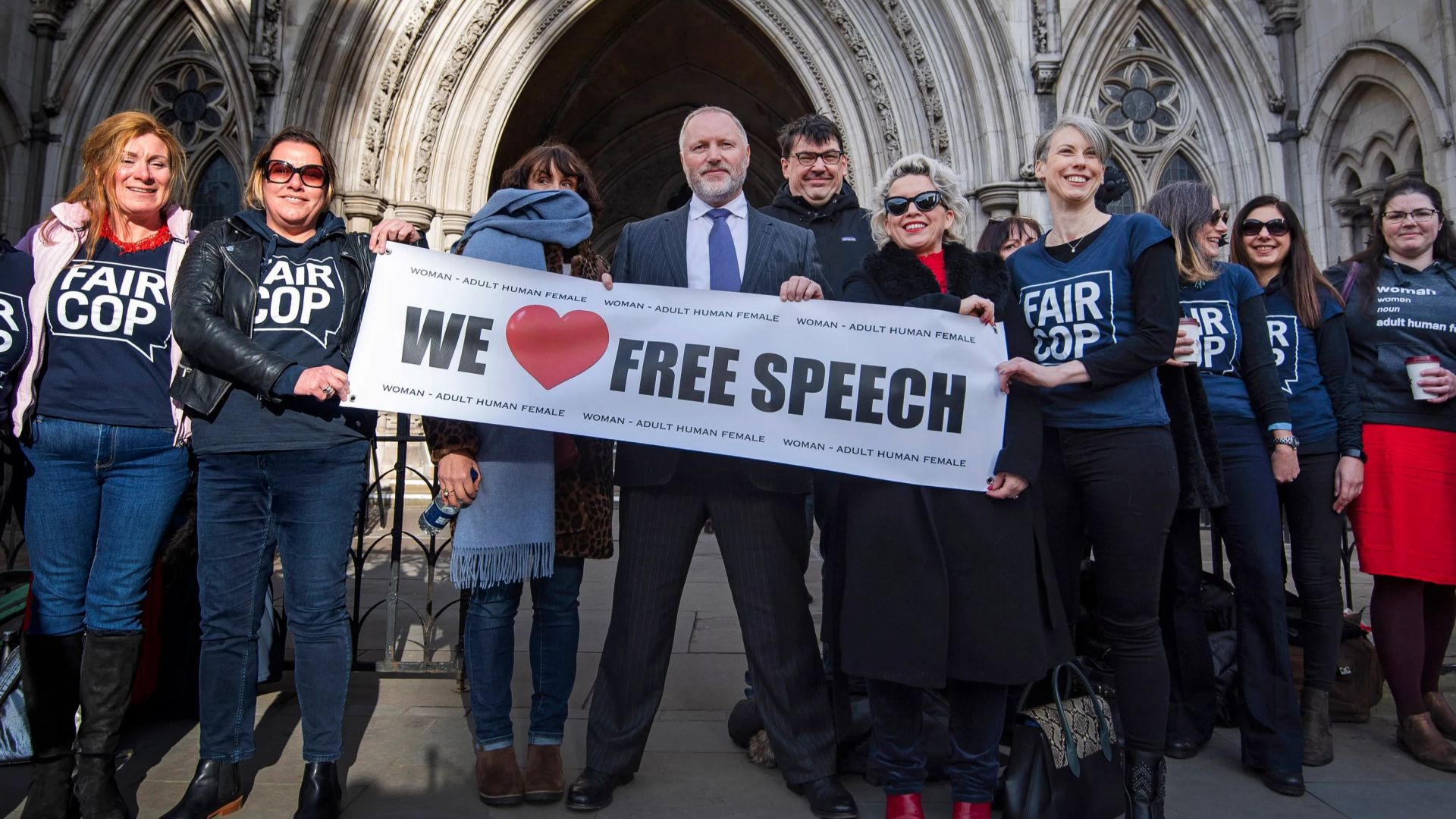
The legal ramifications of these non-crime incidents could also be severe. In a high-profile case, writer Graham Linehan faced trial for harassment due to a series of tweets regarding transgender issues. Although he was acquitted of harassment, he was convicted for damaging the phone of a trans activist. Meanwhile, former police officer Harry Miller successfully challenged his treatment by Humberside Police after he was accused of insulting trans individuals through a satirical tweet.
The repercussions extended to younger individuals as well. A nine-year-old was reported to police for using the term “retard” towards a classmate, highlighting the inappropriate involvement of law enforcement in schoolyard disputes. In another case, two secondary school girls were reported for saying a peer “smelled of fish,” while a ten-year-old was investigated for allegedly using a racist term, despite the parents of the affected child preferring an internal resolution.
The origins of non-crime hate incidents trace back to the murder of Stephen Lawrence in 1993, a crime that exposed significant failures in policing. The subsequent inquiry by Sir William Macpherson recommended that police record all racist incidents, even those not leading to charges. Over time, the definition expanded to encompass a wider range of behaviors, often stretching the boundaries of what constitutes a hate incident.
The College of Policing defined a non-crime hate incident as any action that leaves someone feeling “harassed, alarmed, or distressed,” which allowed for a flood of complaints that stretched police resources thin. As a result, individuals were able to weaponize the reporting process, leading to police investigations based on subjective feelings rather than objective violations of the law.
The recent decision to halt the recording of non-crime hate incidents signals a potential return to common sense in policing. While it is a positive step towards allowing police to focus on genuine crimes, caution remains warranted. Activists who have influenced policing practices may continue to push for similar policies, indicating that the landscape of policing may not have shifted as significantly as it appears.
The changes will not absolve individuals who engage in actual criminal conduct from facing consequences. The hope is that this policy shift will allow police to allocate their resources more effectively, ultimately leading to improved public safety. However, the presence of political motivations in policing practices suggests that vigilance is necessary to ensure the integrity of law enforcement in the future.