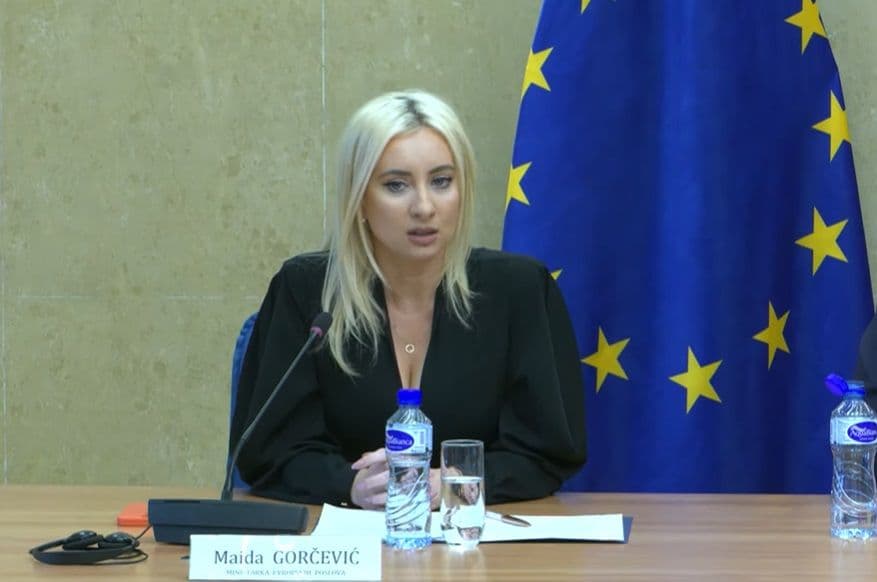
Montenegro has made significant strides in its European Union integration efforts, fulfilling all technical benchmarks for five negotiation chapters, according to Minister of European Affairs Maida Gorčević. During a recent meeting of the European Integration Committee, Gorčević responded to comments from Ivan Vuković, who indicated that Montenegro might only close three chapters in the near term.
Gorčević emphasized the dual nature of the EU integration process, stating, “This process is not only technical but also political.” She noted that while Montenegro has met all obligations, the political will of the 27 EU member states is now crucial.
European Commission assessments have confirmed that Montenegro has met the necessary criteria, yet certain EU nations, including France, have raised additional questions. According to Gorčević, “Some countries may be more interested in issues like agriculture, while others might focus on the transition period for Chapter 13.” She expressed confidence that Montenegro has resolved all technical and political aspects of the chapters.
French Block Impacts Montenegro’s EU Progress
Recent developments revealed that France, during a session of the EU Council Working Group (COELA), blocked the closure of two important chapters: Chapter 11, which covers agriculture and rural development, and Chapter 13, related to fisheries. This decision impacts Montenegro’s ability to finalize negotiations on five expected chapters by the year’s end.
As a result, Montenegro is now likely to close only three chapters in its ongoing negotiations with the EU. Gorčević acknowledged the extensive work accomplished regarding these five chapters, stating, “Each country decides for itself, and we have done significant work in this regard.”
The political climate surrounding Montenegro’s EU aspirations remains complex, with various member states displaying differing levels of interest in specific issues. The ongoing negotiations reflect not only Montenegro’s readiness but also the intricate balance of interests within the EU. As the country navigates these challenges, the importance of maintaining dialogue with all member states becomes increasingly essential.
Montenegro’s path towards EU membership continues to be closely monitored, as the country aims to align itself with European standards and practices, while also addressing the concerns of existing member states.