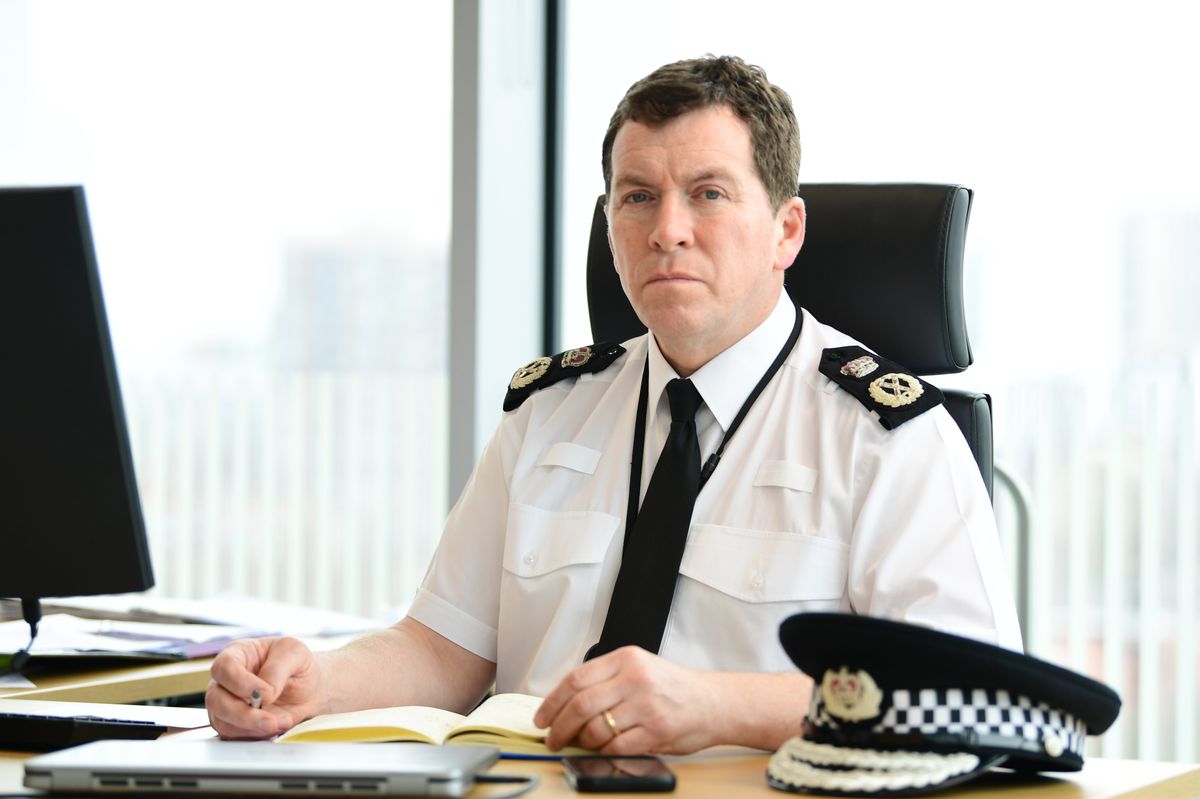
Chief Constable Rob Carden of Merseyside Police has outlined an ambitious strategy to enhance public safety, following his first six months in charge. During an exclusive interview with the ECHO, Carden discussed the force’s proactive approach to policing, emphasizing that recent operations aimed at tackling serious and organized crime represent a significant “statement” of intent.
Carden described the need for a “confident force that polices on the front foot,” highlighting the importance of visible policing in building public trust. He stated, “The public want to see visible policing… it can be difficult to provide them with reassurance.” The chief constable believes that a visible presence will lead to increased public confidence in the police.
The chief constable’s comments come as Merseyside Police undertakes its most significant restructuring in a decade, set to be implemented by March 27, 2024. This plan aims to enhance neighborhood policing and bolster response and patrol units. Carden confirmed the addition of 80 officers to response and patrol teams and 60 officers dedicated to neighborhood policing, in addition to retaining 200 community support officers.
Proactive Policing and Community Engagement
The chief constable emphasized that the bold new approach has “galvanised” officers, pushing them to excel in their duties. He pointed to two major operations in Huyton and Stockbridge Village, as well as recent activities in Anfield, where hundreds of officers have been deployed for public raids and arrests. Carden noted, “We’ve made some fantastic arrests… that concerted effort has got us over the line.”
In discussing the allocation of resources for these operations, Carden responded to criticism by stating that dismissing their effectiveness as “simplistic” is misplaced. He reiterated his satisfaction with the policing response, asserting the importance of adapting strategies to combat evolving criminal threats.
As Merseyside prepares for these changes, the chief constable acknowledged the need for responsible use of technology in policing. He stated that technology is the “future for policing,” with plans for greater implementation of live facial recognition and other innovative tools in the near future.
Addressing Trust and Accountability Issues
Carden recognized the challenges facing modern policing, particularly in light of high-profile cases that have eroded public trust, such as the tragic death of Sarah Everard. He noted that Merseyside has its own issues, acknowledging the presence of “wrong-uns” within the force. His commitment to ethical policing, characterized by responsiveness and compassion, aims to rebuild public confidence.
The chief constable also addressed the recent death of Lain Estridge, a 23-year-old man from Toxteth, who died following police contact. Carden expressed his condolences and emphasized the importance of transparency in investigations, stating, “It is a loss of life and that’s the saddest thing in all of this.”
Looking forward, Carden shared his concerns regarding proposed significant changes to the policing structure in the UK, which could potentially lead to the consolidation of forces into fewer larger entities. He expressed skepticism regarding the idea of a “super force” that would cover the entire North West, advocating for a model that prioritizes local accountability.
In conclusion, Chief Constable Carden’s first half-year in charge has been marked by a focus on proactive, community-oriented policing. With an upcoming restructure and a commitment to ethical practices, he aims to enhance public safety and rebuild trust in the Merseyside Police.