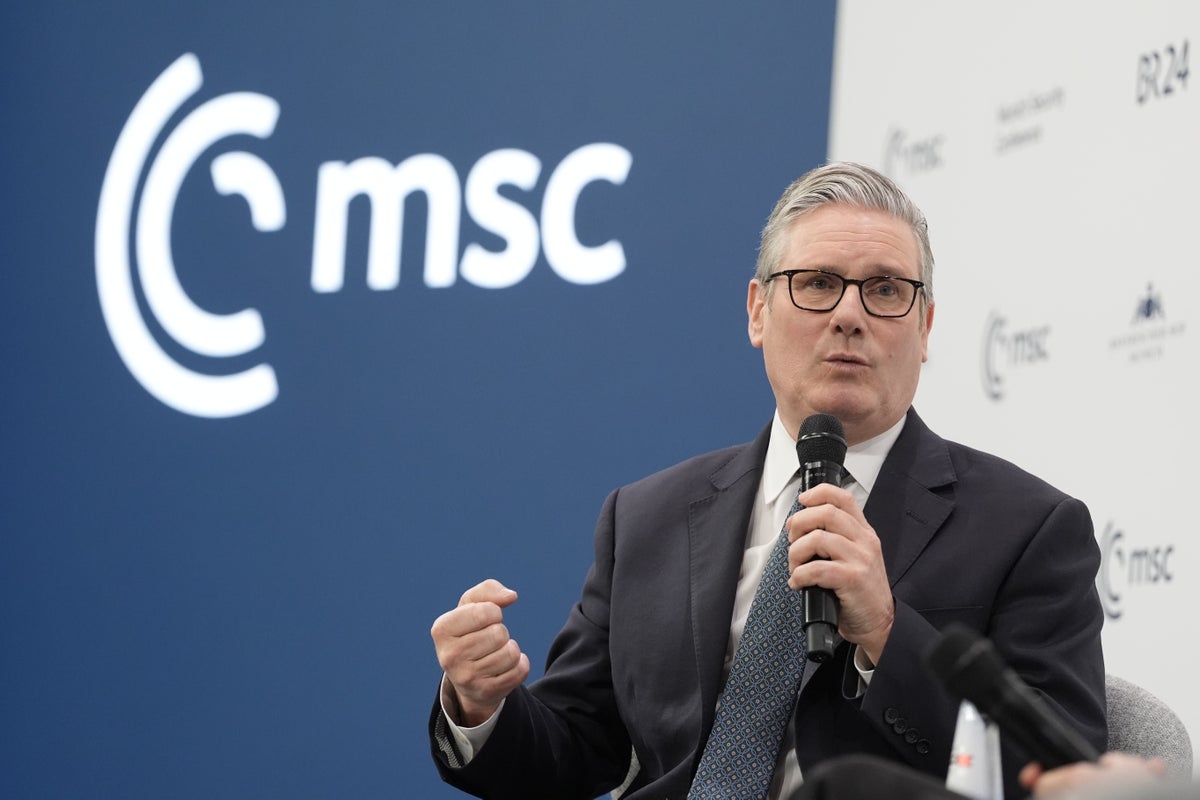
During the recent Munich Security Conference, UK Prime Minister Sir Keir Starmer delivered a significant speech advocating for closer cooperation with European neighbours in defence matters. His remarks addressed both domestic challenges and the necessity for a unified European response to global threats, particularly emphasizing the need for increased defence spending among NATO members.
In his speech, Starmer asserted that he had “ended the week much stronger than I started it,” addressing questions regarding his leadership. He positioned the UK as a proactive participant in European security, stating that while Europe must bolster its own defence capabilities, this does not indicate a withdrawal of US support. His call for “greater European autonomy” was framed as essential for effective burden-sharing among allies.
Addressing Historical Context and Current Threats
Starmer referenced the historical context of European alliances, noting that NATO members had previously come together to support each other, including during the Afghan conflict. He highlighted the importance of unity in the face of challenges posed by figures like Vladimir Putin, stating, “In the 1930s, leaders were too slow to level with the public about the fundamental shift in mindset that was required.” While this comparison to the past may raise eyebrows, his warning about the current geopolitical landscape reflects a growing consensus on the need for vigilance.
Critics might argue that such historical analogies can be hyperbolic. Starmer’s caution against underestimating threats is notable, but equating Putin’s actions with those of Nazi Germany could detract from his argument. Nevertheless, he emphasized the importance of recognising the realities of modern threats, particularly in light of evidence surrounding the murder of Russian opposition leader Alexei Navalny.
Stronger Defence and Economic Cooperation
Starmer’s speech also tackled the challenges posed by political extremes, cautioning against the “peddlers of easy answers” on both sides of the spectrum. He specifically called out the Green Party and the Reform Party for their perceived shortcomings regarding NATO and Russian threats. By doing so, he aimed to strengthen the case for enhanced European defence without creating unnecessary political divisions.
One of the standout features of his address was the call for a “generational shift in defence industrial cooperation.” He stressed that closer economic alignment with the European Union is essential for both defence and economic growth. This cooperation could potentially place the UK at the forefront of a renewed European industrial landscape, benefiting both Britain and its European neighbours.
Starmer’s assertion that “the prize here is greater security and stronger growth for the UK and the EU” highlights the interconnected nature of defence and economic stability. He argued that increased collaboration would ultimately fuel enhanced defence spending, a critical factor as Europe faces evolving security challenges.
While Starmer acknowledged the past tumult of the Brexit years, he emphasized that the UK must move forward without retracing old arguments. His focus on building a positive narrative around European cooperation reflects an understanding of the current geopolitical climate while allowing the public to draw their own conclusions about the future of UK-EU relations.
As discussions around defence and security continue to evolve, Prime Minister Starmer’s speech serves as a significant reminder of the need for unity among European nations. The importance of collaborative action in facing global challenges cannot be overstated, and his vision may pave the way for a more secure and economically prosperous future for all involved.