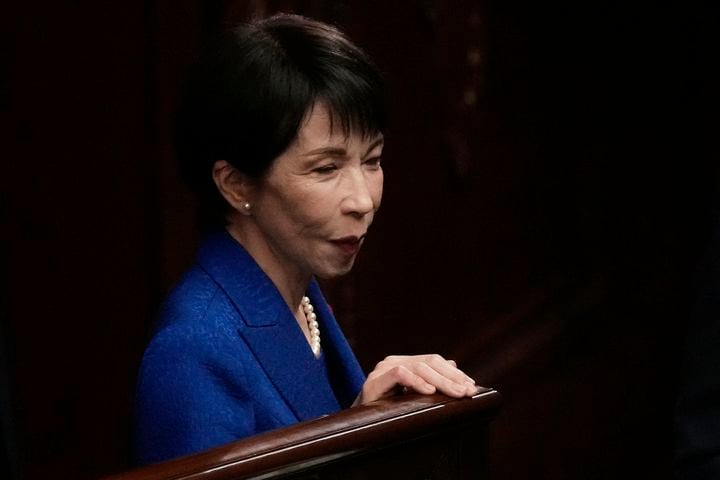
Japanese Prime Minister Sanae Takaichi has announced the dissolution of the lower house of parliament, setting the stage for a snap election on February 8, 2024. This strategic move aims to leverage her recent popularity and strengthen her party’s position following significant electoral setbacks in previous years. However, the decision may postpone critical budget approvals essential for revitalizing Japan’s struggling economy and addressing rising inflation.
Elected as Japan’s first female leader in October 2023, Ms. Takaichi has maintained impressive approval ratings of approximately 70%. Her party, the Liberal Democratic Party (LDP), faces challenges stemming from ongoing corruption scandals and the controversial historical ties to the Unification Church. While the newly formed Centrist Reform Alliance aims to attract moderate voters, the fragmented nature of opposition parties poses difficulties in mounting a formidable challenge to the LDP.
Tensions with China have also escalated since Ms. Takaichi made pro-Taiwan statements, drawing criticism and economic retaliation from Beijing. Additionally, Donald Trump, the former President of the United States, has urged Japan to increase its military spending amid growing competition between Washington and Beijing.
Fukushiro Nukaga, the house speaker, officially declared the dissolution of the 465-member lower house, prompting parliamentarians to chant “banzai,” which means “long live,” three times before rushing out to prepare for the campaign. This announcement initiates a 12-day campaign period leading up to the election.
Ms. Takaichi’s early election strategy seeks to solidify her governing majority in the lower house, which holds more power than the upper chamber. Following a 2024 election loss, the LDP’s coalition currently holds a slim majority in the lower house but lacks control in the upper house, relying on opposition support to pass legislation.
Opposition leaders have criticized Ms. Takaichi for her decision to delay the budget necessary for crucial economic initiatives. During a news conference, she stated, “I believe that the only option is for the people, as sovereign citizens, to decide whether Sanae Takaichi should be prime minister.” This election represents a pivotal moment for her leadership, with Ms. Takaichi asserting she is “staking my career as prime minister” on its outcome.
As a hardline conservative, Ms. Takaichi aims to distinguish her policies from those of her centrist predecessor, Shigeru Ishiba. She emphasizes fiscal spending, military expansion, and stricter immigration policies as key components to enhance Japan’s strength and prosperity. Despite her personal popularity, the LDP’s reputation has suffered due to recent political controversies, leading some traditional supporters to shift their allegiance to emerging far-right populist parties, such as the anti-globalist Sanseito.
The political landscape in Japan is increasingly complex, with Ms. Takaichi’s assertive approach to defense and military spending coinciding with rising tensions in the region. As the election date approaches, the focus will be on whether her strategies can effectively resonate with voters and restore confidence in the LDP amid a challenging political environment.