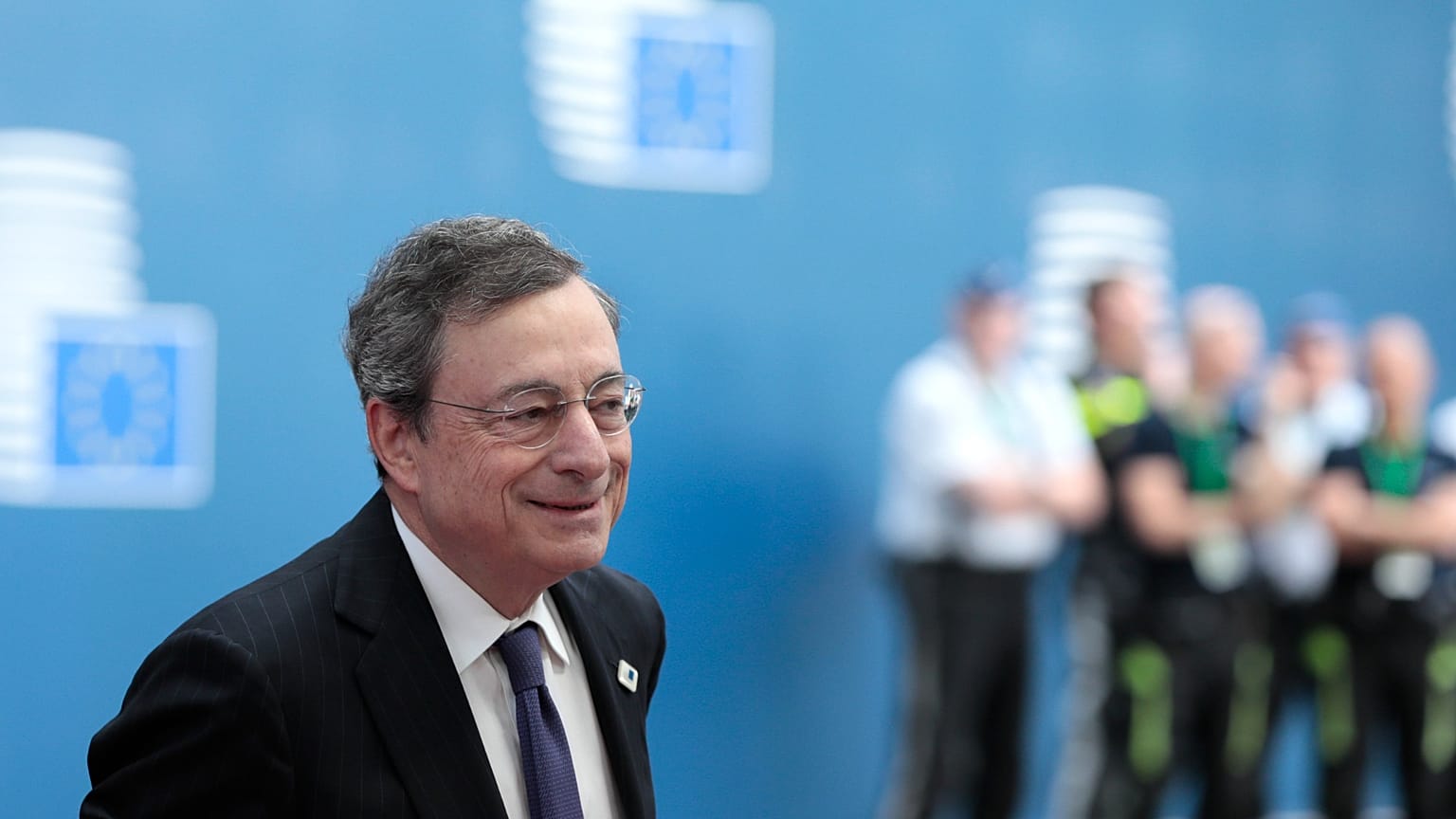
Former Italian Prime Minister Mario Draghi has issued a strong warning regarding the future of the European Union, stating that it must evolve into a “genuine federation” to prevent potential subordination and deindustrialisation. Speaking at the Belgian Ku Leuven University on October 23, 2023, Draghi emphasized that without closer integration, Europe risks becoming fragmented and losing its competitive edge in the global market.
In his speech, which coincided with the presentation of an honorary degree, Draghi remarked, “Europe risks becoming subordinated, divided, and deindustrialised.” He argued that the current global order is “now defunct,” and highlighted the necessity for the EU to shift from a confederation model to a more unified federation to gain power on the world stage.
Urgency for Unified Action
Draghi stressed that a world characterized by reduced trade and weakened regulatory frameworks would be detrimental to Europe. He pointed out, “Power requires Europe to move from confederation to federation.” This transformation is essential not only for economic prosperity but also for maintaining Europe’s values and interests amid rising tensions globally.
He further elaborated that simply grouping together smaller nations does not automatically create a powerful bloc. Where Europe has achieved federation in areas such as trade, competition, and monetary policy, it has been able to negotiate effectively as a unified entity. Draghi cited the “successful” trade agreements recently established with India and Latin America as examples of this collaborative strength.
In contrast, he noted that Europe has struggled in sectors like defence and foreign policy, where it often appears as “a loose assembly of middle-sized states.” He stated, “Where we have not federated, we are treated accordingly.” This fragmentation makes the EU vulnerable to external pressures, particularly from major powers like the United States and China.
A Call for Collective Strength
Draghi’s remarks challenge European leaders to reconsider their approach to unity. He posed a critical question to the audience: “Do we remain merely a large market, subject to the priorities of others? Or do we take the steps necessary to become one power?” His vision for a more integrated Europe is not just about economic benefits but also about ensuring that the continent can defend its interests in an increasingly competitive global landscape.
He concluded by asserting that “a Europe that cannot defend its interests will not preserve its values for long.” As the EU contemplates its future, Draghi’s call for a genuine federation may serve as a pivotal moment in shaping the continent’s trajectory in the years to come.