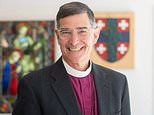
A bishop in New Hampshire has sparked national debate after urging his clergy to finalize their wills in light of recent violence related to immigration enforcement. Bishop Rob Hirschfield of the Episcopal Church of New Hampshire made this statement during a vigil on January 9, 2026, honoring Renee Good, who was fatally shot by Immigration and Customs Enforcement (ICE) Officer Jonathan Ross in Minneapolis, Minnesota.
During the vigil, Hirschfield referred to Good as a ‘martyr’ and emphasized the deepening moral crisis surrounding immigration policies. He criticized the historical relationship between the church and empire, stating, “As soon as the Christian church became linked to the empire by Constantine in the year 325, the church immediately became corrupt.” He expressed concern that the church has lost its voice in advocating for the vulnerable.
The incident involving Good has drawn significant public attention. Trump administration officials defended Ross’s actions, claiming he acted in self-defense as Good’s SUV moved toward him. However, this explanation has faced criticism from local leaders, including Minneapolis Mayor Jacob Frey and Minnesota Governor Tim Walz, who cited video evidence from the scene that contradicts the official narrative.
Hirschfield’s remarks included a call to action for his fellow clergy. He stated, “I have told the clergy of the Episcopal diocese of New Hampshire that we may be entering into that same witness.” He urged them to prepare their wills, indicating that the time for passive statements may be over. Instead, he encouraged them to “stand between the powers of this world and the most vulnerable.”
The bishop further argued that God expects Christians to advocate for justice and compassion. He recalled the tragic death of George Floyd in Minneapolis, stating, “Say his name,” as a reminder of ongoing issues related to racial injustice and police violence.
Hirschfield concluded his speech with a prayer, urging attendees to find courage and strength in the face of adversity. He expressed a hopeful vision, stating, “There is a new day ahead. It is coming. We can smell it. It is on its way.”
Following the vigil, the White House responded to Hirschfield’s statements, with spokesperson Abigail Jackson asserting that “no one should follow advice encouraging them to commit crimes.” She emphasized that interfering with federal law enforcement operations is illegal and that individuals would be held accountable.
In defense of his position, Hirschfield clarified that he does not support any form of violence. He advocated for peaceful, non-violent resistance against unjust actions, following the example of Jesus. He expressed surprise at the attention his remarks garnered, stating that his message has been consistent throughout his 35 years of service as a priest.
Witnesses have reported that Good and her wife, Rebecca Good, were acting as legal observers during ICE raids in Minneapolis on January 7, 2026. Surveillance footage captured moments leading up to the shooting, showing Good’s vehicle blocking the road for approximately four minutes before the tragedy unfolded. The vehicle was struck by gunfire as it began to move away from the scene, resulting in a crash after the shots were fired.
In the weeks following Good’s death, various religious leaders have echoed Hirschfield’s calls for protection of the vulnerable amid increasing immigration enforcement. Most Rev. Sean W. Rowe, the presiding bishop of the Episcopal Church, stated, “We keep resisting, advocating, bearing witness and repairing the breach,” highlighting the church’s role in supporting immigrants and refugees.
In Minnesota, Rt. Rev. Craig Loya urged individuals to respond to hatred with love, emphasizing the need for compassion in an increasingly challenging world. He expressed a commitment to mobilizing for justice and hope, aligning with Hirschfield’s emphasis on non-violent action.
As discussions continue surrounding the implications of Hirschfield’s remarks, the focus remains on the balance between advocating for justice and adhering to the law, a conversation that resonates deeply within the context of ongoing national debates about immigration and civil rights.