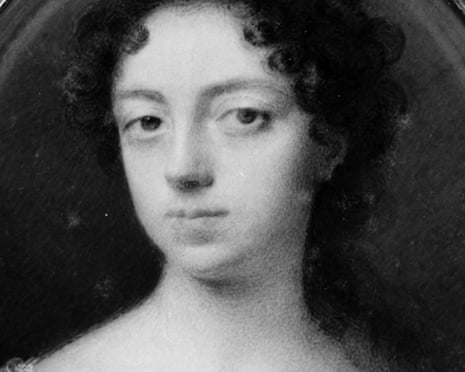
Anne Finch, Countess of Winchilsea, boldly navigates the complexities of female authorship in her poem “The Apology.” Written in the early 18th century, this piece serves as both a personal reflection and a broader commentary on women’s roles in literature during a time when such pursuits were often met with skepticism. Finch’s work is a spirited defense of her right to write poetry, a domain typically reserved for men.
Finch opens with the self-aware declaration, “’Tis true, I write,” immediately addressing the societal constraints placed upon women in the arts. She questions why she should be forbidden to explore her creativity in the same way that men do, highlighting the disparity between male and female experiences. The imagery of wandering through “the groves” encapsulates the idyllic space where poets often find their muses, yet Finch juxtaposes this with the notion of “feigned ideas,” asserting that women possess the same imaginative capabilities as their male counterparts.
In her exploration, Finch introduces characters like Myra and Lamia to illustrate differing approaches to self-expression. Myra, who “paints her face” instead of engaging with deeper thoughts, reflects the superficial expectations of women. Lamia, drawing inspiration from a “manly bumper,” suggests that women, too, can find creativity in unconventional ways. These references not only enrich the poem but also invite speculation about whether they represent real individuals in Finch’s circle.
Despite her self-deprecating tone, Finch’s argument for the legitimacy of her poetic pursuits is clear. She acknowledges the challenges she faces, admitting, “Each woman has her weakness; mine indeed / Is still to write, though hopeless to succeed.” This confession underscores the societal pressures that weigh on women writers, yet it is delivered with a sense of humor and resilience.
Finch finds solidarity in her friendship with Flavia, who is identified as Catherine Fleming. The poem’s second stanza sees Finch using Flavia’s confidence as a counterpoint to her own insecurities. The playful jab at Flavia’s fortieth birthday, where she continues to embrace her beauty despite past rejections, serves as a subversive challenge to societal norms surrounding aging and femininity.
While Finch expresses humility in her writing, her acknowledgment of her supporters, including her husband, Heneage Finch, suggests that she was not entirely without recognition. Her work, including “The Spleen,” published in Gildon’s Miscellany in 1701, demonstrates her ambition and talent. Yet, it is evident that she faced significant hurdles in gaining the visibility her poetry deserved.
Finch addresses the male literary establishment with a critical eye, noting that their works often contain “less to be applauded than forgiven.” This observation suggests a mutual imperfection among writers, regardless of gender. By limiting her critique to the “wits” of her time, she crafts a balanced perspective that acknowledges shared human flaws.
“The Apology” not only highlights Finch’s skill in employing heroic couplets but also serves as an early testament to the struggles faced by women in literature. The poem is believed to belong to the Folger Manuscript of 1702, and while Finch’s works did not receive the acclaim they deserved during her lifetime, her influence continues to resonate.
Finch’s poignant and humorous exploration of female authorship in “The Apology” remains relevant today, reminding readers of the ongoing challenges women face in creative fields. She champions the right to write, to express, and to be heard, making her work a significant contribution to the literary canon.