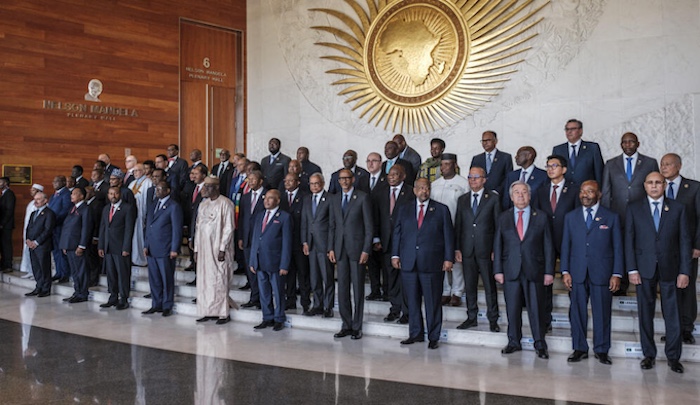
Leaders of the African Union (AU) have adopted a historic resolution during a two-day summit in Addis Ababa, officially categorizing slavery, deportation, and colonialism as acts of genocide and crimes against the African people. This landmark decision signifies a pivotal moment in the AU’s ongoing effort to formally acknowledge and address the long-lasting effects of historical injustices faced by the continent and its diaspora.
Mahmoud Ali Youssouf, the AU Chairman, highlighted the resolution’s significance, stating, “The conference recognises colonisation as a crime against humanity. That’s very important.” His remarks reflect the AU’s commitment to confronting historical grievances and advocating for justice on behalf of those affected by these injustices.
In a show of solidarity, Youssouf also called for an end to what he termed the extermination of the Palestinian people. This declaration serves not only as a recognition of past atrocities but also as a call to action for contemporary issues of injustice.
As part of this resolution, member states have designated November 30 as the “African Day of Tribute to African Martyrs and Victims of the Transatlantic Slave Trade, Colonization, and Apartheid.” This day is intended to commemorate those who suffered under these oppressive systems while reinforcing the continent’s dedication to justice and remembrance.
The AU leaders expressed their collective resolve to keep the matter under review, working together to secure broader international acknowledgment of this declaration. This proactive stance underscores the union’s determination to address historical injustices and promote a global understanding of their impact.
The adoption of this resolution marks a significant step towards healing and reconciliation within Africa, as well as a broader recognition of the continent’s historical narrative on the world stage. The AU’s commitment to honoring the victims of slavery and colonialism reflects a growing understanding of the need to address past injustices to foster a more equitable future.
Through this resolution, the AU not only seeks to memorialize the suffering endured by countless individuals but also aims to inspire a renewed commitment among its member states to confront and rectify historical wrongs. The ongoing dialogue surrounding these issues emphasizes the importance of collective action in achieving justice and reconciliation, both within Africa and globally.