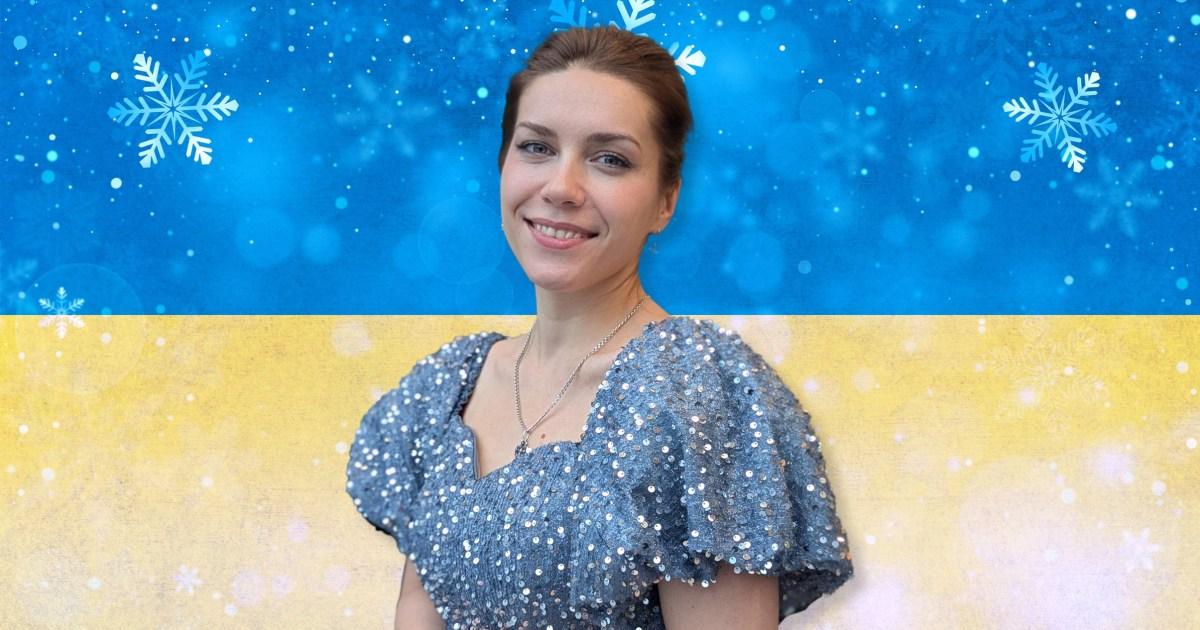
As the festive season unfolds, many Ukrainian families are finding ways to hold onto their cherished Christmas traditions while living in foreign lands. Mariia Kushch, who fled Ukraine three years ago following the Russian invasion, now resides in Hertfordshire, UK, with her son. She reflects on the changes in her life since February 24, 2022, when an explosion jolted her awake, marking the beginning of a devastating conflict.
That morning, Mariia heard the sound of war erupting outside her apartment near Kyiv. Struggling to comprehend the unfolding situation, she sought refuge in the basement of her building with her seven-year-old son. The chaos outside was overwhelming, with helicopters flying overhead and the distant sounds of gunfire.
Statistics from the United Nations indicate that there have been over 53,000 Ukrainian civilian casualties, including 14,534 deaths, since the invasion began. Mariia describes the heartache of uprooting her life, learning a new language, and navigating a different culture. “I miss Ukraine every day,” she states. “It breaks my heart that I cannot return, that my home and old life are out of reach.”
As Christmas approaches, Mariia finds solace in the traditions she grew up with. She cherishes St Nicholas Day on December 6, when children in Ukraine anticipate gifts left under their pillows. “Surprise surprise, the week before, every child across Ukraine becomes an angel,” she jokes. In Ukraine, Orthodox Christmas is celebrated on January 7, culminating in a period of festivities that lasts until January 19.
Mariia fondly recalls the tradition of carolling, especially the song “Shchedryk,” known internationally as “Carol of the Bells.” This carol has become a symbol of Ukrainian resilience. This year, she and her son plan to celebrate with another Ukrainian family nearby, continuing the carolling tradition that brings a piece of home into their new lives.
Reflecting on the last Christmas spent in Ukraine, Mariia describes it as “the most beautiful” she ever experienced, set in a picturesque winter wonderland. “It’s painful to think that, just months later, that same forest became a battleground,” she reflects.
Karyna, another Ukrainian who now lives in London, shares a similar story. Originally from Kyiv, she recalls hearing explosions close enough to prompt her to flee as the invasion began. For Karyna, the past three years have been a testament to resilience. “This Christmas, I still feel as though the festive season is about togetherness and keeping traditions alive,” she remarks.
Karyna plans to prepare a traditional Sviata Vecheria, or Holy Supper, featuring twelve dishes, a practice she hopes to share with friends. Memories of a beautifully set table covered with straw, symbolizing the manger, and the sharing of kutia, a sweet wheat and honey dish, bring her joy. “The streets would be alive with music and laughter, even in the cold winter,” she adds, recalling the sense of community and celebration.
Looking towards the future, Karyna expresses hope, confident in the resilience and unity of her people. “The Ukrainian cause is about defending the right to exist as a free, independent nation,” she explains. “Ukrainians are fighting not for power, but for the ability to live with dignity, make their own choices, and preserve their traditions.”
In a notable initiative, Fynn Watt and Jacob Simpson, co-founders of the charity Driving Ukraine, continue their efforts to support their homeland. They coordinate convoys delivering life-saving vehicles to Ukraine, having transported over 270 vehicles and raised more than £1.7 million to date. This December, their 52nd convoy included eight volunteers dressed in festive attire, traveling from Oxfordshire to Lviv.
The convoy distributed evacuation vehicles to the Ukrainian armed forces while also bringing essential supplies, including a baby incubation device for transporting patients. “Each car was decorated with Christmas lights,” Jacob shares, underscoring a spirit of hope amidst the ongoing conflict.
Karol Swiacki, founder of another aid organization, Ukraine Relief, has spent significant time in Ukraine since the war began. He notes that the people are fighting for their families and freedoms. “It’s a very painful process,” he reflects, recounting stories of families left behind. “When you’re there, sitting around these people, there is no electricity, there is no heating, there is no hope, almost.”
As families like Mariia’s and Karyna’s navigate the complexities of life in a new country, they remain committed to keeping their traditions alive. Christmas, while tinged with sorrow for what has been lost, also serves as a reminder of the strength and resilience of the Ukrainian spirit.