A tribute has been paid to the often-overlooked architect Robert Burns Dick, renowned for his role in designing significant buildings in the North East of England. A plaque was unveiled in his honour at the headquarters of the Good Neighbour Project in Pendower Estate, a council estate he helped develop, highlighting his lasting contributions to the region’s architectural heritage.
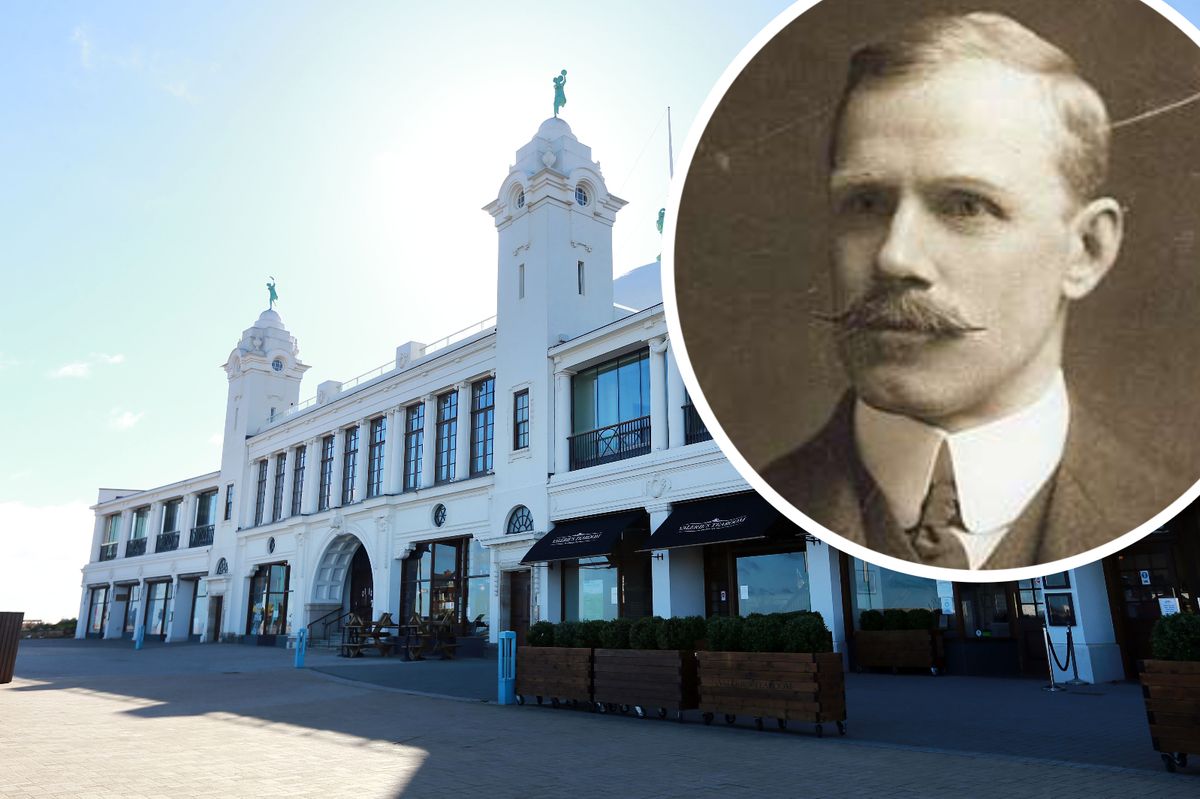
Born in 1868 in Stirling, Scotland, Burns Dick moved to Newcastle as a child. His architectural career began after studying at the Royal Grammar School and later at Art School. In 1883, he joined architect W. Lister Newcombe and later partnered with James T. Cackett to establish the firm Cackett & Burns Dick in 1898. Over his career, he designed more than 20 notable buildings, including the iconic Spanish City in Whitley Bay, the Laing Art Gallery, and the Newcastle University Students Union.
The post-World War I era saw a demand for “homes fit for heroes,” which led Burns Dick to create the Pendower Estate. His design philosophy prioritized community and accessibility, opting for layouts that featured 12 to 18 houses per acre rather than the standard 20. This approach reflected a commitment to creating sustainable living environments.
During the unveiling ceremony, Lord Mayor Henry Gallagher praised Burns Dick’s contributions: “Robert Burns Dick made a considerable contribution to the architectural heritage of the city, the region, and beyond. He’s been described as the unknown architect, but his buildings are far from unknown; they remain integral to our region today.”
Burns Dick was not only a prolific architect but also a community advocate. He was a founding member of the Newcastle Upon Tyne Society in 1924, an organization dedicated to enhancing the city’s beauty and amenities. The group later became known as the Northumberland and Newcastle Society, which continues to campaign for recognition of his work, including the recent plaque initiative.
John Matthews, Chairman of the Northumberland and Newcastle Society, expressed his delight at the honour bestowed upon Burns Dick. “I am thrilled that we now have a plaque in Newcastle dedicated to Robert Burns Dick, recognising his involvement in so many of the city’s historic buildings, which have withstood the test of time.”
In addition to the Spanish City and Pendower Estate, Burns Dick contributed to other significant projects, including Pilgrim House, Cross House, and the Berwick Police Station, which opened in 1901. He also played a role in the extension works at A. Reyrolle and Co. in Hebburn and the Armstrong Naval Yard in Walker.
Current president of the Northern Architectural Association, Neil Barker, highlighted Burns Dick’s multifaceted talents, describing him as not only an accomplished architect but also an artist and town planner. Barker noted that Burns Dick proposed significant improvements to Newcastle’s city centre as early as 1925, aiming to address future traffic challenges.
Burns Dick passed away in a care home in Surrey at the age of 86, but his legacy remains firmly rooted in Newcastle, where he is buried in Elswick Cemetery. His contributions continue to be celebrated, affirming his status as an influential figure in the region’s architectural history. As Barker aptly stated, “His legacy through architecture can be seen all around us in Newcastle, and he thoroughly deserves this accolade.”