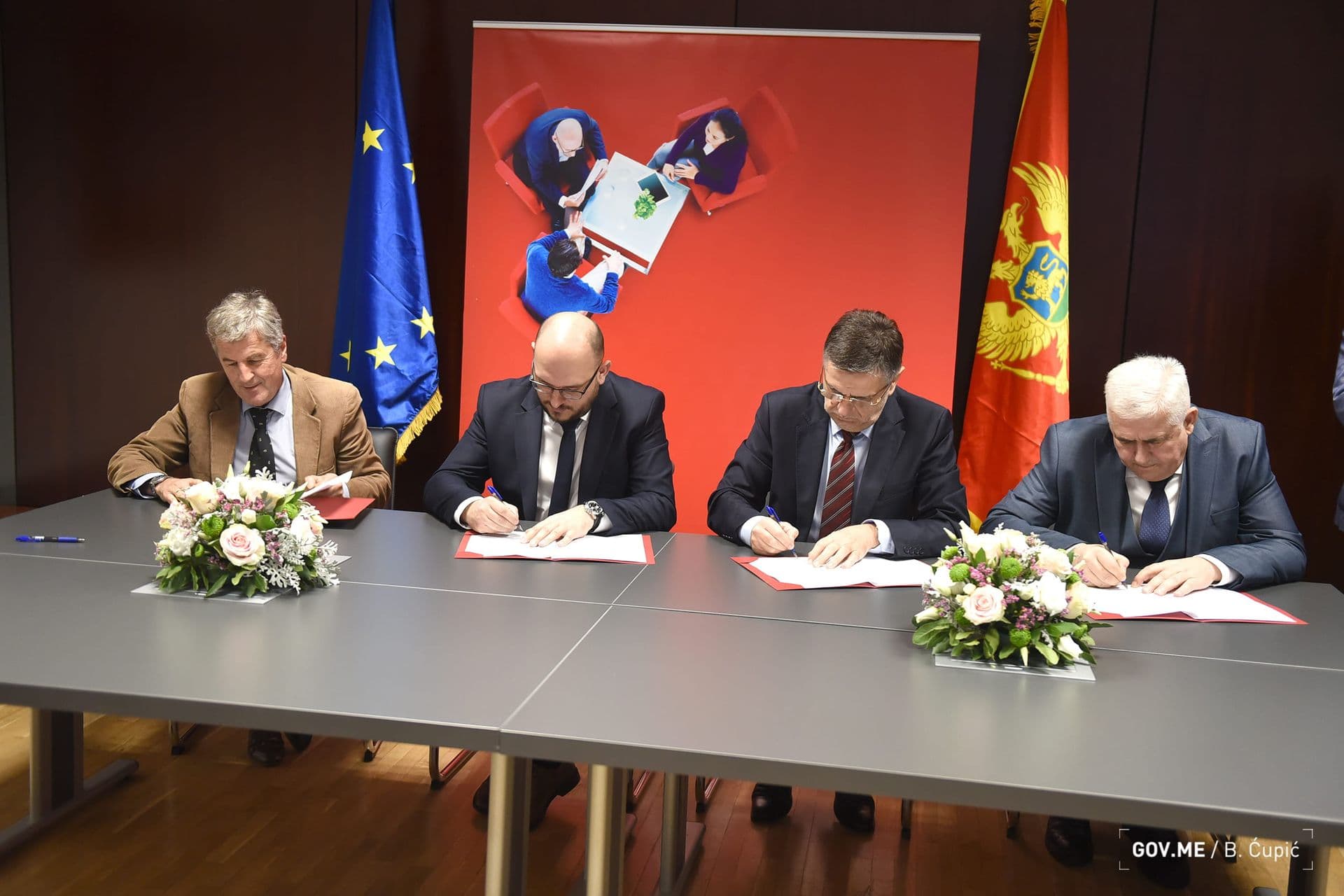
Negotiations between social partners and the Prime Minister of Montenegro regarding a new General Collective Agreement (OKU) will continue tomorrow, starting at 14:00 local time. According to Duško Zarubica, General Secretary of the Trade Union Confederation of Montenegro, the outcome of these discussions is critical for improving the working and legal status of employees in the country.
The ongoing negotiations carry significant implications for the national budget. An assessment is anticipated regarding how increasing the calculation value of the coefficient—currently set at €90—to €100 would impact government finances. Earlier unofficial estimates suggested that wage increases could total between €70 million and €80 million annually. However, this figure does not account for the potential rise in tax revenues resulting from higher wages.
In addition to the unions’ request for a coefficient increase, the discussions will address a comprehensive package of demands from employers and the government. These include proposals related to sick leave regulations, reducing the employer’s financial responsibility for sick leave from 60 to 30 days, and adjustments regarding holiday pay and Sunday work regulations.
The previous General Collective Agreement expired on December 30, 2022. To protect the rights of approximately 100,000 employees whose basic labor rights are not safeguarded by sectoral collective agreements or individual contracts, lawmakers extended the validity of the existing agreement until March 31, 2024, through amendments to the Labor Law.
The calculation value of the coefficient is a fundamental component in determining wages. An increase from €90 to €100 would result in an approximate 10 percent wage increase for affected workers. This adjustment would not apply to sectors where the coefficient is already set above €100 by existing agreements.
The coefficient has remained unchanged for the past thirteen years, having been established at €90 in 2011. According to the obligations outlined in the General Collective Agreement signed at the end of 2022, the coefficient is to be reviewed annually by December 31, considering inflation, changes in the minimum consumer basket, and overall living costs. This review has not taken place since the agreement was last signed.
The agreement specifies that if the parties do not reassess and adjust the calculation value by the deadline, the existing figure of €90 will remain in effect for the following year. The proposal to raise the calculation value to €100 is deemed essential to preserve the positive effects of the “Europe Now” initiative, which has been undermined by recent inflationary trends.
In correspondence to the Ministry of Finance dated December 11, 2023, social partners emphasized that while the European Bank for Reconstruction and Development has called for a reduction in public spending and a freeze on wages until 2026, they believe the budgetary impact of wage increases could be offset by internal reserves, preventing an increase in the overall budget.
The outcome of these negotiations will be closely watched, as they not only affect the financial well-being of workers in Montenegro but also have broader implications for economic stability and growth in the region.