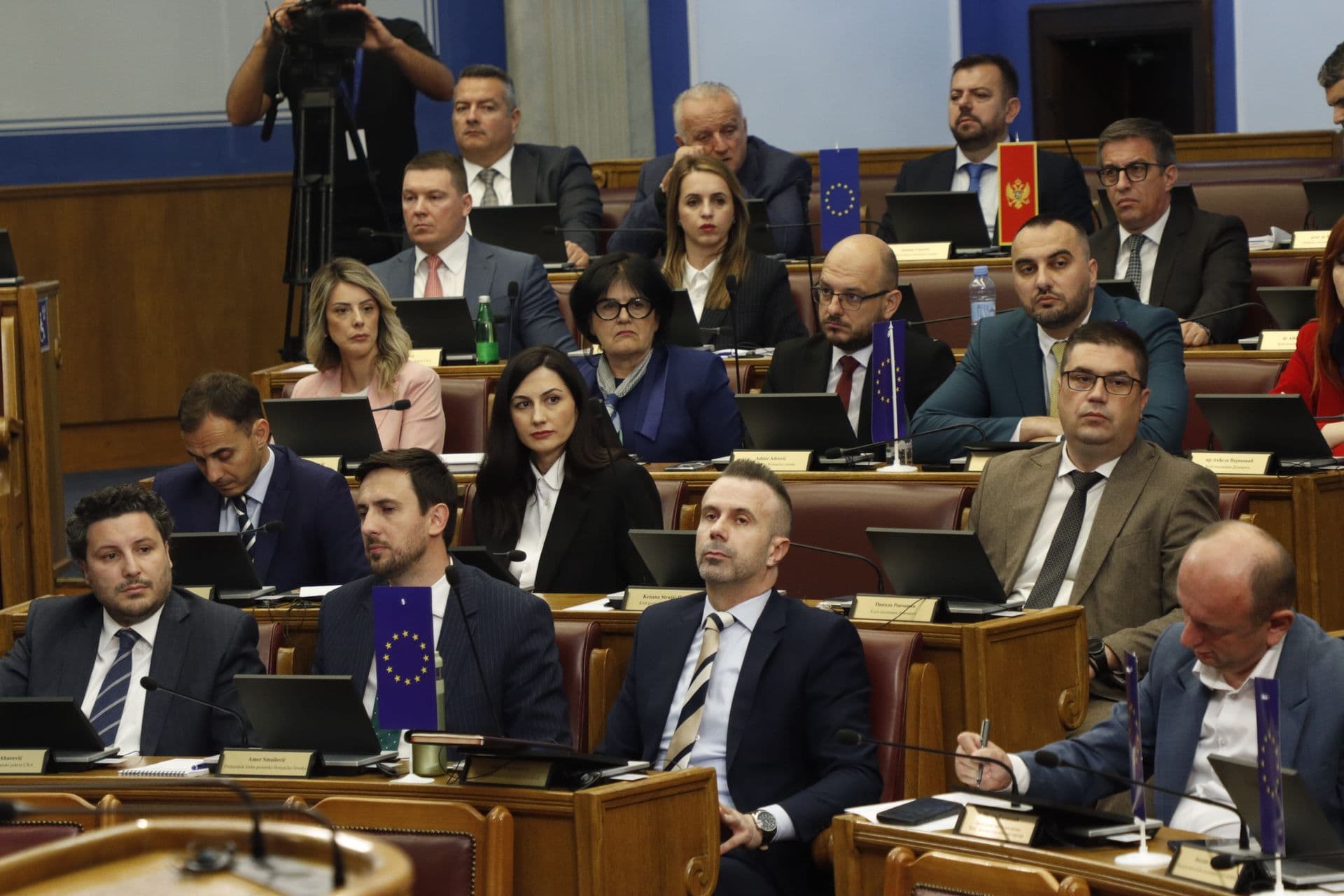
In January 2024, Montenegro had 79 registered political entities, but only a fraction—23 parties in the current parliament—are benefiting from state funding. These parties received a considerable boost last year, with a total of €12 million allocated in two installments, though only €7.56 million was disbursed. An additional €4.44 million is set to be released this year, alongside €13.83 million earmarked for parties, as part of the government’s budgetary provisions.
The funding landscape reveals that these allocations do not include other financial resources available to political parties and their representatives, which come from budgetary expenditures intended for the operation of state and local parliaments. The Agency for Prevention of Corruption (ASK) highlighted that the majority of the 79 political entities in Montenegro have not mandated membership fees to sustain their operations.
State Funding Regulations and Party Financing
Long-established parties, such as the Socialist People’s Party and the Democratic Party of Socialists, maintain mandatory contributions for their members, with fees ranging from €5 to €20, depending on the party or position. Some parties have opted for a percentage-based contribution system relative to their members’ monthly incomes.
Interestingly, many political groups, particularly local initiatives and smaller parties, are not required to collect membership fees, indicating a reliance on alternative funding sources or voluntary contributions for their operations. Out of the 79 political entities, only 23 regularly receive budgetary support due to their parliamentary seats, with funding amounts increasing significantly due to recent legislative changes.
The state is obligated to transfer over €18 million to parliamentary party representatives by the end of the year. This year’s budget reflects a substantial increase in funding for political parties, a result of the new Political Party Financing and Electoral Campaign Law, which raised the percentage of total planned budget funds allocated to parties from 0.5% to 0.8% of a projected total budget of €3.79 billion.
Financial Growth for Minority and Coalition Parties
Comparative data between budget allocations for 2025 and 2026 shows significant increases, with some parties enjoying boosts of up to 130%. Minority parties, including the Croatian Civic Initiative and the Democratic Party of Albanians, have seen their monthly allocations rise dramatically, with previous monthly funds of between €2,800 and €18,600 now increasing to levels between €6,400 and nearly €43,000.
The Socialist People’s Party has also experienced noteworthy growth, with its monthly funding jumping from €28,805 last year to €59,127 this year—an increase of 105%. The coalition formed by the Democrats and the Civil Movement URA will see their funding almost double, with the ruling Democrats set to receive €89,992 monthly, up from €53,136.
Despite these gains, there are still challenges for some opposition parties, such as the Democratic Party of Socialists (DPS), which will receive €181,725 monthly compared to last year’s €112,813. The total budgetary increase for four opposition parties, including DPS, is approximately 61%, rising from €139,358 to €224,484.
The funding landscape in Montenegro illustrates a complex relationship between political entities and state financing. With the majority of parties relying heavily on government support, questions arise regarding whose interests are truly represented, especially as more than two-thirds of political entities lack access to such funding streams.
Women’s organizations within these parties are also experiencing increased financial support, with total monthly allocations rising from €63,818 to €67,507. Each coalition now receives equal monthly funding, increasing from €7,091 to €7,501.
In conclusion, the financial dynamics of Montenegro’s political parties indicate a trend towards reliance on state funding, raising important questions about the sustainability and representation of political interests in the country.