Montenegro is set to implement a new strategic document aimed at improving air quality management over the next several years. The draft strategy for the period from 2026 to 2029, released for public consultation by the Ministry of Ecology, Sustainable Development, and Northern Development, outlines measures to reduce pollutant emissions, align with European standards, and enhance monitoring systems.
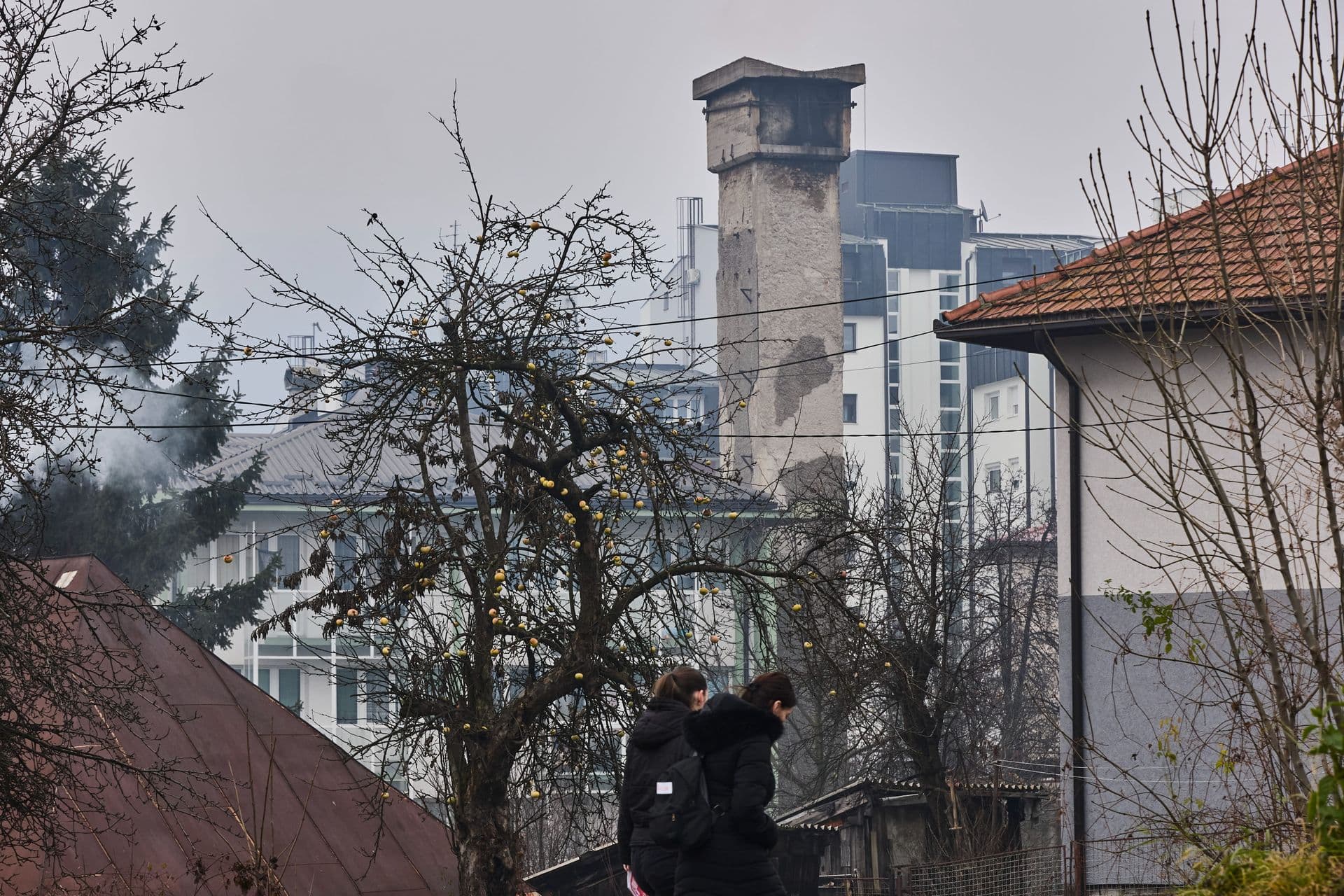
The document highlights that the majority of air pollution from suspended particles in Montenegro originates from household heating. According to the strategy, households account for approximately 84 percent of PM2.5 emissions and 79 percent of PM10 emissions, while their contribution to benzo(a)pyrene emissions is nearly complete at around 99 percent. Additionally, it identifies household heating, energy production, and road traffic as the main sectors generating almost all suspended particle emissions in the country.
While the southern region of Montenegro generally experiences suspended particle concentrations below European limit values, the northern region frequently faces prolonged pollution episodes during winter months. In some years, the number of days exceeding permitted PM10 concentrations has surpassed 100 annually. The strategy notes that air quality remains problematic, particularly in northern areas such as Pljevlja and Bijelo Polje, where the number of days exceeding allowed PM10 levels has often exceeded European standards permitting a maximum of 35 exceedances annually.
The strategy outlines various measures, including reducing emissions from households and transportation, modernizing the energy sector, and developing district heating systems in certain cities. One highlighted project is a district heating system in Pljevlja, estimated to cost several million euros.
Nevertheless, the strategy lacks a consolidated assessment of the total costs for the proposed measures leading up to 2029, and it does not specify how much funding is allocated in the state budget for their implementation. The document proposes incentives for improving energy efficiency and transitioning to cleaner energy sources, emphasizing the importance of household heating as a key area for reducing suspended particulate emissions in the coming years.
This strategy forms part of Montenegro’s commitments under Chapter 27 concerning environmental protection and climate change, regarded as one of the most challenging areas in the country’s EU accession process. The European Union has also introduced stricter air quality standards, which will further lower allowable concentrations of suspended particles and other pollutants.
The Ministry of Ecology faces questions regarding the financial framework and accountability for implementing the air quality management strategy for 2026-2029, as well as the anticipated new nature protection law. Concerns have been raised about the estimated total cost of implementing the strategy and the budget allocation for 2026, the three priority measures for the first year, and the necessary subsidiary legislation to apply the nature protection law.
In addressing these issues, the Ministry of Ecology acknowledges that pollution reduction cannot be achieved solely through technical measures but requires changes in natural resource management and local environmental protection policies. Concurrently, the government has announced a new nature protection law aimed at establishing a clearer system for managing protected areas and aligning national legislation with European directives.
The impact of this new law will depend significantly on its implementation. As Azra Vuković, a representative from the NGO Green Home, points out, the effectiveness of the new nature protection law will hinge on its execution. “While numerous good laws have been enacted in Montenegro, full implementation has often been lacking, leading to numerous adverse environmental consequences,” she stated.
She emphasized that the new law is part of Montenegro’s commitments under Chapter 27 and the need to align with increasingly demanding EU directives on environmental protection and climate change. Vuković noted that the civil sector has not had complete visibility into the law-making process, which raises concerns about transparency and the inclusion of diverse perspectives.
Monitoring air quality and collecting emission data in Montenegro falls under the purview of the Environmental Protection Agency. The strategy relies heavily on monitoring data collected by the agency, alongside emission inventories and databases concerning the state of nature. The agency maintains national registers and information systems covering protected areas, biodiversity monitoring, and nature condition indicators.
The agency reports that Montenegro currently operates nine automatic air quality monitoring stations and one mobile station, distributed across various locations, including two in Pljevlja and three in Podgorica.
The strategy projects that by 2029, emission reductions from suspended particles should lead to fewer days exceeding permissible values in the most affected zones. However, achieving these objectives will largely depend on implementing measures in the household heating, transportation, and energy sectors. The air quality management strategy for 2026-2029 establishes a framework that intertwines emission data, health impact assessments, and proposed pollution reduction measures, determining whether it will serve merely as another planning document or yield tangible improvements in air quality in the cities that grapple with this issue each winter.