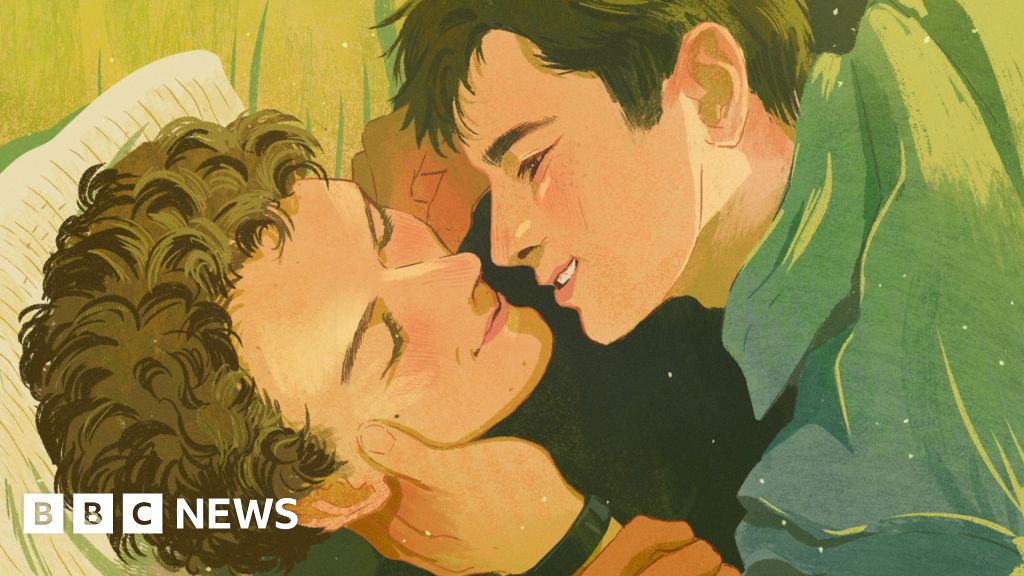
The television series Heated Rivalry has struck a chord with viewers around the world, particularly for its portrayal of a queer romance between elite hockey players Shane Hollander and Ilya Rozanov. The narrative encapsulates a common theme: two boys falling in love amidst the complexities of their environment, culminating in a heartfelt relationship that resonates with a diverse audience.
The show’s success has surprised industry experts and fans alike, particularly in the West, where it has garnered significant attention from women across various demographics. These include straight, queer, and trans viewers, as well as women from different age groups, all drawn to the intimate exploration of queer love depicted in the series. For many, including a fan named Anna, Heated Rivalry resembles the Chinese male-male romance stories she grew up with, known as danmei. Anna describes it as “the best Western danmei show I’ve seen in a long time,” highlighting its emotional depth and the slow burn of romance that characterizes the genre.
The genre of Boys’ Love (BL) has a rich history in Asia, where it has served as a subcultural haven for women and the queer community. This form of storytelling began in Japan’s manga scene in the 1970s and evolved into the yaoi genre, which focuses on male/male romantic relationships primarily written by and for women. Today, this genre thrives through various media, including television adaptations like Heated Rivalry, which some fans jokingly refer to as “Canadian government-funded yaoi.”
The show’s themes resonate deeply with its audience, reflecting struggles against internalized homophobia and the tension between vulnerability and hyper-masculinity. According to Chicca, an illustrator and devoted fan of the genre, the emotional dynamics portrayed in these stories are what captivate viewers. She notes, “The focus is entirely on the emotional dynamics between the characters, their vulnerabilities, and their psychological depth.”
As the internet expanded, Boys’ Love gained a loyal following across East and South East Asia, often in conservative cultures where queer love remains stigmatized. In countries like China, where the creation of gay erotica has led to arrests under censorship laws, fans have turned to underground platforms for their storytelling. Here, they can explore various narratives, from innocent campus romances to fantastical tales of mythical warriors.
Women engaging with Boys’ Love narratives often find empowerment in these stories. Dr. Aiqing Wang, a senior lecturer at the University of Liverpool, describes the allure of being part of a “secret community.” In these spaces, women can create narratives that allow them to explore their desires and challenge societal norms. Wang emphasizes that BL provides a safe environment for women, enabling them to engage with male vulnerability on their terms.
Despite the conservative backdrop in many Asian societies, the popularity of Boys’ Love illustrates a growing acceptance of queer narratives. In Thailand, the genre has transformed into a multi-million dollar industry, projected to generate over 4.9 billion baht (approximately $155 million) by the end of 2025. In contrast, while homosexuality remains less accepted in countries like Japan and South Korea, dedicated social media followings for Heated Rivalry showcase the show’s appeal. Fans have taken to platforms to share fan art, subtitles, and promotional content, amplifying its reach even before an official airing.
The show’s stars, Hudson Williams and Connor Storrie, have garnered idol-like status in regions such as Vietnam and the Philippines, where fans celebrate their birthdays with elaborate festivities and billboards. As LGBTQ+ representation in mainstream media has dwindled, the success of Heated Rivalry highlights an enduring hunger for authentic queer narratives that resonate on a personal level.
With a second season not expected until 2027, viewers are actively seeking out similar content to fill the void. Fans have been exchanging recommendations for various BL shows and literature, reflecting a desire to capture the magic of Heated Rivalry. Anna notes that sometimes, it can be enough to simply see stories that resonate with one’s experiences, providing hope and inspiration for those navigating their own journeys.
The impact of Boys’ Love and shows like Heated Rivalry extends beyond entertainment. They offer a platform for underrepresented communities to envision their own narratives, fostering connection and understanding among diverse audiences. As the conversation around queer representation continues to evolve, the genre’s ability to convey profound emotional truths remains a powerful resource for many.