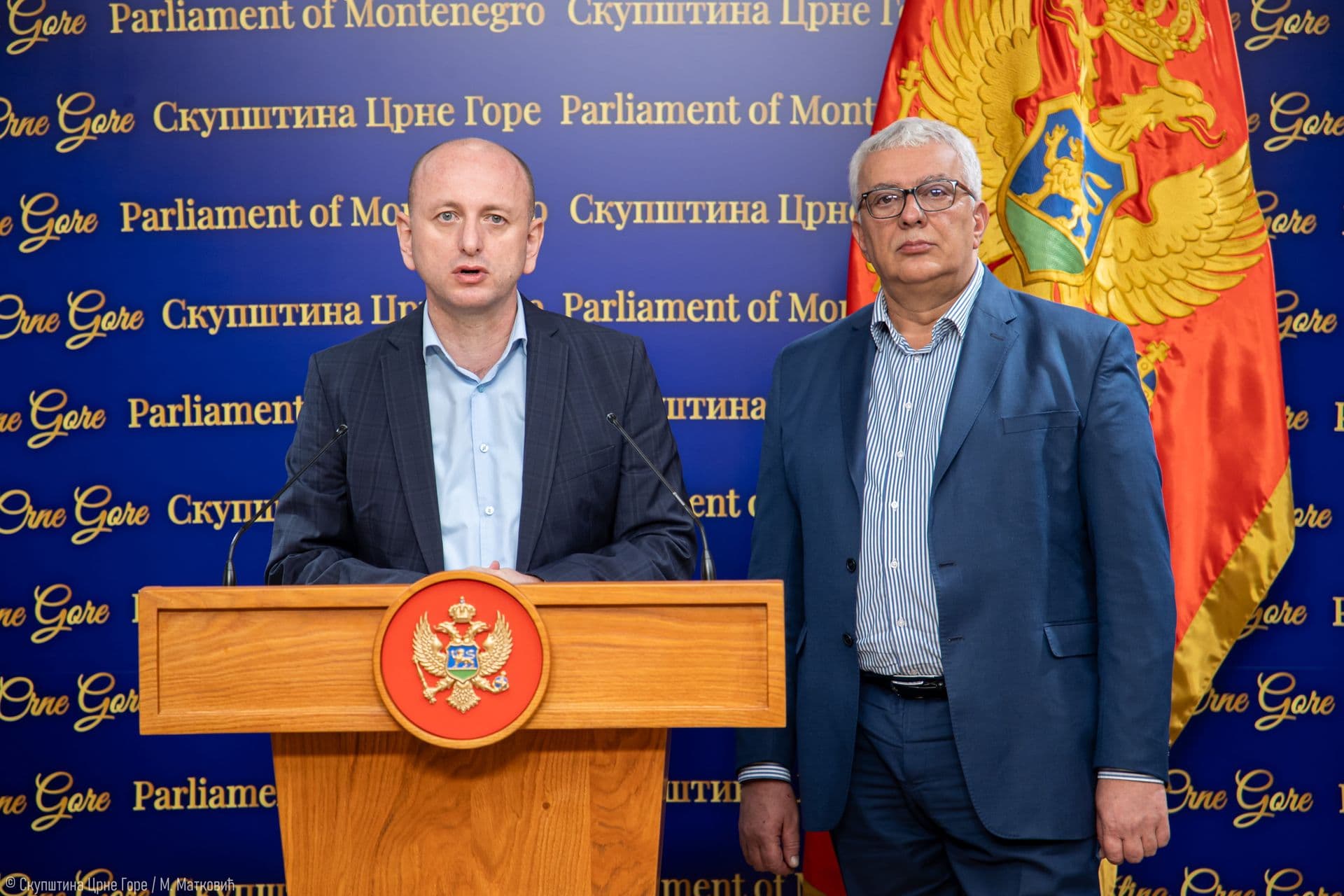
A recent ruling by the Appellate Court in Montenegro has led to the acquittal of several individuals involved in a case known as the “coup attempt.” This decision has drawn significant attention, particularly regarding its implications for regional politics and international relations. The court found that the accused, including Russian nationals Eduard Shishmakov Vadimovich and Vladimir Popov Nikolaevich, along with former Serbian police chief Bratislav Dikić, were not guilty of planning a violent takeover of the Montenegrin Parliament during the 2016 elections.
In an interview with the media outlet Pobjeda, Aleksandar Olenik, an attorney and vice president of the League of Social Democrats of Vojvodina (LSV), expressed his belief that the acquittal serves the interests of both Russia and Serbia. He described Serbia as a “carrier of Russian influence in Europe,” suggesting that the ruling aligns with Moscow’s political objectives. Olenik pointed out that the decision could undermine Montenegro’s sovereignty and signal a continuation of foreign interference in its internal affairs.
According to Olenik, nine individuals involved in the initial trial had previously acknowledged their participation in the coup, which raises questions about the legal reasoning behind the court’s recent judgment. He argued, “If nine people have confessed to committing a crime, it is a logically unsustainable position to claim that others did not participate.” This sentiment reflects broader concerns about the integrity of the judicial process and its susceptibility to political narratives.
Beyond the courtroom, the acquittal has prompted reactions from political analysts, including Croatian expert Aleksandar Mucić, who suggested that such decisions often receive “subtle signals from abroad.” Olenik, however, emphasized the idea that any external influence likely originated from Russian interests, facilitated through Serbia.
International Reactions and Implications
The response from European and international partners has been notably quiet in light of the ruling. Olenik noted that both the British Foreign Office and the U.S. State Department had previously labeled the attempted coup as a prime example of Russian malign influence, stating their position has remained unchanged since 2016. He remarked, “In respectable countries, particularly in diplomatic relations, a valid ruling would typically be accepted without extensive commentary.”
Among those acquitted are the two Russian agents, Shishmakov and Popov, whose activities have been scrutinized by global media amid tensions in Moldova, Georgia, and Poland. Olenik suggested that their release sends a concerning message to Vladimir Putin, indicating that Russian operatives can operate with impunity in Montenegro and across Europe.
Olenik further addressed the broader geopolitical context, asserting that Montenegro’s NATO membership has exacerbated Russia’s attempts to destabilize the country. He believes that Serbia is complicit in executing Russia’s directives, although he expressed confidence that neither country possesses the capacity to significantly disrupt Montenegro’s stability.
Future Prospects for Montenegro
Looking ahead, Olenik sees the current political climate as a potential opportunity for Montenegro. He argued that the country should seize the moment to pursue European Union membership by 2028, particularly as both Russia and Serbia may weaken in the coming years. He stated, “This is the right moment for Montenegro to accelerate its EU accession, as neither Russia nor Serbia, particularly under Aleksandar Vučić, will be stronger than they are now.”
The recent ruling by the High Court, which dismissed charges against the accused, followed a lengthy legal process that began with an indictment in April 2017. This indictment had alleged that a criminal organization, in collaboration with the Democratic Front, planned to engage in violent confrontations with Montenegrin police, seize the Parliament, and even kidnap or assassinate then-Prime Minister Milo Đukanović. The initial judgment had resulted in significant prison sentences for several individuals involved, including lengthy terms for Shishmakov and Popov, who were identified as the main organizers.
As the political landscape in Montenegro continues to evolve, the implications of this ruling will likely resonate throughout the region, influencing both domestic policies and international relations. The dialogue surrounding external influence, national sovereignty, and the future trajectory of Montenegrin governance remains a critical focus for policymakers and analysts alike.