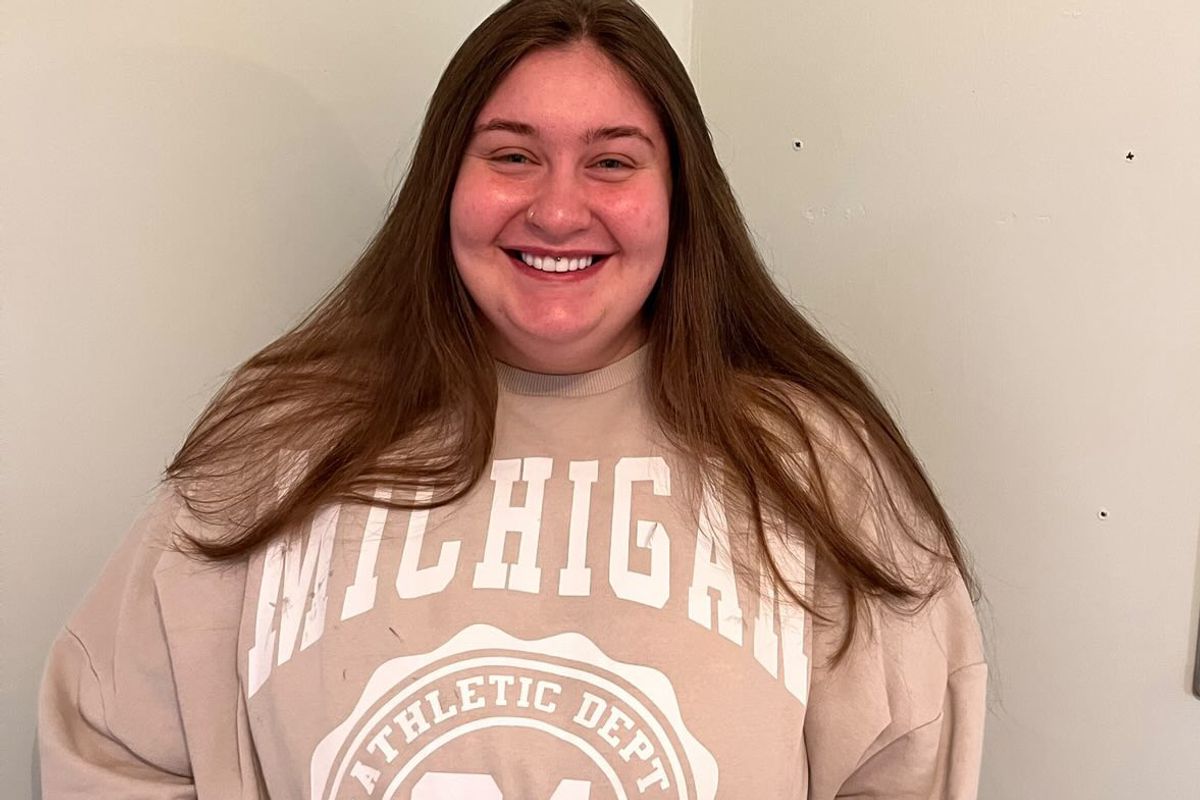
Sassy Smith, a therapist from Bournemouth, has lived with a rare condition known as aphantasia, which prevents her from picturing images in her mind. This unique cognitive difference, affecting an estimated 1% to 5% of the population, has led to significant challenges in recalling memories from her childhood and other significant life events. Smith, who is now 56, only discovered her condition at the age of 50, which helped clarify many confusing aspects of her life.
Aphantasia is often accompanied by another condition called severely deficient autobiographical memory (SDAM). Smith describes her childhood memories as a series of “knowings,” acknowledging events that occurred but unable to visualize them. “I know my friends and I made camps on a road near my house, but I don’t remember doing that,” she shared. This lack of visual recall extends to personal milestones, including her wedding to husband Russell in 2005, where she struggles to remember significant moments like their first dance.
A Scientific Exploration of Aphantasia
The term aphantasia was first introduced by Professor Adam Zeman of Exeter University in 2015. His research began after encountering a patient who lost the ability to visualize following a cardiac procedure. Zeman’s studies suggest that individuals with aphantasia have differences in brain connectivity that affect how they process visual information. A recent study conducted at the Paris Brain Institute utilized ultra-high-field functional MRI scans to observe brain activity in individuals with aphantasia. The findings, published in the journal Cortex, indicated that while areas of the brain associated with memory and visual processing were activated, communication between these regions was significantly reduced.
Jianghao Liu, a cognitive neuroscientist involved in the study, explained that this reduced connectivity may clarify why those with aphantasia can accurately recall factual knowledge about objects but cannot form mental images. Smith resonated with this idea, reflecting on her experiences of not being able to visualize her beloved stepfather, Derek, who passed away from cancer in 2011. “I remember someone saying to me that I seemed to have moved on pretty quickly and hadn’t really grieved, which I found a bit hurtful,” she recalled.
Finding Community and Understanding
The journey to understanding her own cognitive differences was not immediate for Smith. It wasn’t until she began therapy in 2019, following a period of stressful events, that she connected her struggles to her brain’s unique wiring. “I realized this was all down to a difference in how my brain worked,” she said. When her therapist encouraged her to visualize childhood experiences, Smith recognized the futility of the exercise, as she could not create images in her mind.
Discovering Zeman’s work on aphantasia in the years prior was a pivotal moment for her. She realized that her experiences aligned with others who identified as aphantasic. Smith reached out to these individuals through social media, finding comfort in shared experiences. She highlighted the emotional toll of not being able to visualize the faces of loved ones, particularly as her parents age. “I’m terrified knowing I won’t be able to picture them or relive memories of our time together after they die,” she admitted.
To cope with these fears, Smith has taken numerous photos and videos of her family, ensuring that she has tangible memories to hold onto. She hopes to raise awareness about aphantasia and the fact that not everyone can visualize memories or have an inner voice, which drove her to retrain as a therapist.
In her book, Unseen Minds: A Therapist’s Guide To Multisensory Aphantasia And Invisible Cognitive Differences, Smith details her journey and offers insights into living with these conditions. Her goal is to foster understanding about the diverse ways people experience memory and cognition, ultimately highlighting that differences in mental processing are not impairments but rather variations in human experience.