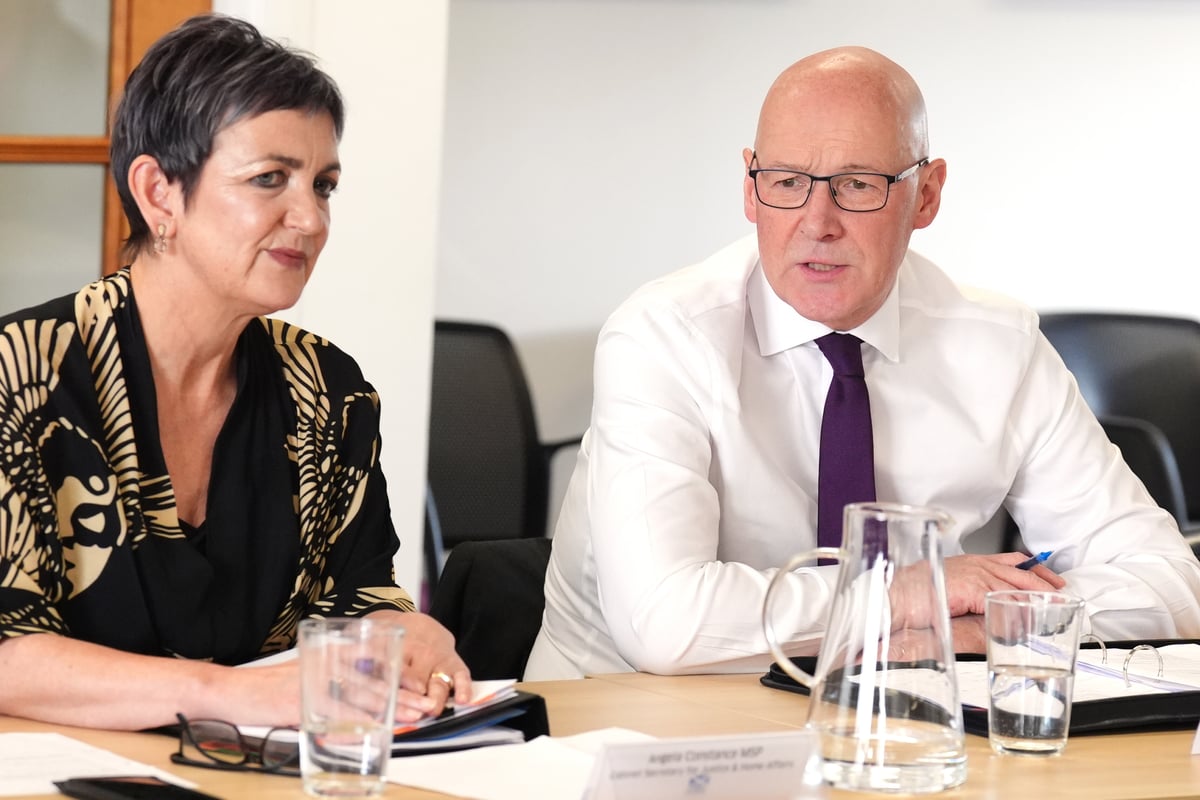
Public sentiment in Scotland has shifted dramatically as the Scottish Government has announced a full public inquiry into the prevalence of group-based child sexual abuse and exploitation. This decision comes just months after Justice Secretary Angela Constance stated there was no need for such an inquiry, asserting there was no evidence of widespread grooming gangs operating in Scotland.
On September 16, 2023, Constance referred to leading expert Professor Alexis Jay, claiming she supported the government’s stance against further inquiries. However, it was later revealed that Professor Jay’s comments had been misrepresented, as they pertained to the situation in England rather than Scotland. Despite the misleading nature of her statements, Constance faced no repercussions, and the Scottish National Party (SNP) appeared to continue on its established path.
In a surprising turn of events, Education Secretary Jenny Gilruth announced the inquiry during a session at the Scottish Parliament. Dressed in a sober suit, she vowed to “leave no stone unturned in the pursuit of justice.” In an unexpected twist, she revealed that Professor Jay would lead the statutory inquiry, while John O’Brien would manage a truth project aimed at prioritizing the voices of survivors.
The timing of this announcement raises questions. Critics suggest that Gilruth’s reversal may be more politically motivated, particularly with elections approaching in less than three months. Grooming gangs have been a longstanding issue, highlighted by revelations from Rotherham and other English towns a decade ago. At that time, campaigners contended that Scotland was failing to adequately investigate these abuses, a claim the Scottish Government dismissed.
Recent reports, including a 2022 investigation by Sky News, described organized child sexual abuse as a “hidden pandemic” in central Scotland. Despite this, the government had previously chosen not to pursue a public inquiry. Survivors like ‘Taylor’ have begun sharing their harrowing experiences, revealing a pattern of abuse by groups of men while in the care system. Others, such as Holly Alex, have similarly detailed their traumatic experiences in care in her memoir, “I Thought You Cared.”
Until recently, ministers maintained that the existing systems were functioning adequately, often dismissing calls for a public inquiry. Yet, as pressure mounted from survivors and advocates, the prospect of sexual exploitation becoming a campaign issue seems to have prompted the government’s change of heart.
One of the most vocal advocates for a thorough inquiry has been Joani Reid, the Labour MP for East Kilbride. While she welcomed the announcement, she expressed frustration over the prolonged delay in addressing these serious issues. Reid emphasized that the focus should be on examining the system rather than defending it, stating, “The SNP has been in government for nearly two decades. Child protection, policing, social work – these are devolved responsibilities. Accountability sits in Edinburgh.”
She further asserted that the inquiry must be properly resourced, genuinely independent, and adhere to a clear timetable. All relevant parties—including police, councils, ministers, civil servants, and publicly funded charities—must be open to scrutiny.
The rise in reported sexual crimes in Scotland underscores the urgency of this issue. Recent statistics from Police Scotland indicate a 10 percent increase in sexual offenses, alongside a 20 percent rise in the possession of indecent images of children. Reports of rape and attempted rape continue to climb, raising alarm about the rising levels of sexual exploitation and abuse.
While Gilruth and her colleagues may have initiated this inquiry out of necessity, it is crucial that the process is conducted with sincerity and diligence. Public agencies, including social work departments and the Scottish Government, must be held accountable for any failures in the system. The inquiry has the potential to deliver significant reforms aimed at protecting vulnerable children.
Scotland’s public deserves more than performative government actions; they require effective services that genuinely safeguard women and girls. As this inquiry unfolds, the key question remains: will Scotland’s children be safer as a direct result of its findings? The answer must be a resounding yes.