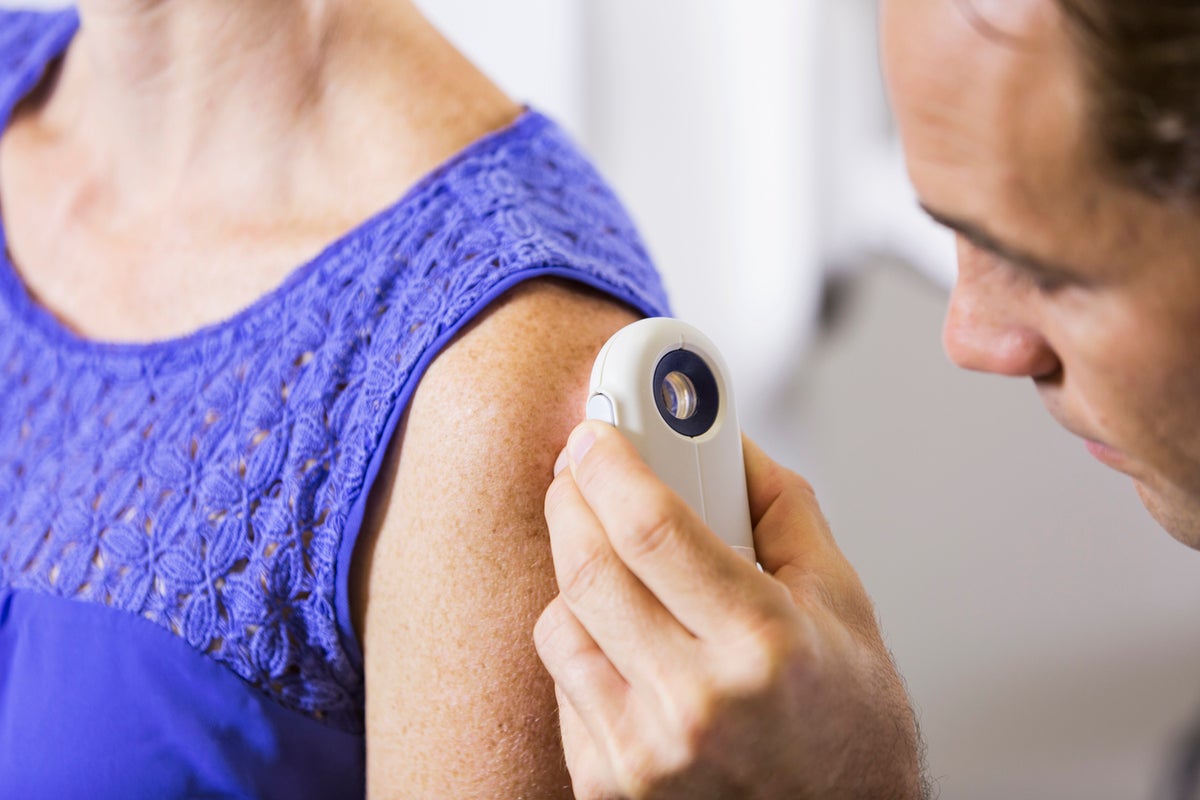
Television presenter Adrian Chiles recently underwent surgery to remove a cancerous patch from his shoulder, drawing attention to the often-overlooked dangers of skin cancer. His diagnosis, confirmed as squamous cell carcinoma, emphasizes the critical need for greater public awareness regarding the condition and its early warning signs.
Skin cancer is the most prevalent form of cancer in the UK, claiming around 2,100 lives annually. Despite its widespread impact, a staggering 77 percent of the population cannot identify the symptoms of melanoma, a malignant skin cancer, according to the British Association of Dermatologists (BAD). This lack of awareness can have dire consequences, as early detection significantly improves survival rates.
Chiles noted that he discovered the suspicious patch himself, which prompted a biopsy that confirmed the presence of cancer. He stated, “It was a shock to learn I had skin cancer, but I am grateful for early detection.” His experience highlights the importance of self-examination and regular skin checks, especially for those with a history of sunburn.
The rise in skin cancer diagnoses is alarming. Cancer Research UK predicts a 50 percent increase in cases by 2040, driven largely by the boom in affordable package holidays that began in the 1960s. Between 2017 and 2019, diagnoses reached a record high of 17,545 annually, with projections suggesting this figure could escalate to 26,531 by 2040.
There are two primary types of skin cancer: melanoma, which accounts for around 13,000 new cases each year in the UK, and non-melanoma cancers, which exceed 100,000 cases annually. The risk of developing melanoma doubles for individuals who have experienced five or more sunburns at any age, as highlighted by the Skin Care Foundation. Notably, experiencing just one blistering sunburn during childhood or adolescence more than doubles the likelihood of developing melanoma later in life.
Non-melanoma skin cancers primarily manifest as basal cell carcinoma, responsible for approximately 75 percent of cases, and squamous cell carcinoma, which accounts for around 20 percent. The principal cause of these cancers is overexposure to UV radiation.
Despite the serious risks, nearly three-quarters of individuals surveyed by BAD admitted to suffering from sunburn in the past year. Alarmingly, 40 percent reported never checking themselves for signs of skin cancer. This highlights a significant gap in public knowledge regarding skin health.
To recognize potential signs of skin cancer, it is essential to be vigilant about changes in the skin. Key indicators include any new, unusual, or changing moles or patches, particularly those that are asymmetrical, have irregular borders, or vary in color.
Chiles’ diagnosis serves as a vital reminder for everyone to prioritize skin health. Regular self-examinations and consultations with healthcare professionals can lead to early detection and improved outcomes for those affected by skin cancer. Awareness, education, and proactive health measures are crucial in combating this prevalent disease.