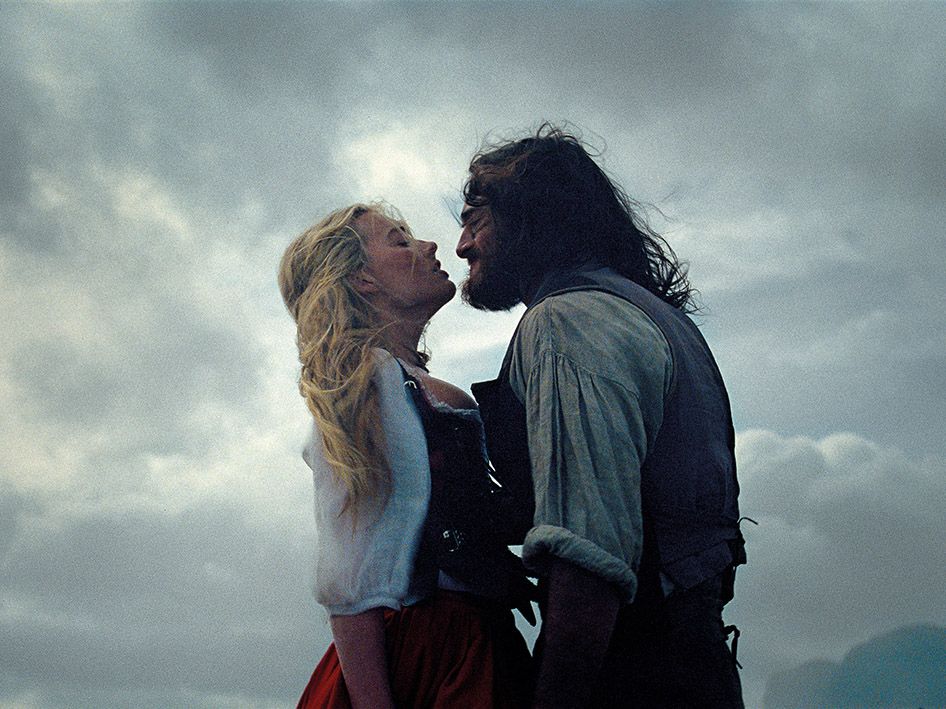
The upcoming film adaptation of Wuthering Heights, directed by Emerald Fennell, promises to delve into the profound themes of obsession and emotional extremity present in Emily Brontë‘s classic novel. The marketing campaign has already sparked interest by invoking the phrase “Drive me mad,” spoken by the tortured character Heathcliff. This sentiment encapsulates the novel’s intense exploration of love and grief, particularly following the death of Heathcliff’s beloved Catherine.
The novel, first published in 1847, portrays a tumultuous relationship marked by unfulfilled desire and psychological torment. Heathcliff’s plea to Catherine’s ghost—“I know that ghosts have wandered on Earth. Be with me always – take any form – drive me mad!”—highlights the depths of his passion. Following her death, he exhibits extreme emotional instability, even resorting to self-harm.
Fennell aims to capture what she describes as the “primal, sexual” elements of the narrative. Yet, it is crucial to note that the profound love between Heathcliff and Catherine remains largely unconsummated throughout the novel. Their bond is forged in childhood, and by the time Catherine becomes engaged to Edgar Linton at the tender age of 15, Heathcliff is devastated. His departure from Wuthering Heights, where the story unfolds on the desolate Yorkshire moors, lasts three years.
Upon his return, he finds Catherine married and gravely ill. Their reunion, observed by housekeeper Nelly Dean, is fraught with urgency as Heathcliff expresses his love through fervent kisses, despite the reality of Catherine’s pregnancy and impending death. This complicated portrayal of desire and the unspoken realities of marital life add layers to the narrative that film adaptations often struggle to convey.
The novel’s intricate structure complicates the portrayal of events. Much of the story is narrated by Nelly Dean to Lockwood, a tenant at Thrushcross Grange, the Lintons’ former home. This framing technique creates a dizzying effect, as layers of storytelling unfold. Lockwood’s perspective and Nelly’s accounts distance the reader from definitive authorial judgment, leaving interpretations of the characters’ actions open-ended.
Heathcliff’s declarations of love often border on the absurd, emphasizing his emotional intensity. He contrasts his feelings for Catherine with Edgar’s, claiming, “If he loved with all the powers of his puny being, he couldn’t love as much in 80 years, as I could in a day.” This hyperbolic expression underscores the novel’s exploration of passion, which is often intertwined with violence.
The narrative traverses a complex timeline, beginning in 1801 and reaching back into the late 18th century, challenging the reader’s perception of time and emotional resonance. Brontë’s meticulous attention to detail, especially regarding the weather and seasons, further immerses readers in the story’s setting, lending a sense of realism that contrasts sharply with the characters’ tumultuous lives.
Lockwood’s initial observations reveal a place “completely removed from the stir of society.” This isolation becomes a breeding ground for intense emotions, as encapsulated in Heathcliff’s declaration, “My mind is so eternally secluded in itself.” Rather than a pure love story, Wuthering Heights is fundamentally a narrative of hatred and revenge.
Fennell’s adaptation may focus on the novel’s mid-point, concluding with Catherine’s death and foregoing the later developments that include Heathcliff’s revenge and the eventual redemption of characters like Hareton Earnshaw and Catherine Linton. This decision could lead to a more straightforward but potentially less nuanced interpretation of Brontë’s themes.
As the film nears its release, the challenge remains to authentically capture the novel’s complexity. Critics have long noted that adaptations struggle to reflect the depth of violence and emotional turmoil present in Brontë’s work. Initial reviews of the novel described it as both compelling and disturbing, with one commentator noting its “shocking pictures of the worst forms of humanity.”
The phrase “the reality of unreality” aptly encapsulates the essence of Wuthering Heights. As audiences prepare to experience Fennell’s interpretation, they will be reminded of the novel’s enduring ability to transport readers to a time and place that, while steeped in emotional intensity, remains hauntingly distant.