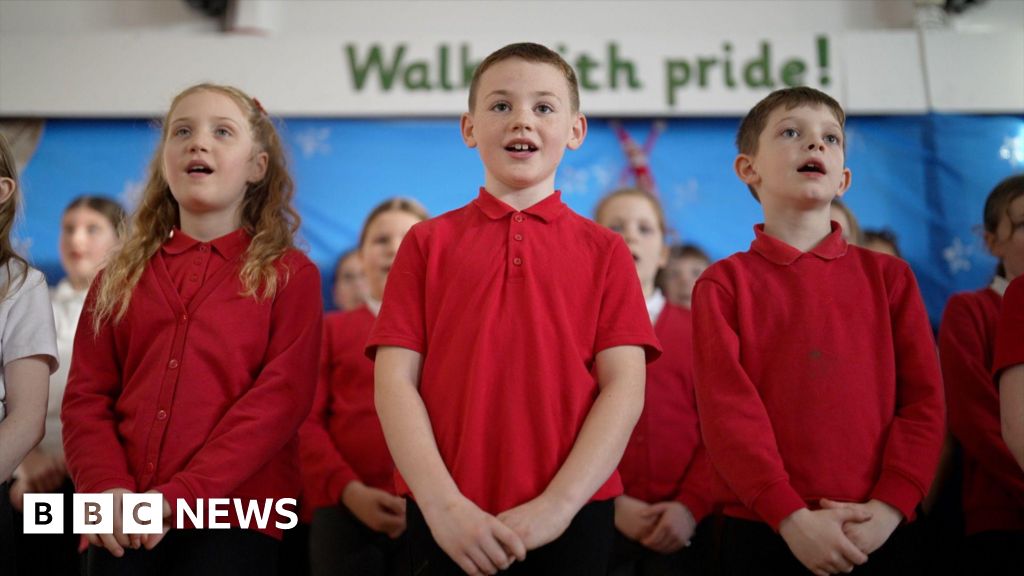
Music educators in England are calling for schools to incorporate singing into their programs year-round, rather than limiting it to festive occasions such as Christmas. Recent data reveals a significant decline in singing activities among students, particularly after they transition from primary to secondary education.
According to a survey conducted by Teacher Tapp, which included nearly 10,000 teachers, over half of state secondary school educators—57%—reported that their students never sing together during assemblies. In contrast, only 4% of primary school teachers indicated the same. This stark difference highlights a growing disconnect in music engagement as students advance in their education.
The Music Teachers Association is advocating for every school to establish a choir to sustain students’ musical involvement throughout their academic journey. This initiative comes as the popularity of music as a subject has noticeably waned, with a 25% drop in students opting for GCSE music courses over the past fifteen years, despite recent improvements in enrollment statistics.
Many educators attribute this decline, in part, to the introduction of the English Baccalaureate in 2010, which emphasizes core subjects like English, maths, and sciences over arts education. In response, the government has announced plans to revise the school curriculum to facilitate greater access to arts subjects, including music.
Challenges in Music Education
The issue of music education is further complicated by staffing shortages. While recruitment of new music teachers has improved this year, the current numbers still fall 35% short of the government’s target for trainee music teachers. James Manwaring, president of the Music Teachers Association and director of music at the Windsor Learning Partnership, stresses the importance of having a choir in every school.
“All you need is a room and someone to lead it,” Manwaring stated. “It’s a shame to think some state schools aren’t capitalizing on that.” He believes that recent curriculum changes present exciting opportunities for enhancing music education, but cautions that additional funding and resources will be essential to support these efforts and retain skilled music instructors.
At the East Manchester Academy, head teacher Jackie Bowen recognizes the challenges students face as they move into secondary education. “Pupils can feel embarrassed or think it’s not cool to sing,” she said. Despite this, Bowen emphasizes the intrinsic value of music for students’ development and mental health. The academy has implemented various initiatives to promote music, including a weekly music hub featuring specialists from the Royal Northern College of Music.
Students at the academy are also exposed to classical music during lesson transitions, replacing the traditional school bell. Furthermore, the school has recently established its first gospel choir, fostering a supportive environment for musical expression.
Year 11 student Mercy, a member of the choir, expressed her desire to continue singing in secondary school. “In primary, they say you have to sing, but when you come to secondary, it’s a choice, so most people don’t do it,” she shared. “I feel like we should all release our voices to the world. Whether you’re good or not, just sing.”
Government Initiatives and Future Prospects
The government’s commitment to revitalizing music education includes a financial investment aimed at improving access to musical instruments and high-quality teaching. A spokesperson from the Department for Education stated that they are working to ensure that arts education is not limited to a privileged few, emphasizing that millions are being allocated to support music education through initiatives like Music Hubs.
As schools across England begin to adapt to the proposed curriculum changes, the hope is to reverse the trend of declining music participation among students. With educators advocating for more inclusive music programs, the future of singing in schools may hold greater promise for the next generation of students. By fostering a culture of musical engagement, schools can contribute significantly to the holistic development of young learners, encouraging them to embrace the joys of singing beyond the festive season.