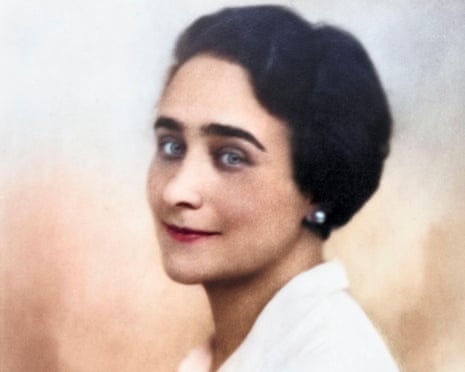
In a significant move for literary rediscovery, Gabriele Tergit’s “The Effingers” has been translated into English, providing readers with a vivid portrayal of Berlin’s Jewish community before the rise of the Nazis. Originally published in 1951, this novel has only recently gained recognition as a major work in German literature, thanks in part to the skilled translation by Sophie Duvernoy.
Tergit, a Jewish author born in Berlin, faced immense upheaval in her life following the Nazi rise to power. After her debut novel in 1931, she became a prominent figure in the city’s literary and journalistic scenes. Yet, by 1938, she was forced to flee Germany, eventually settling in London, where she lived until her death in 1982. Her return to Berlin in 1948 revealed a city transformed by war, with little room for her literary contributions in the conservative postwar landscape.
“The Effingers” chronicles the lives of four generations of the Effinger family, Jewish industrialists navigating the complexities of Berlin high society from the 1870s through the 1930s. Central to the narrative is Paul Effinger, who seeks success in industry, marrying into the elite Oppner-Goldschmidt family. The novel paints a rich tapestry of life during what is often described as a golden age for assimilated Jews in Berlin, juxtaposed against a backdrop of rapid societal changes, including urban growth, technological advances, and rising antisemitism.
As the story unfolds, Tergit captures the profound shifts in Berlin society during these decades. Her narrative style features short, dialogue-driven chapters that shift between perspectives, revealing the multifaceted nature of the characters’ experiences. Tergit skillfully avoids a singular point of view, presenting a nuanced exploration of the period’s political and economic instability.
The author’s attention to detail enriches the novel, illustrating the vibrant social scene of pre-Nazi Berlin through meticulous descriptions of fashion, food, and the intricacies of social interactions. Tergit’s characters engage in intellectual debates, reflecting the values of the time, from liberal cosmopolitanism to varying interpretations of Judaism.
When fascism begins to take hold, Tergit presents it not as an abrupt change but as an unsettling continuity of existing societal trends. Her portrayal of the emergence of Nazism is complex, emphasizing the historical and social factors that contributed to its rise rather than depicting it as a clear-cut battle of good versus evil.
In a letter to a publisher in 1949, Tergit stated that “The Effingers” is “not the novel of Jewish fate, but rather a Berlin novel in which very many people are Jewish.” This assertion reflects her intention to frame the Jewish experience within the broader context of Berlin’s history, resisting the narrative of inevitable tragedy.
Tergit’s skepticism towards Zionist nationalism also permeates the novel, particularly through the character of Uncle Waldemar, who defends the assimilated Jewish identity against ethnic nationalisms. The author’s own journey to Palestine in 1933, where she felt at odds with many Zionist emigrants, further informs her critique of the movement’s approach to Jewish identity.
“The Effingers” serves as both a family saga and a critical reflection on the cultural and political landscape of early 20th-century Berlin. It challenges readers to reconsider the narratives surrounding Jewish life in Germany, asserting that the destruction of Jewish Berlin was not a foregone conclusion.
With its rich historical context and vibrant character portrayals, “The Effingers” is more than a recounting of a family’s tragedy; it is a powerful statement on the resilience of Jewish identity in the face of adversity. The novel is now available from Pushkin Press for £20, marking an important addition to the canon of literature that examines the complexities of Jewish life in pre-Nazi Germany.