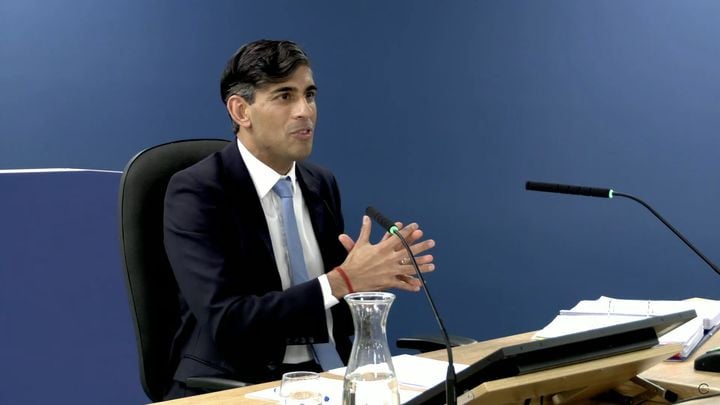
Rishi Sunak, the former Chancellor of the United Kingdom, expressed unwavering support for the government’s Covid-19 business loan scheme, stating he would make the same decisions again despite ongoing criticisms regarding fraud risks. This assertion came during his testimony before the UK Covid-19 Inquiry, where the focus has shifted to the economic measures implemented during the pandemic.
In his second day of evidence at the inquiry, Sunak defended the Bounce Back Loan Scheme, which was launched in 2020 to provide financial assistance to businesses affected by the pandemic. The scheme has faced scrutiny due to concerns that it facilitated fraudulent claims, with billions of pounds potentially lost to scammers.
Sunak highlighted the urgency of providing financial support at the onset of the pandemic, arguing that the government had to act quickly to safeguard jobs and businesses. “The situation was unprecedented,” he stated, emphasizing the need for rapid response measures. He acknowledged that while the risks of fraud were significant, the priority was to ensure that businesses had access to the funds they desperately needed to survive.
The Bounce Back Loan Scheme allowed small and medium-sized businesses to borrow up to £50,000 with a 100% government guarantee. This initiative was part of a broader package of economic support measures, which included furlough schemes and grants. Sunak noted that these efforts were designed to prevent economic collapse and preserve jobs during a critical time.
As the inquiry continues, it is expected to delve deeper into the implications of the loan scheme and the government’s overall economic strategy during the pandemic. The investigation aims to determine the effectiveness of the financial responses and the lessons that can be learned to improve future crisis management.
Critics of the scheme argue that the government should have implemented stricter verification processes to mitigate fraud risks. Reports estimate that up to 40% of loans issued under the scheme could be fraudulent, raising concerns about the financial oversight.
Sunak’s testimony reflects the ongoing debate surrounding the balance between rapid economic support and the need for robust safeguards against fraud. As the inquiry progresses, its findings may have significant implications for future fiscal policies and crisis management in the UK. The discussion surrounding these issues remains crucial for understanding the impact of government responses on the economy and public trust.