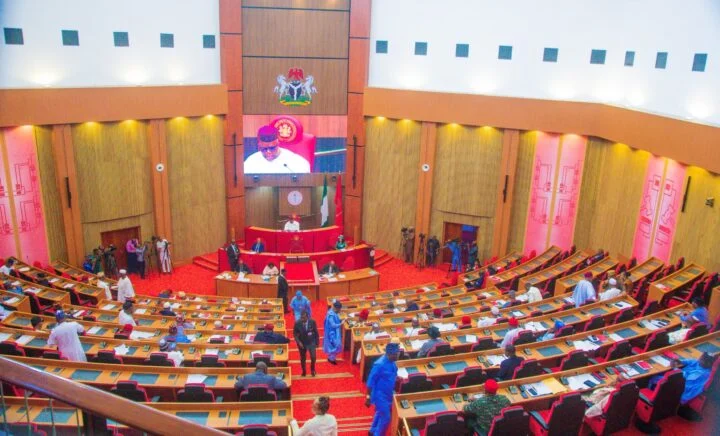
The Nigerian Senate has signaled its intent to reduce the proposed N58.472 trillion budget for 2026, citing unrealistic revenue projections and a lack of confidence in oil performance benchmarks. This warning emerged during a heated session between the Senate Committee on Appropriations and the federal government’s economic team, where lawmakers scrutinized the underlying assumptions of the budget proposal.
During the discussions, Senator Solomon Adeola, chairman of the Senate Committee on Appropriations, expressed concern about the significant discrepancy between projected and actual oil revenues. He highlighted previous fiscal years where performance dipped to as low as 18 percent and 36.5 percent, far below expectations. “How do we explain this level of underperformance?” Adeola questioned, suggesting that the Senate might need to adjust the budget to reflect more realistic targets.
In a related development, the National Assembly proposed a take-off grant of N1.5 trillion for the Federal Ministry of Art, Culture, Tourism and the Creative Economy (FMACTCE). This initiative aims to reposition the sector as a crucial driver of economic diversification to reduce Nigeria’s reliance on oil revenue. During the ministry’s budget defense, Minister Hannatu Musa Musawa projected that the sector could contribute $100 billion to Nigeria’s Gross Domestic Product (GDP) and create over 2.5 million jobs by 2030.
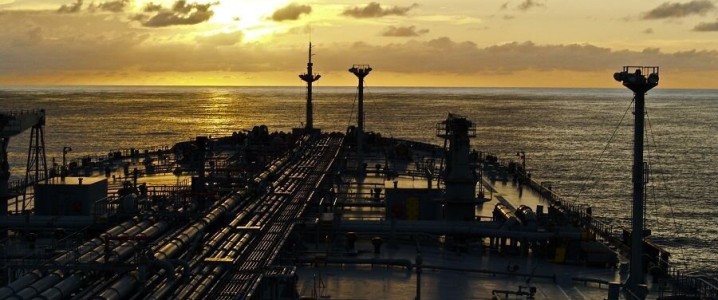
The session featured intense questioning of the government’s oil production benchmark of 1.84 million barrels per day, which Mr. Wale Edun, Minister of Finance and Coordinating Minister of the Economy, defended as a “stretch target.” He stated that this target encourages higher performance and ensures that spending aligns with actual revenue.
Edun emphasized that security spending is prioritized in the proposed budget and noted that emergency funding has been allocated for critical military procurements. He reassured the Senate that Nigeria is moving towards economic recovery, with projected growth of about 4 percent, easing inflation, and improved foreign reserves. He also mentioned a significant investment commitment from Shell, amounting to $20 billion, as a positive sign for the economy.
In response to concerns about unrealistic revenue assumptions, Dr. Zacch Adedeji, chairman of the Nigeria Revenue Service, echoed lawmakers’ sentiments. He cautioned that budget performance suffers when revenue projections are overly optimistic. “Budget efficiency is not in the size of the budget; it is in what you can implement,” Adedeji stated, urging lawmakers to ensure that revenue expectations are grounded in reality.
The Senate also revisited issues surrounding poor capital budget implementation in previous years, which lawmakers described as minimal. Minister of State for Finance Dr. Doris Nkiruka Uzoka-Anite assured the Senate that outstanding components from the 2024 and 2025 budgets would be fully executed by March 31, 2026. She confirmed that payments for 2024 capital projects would commence immediately.
As discussions progressed into a nearly two-hour closed-door session, the Senate indicated that unless the executive provided revised, realistic assumptions regarding revenue, the proposed budget might face significant cuts.
Chairman of the National Assembly Joint Committee on Culture, Art and Creative Economy Senator Mohammed Onawo stated that the legislature is prepared to engage with President Bola Tinubu on the need for substantial seed capital to allow the ministry to function independently. He emphasized the importance of determining funding requirements for the ministry to minimize dependence on federal allocations.
The committee’s recommendation for a N1.5 trillion funding package underscores the potential of the creative and tourism sectors to transform Nigeria’s economic landscape. With adequate funding and strategic reforms, lawmakers believe the ministry could emerge as a significant revenue-generating entity for the government.