Saudi Arabia has recently signed agreements with the Syrian Petroleum Company to revitalize and develop Syria’s oil and gas fields. This move is part of a broader strategy orchestrated by the United States and the United Kingdom following the removal of President Bashar al-Assad in December 2023. Rather than pursuing another military occupation akin to Iraq, Western powers aim to establish a reconstruction model led by influential Arab states, with Western companies providing technical support.
The agreements signal a significant shift in regional dynamics. With the United Arab Emirates (UAE) taking an early lead in Syria’s gas sector, Riyadh’s involvement in oil and gas development further aligns with Washington’s efforts to reshape its influence in the Middle East. The goal is not only to stabilize Syria but also to integrate it into a framework of Arab-Israeli normalization, reminiscent of initiatives from the previous U.S. administration.
Saudi Arabia’s Ministry of Energy is directly overseeing the operational aspects of these agreements, which involve key companies such as TAQA, ADES Holding, Arabian Drilling, and the Arabian Geophysical and Surveying Company (ARGAS). These firms are set to provide a range of services, including seismic surveying, drilling operations, and workforce training.
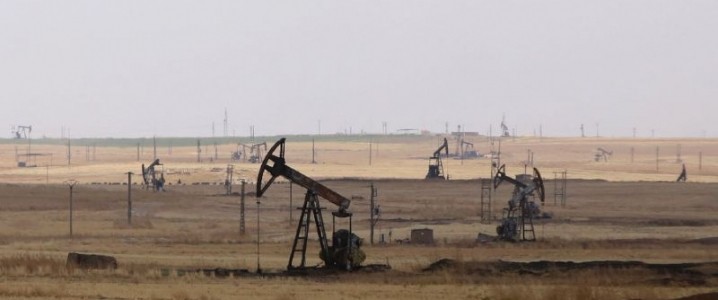
ARGAS will perform 2D and 3D seismic surveys to support exploration, while Arabian Drilling will supply drilling rigs and personnel training. TAQA will offer integrated solutions for field construction and maintenance, and ADES Holding will initially focus on increasing output from five critical gas fields: Abu Rabah, Qamqam, North Al-Faydh, Al-Tiyas, and Zumlat al-Mahar.
These developments follow the UAE’s preliminary agreement with Syria’s state oil company on November 12, 2023, aimed at redeveloping key gas fields. Collectively, these initiatives are expected to complement the efforts of U.S. firms like Baker Hughes, which are also working on plans to rebuild Syria’s oil, gas, and power infrastructures.
Before the onset of civil war, Syria was producing approximately 316 billion cubic feet of dry natural gas daily and had proven reserves of 8.5 trillion cubic feet. The country was a significant player in the eastern Mediterranean hydrocarbon market, with oil and gas exports accounting for a quarter of government revenues.
Despite ongoing challenges, the current landscape presents substantial opportunities for the companies entering the region. Following Russia’s military intervention and the 2015 Cooperation Plan with Syria, several energy facilities have already been restored, laying the groundwork for future investments. The plan included revitalizing the Homs refinery, which aims to increase its refining capacity to 360,000 barrels per day.
The strategic implications of these developments are significant. The West views the reconstruction of Syria not merely as a humanitarian effort but as a means to diminish Russia’s foothold in the region. With Russia having invested heavily in Syria’s military and energy infrastructure, the recent agreements signify a push to reestablish Western influence and counterbalance Russian interests.
As Gulf states like Saudi Arabia and the UAE enhance their roles in Syria, they provide the regional legitimacy necessary for a reconstruction model that aligns with Western geopolitical goals. This cooperation could serve as a template for future normalization deals between Arab nations and Israel, potentially reshaping Middle Eastern geopolitics.
The unfolding situation in Syria underscores the complex interplay of regional power dynamics, energy security, and international relations. The involvement of Saudi Arabia and the UAE in Syria’s oil and gas sector represents a calculated move to redefine the energy landscape while counteracting Russian influence in the region.