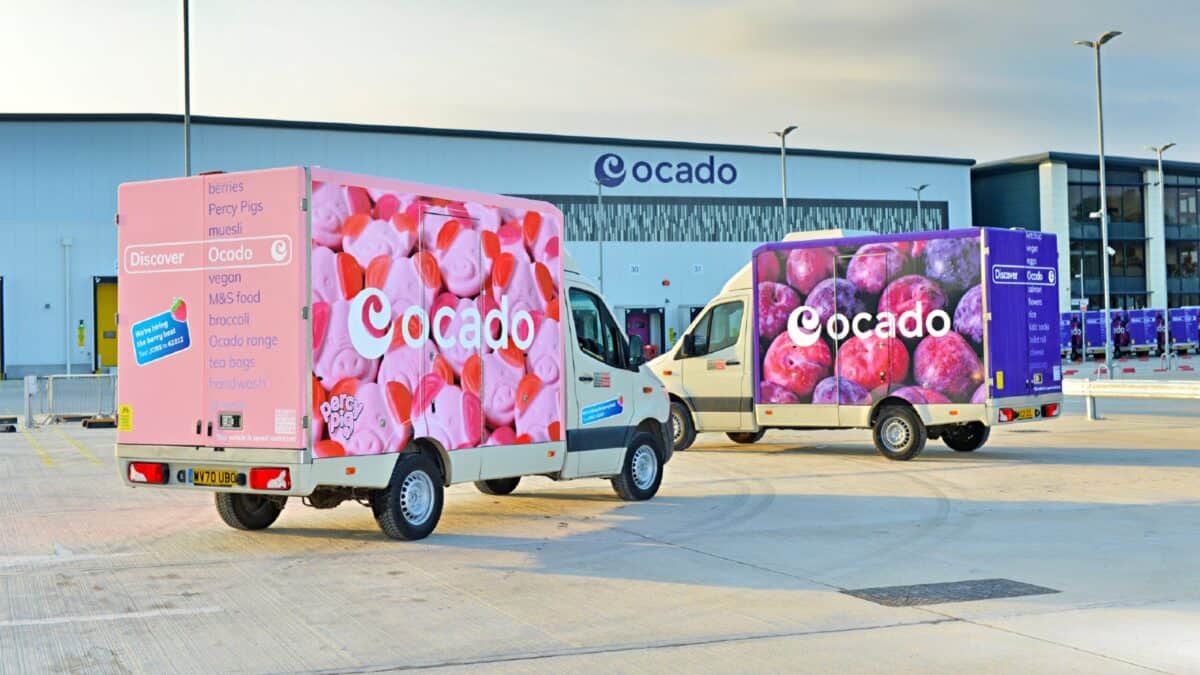
Ocado Group plc (LSE:OCDO) has seen its share price decline by 9% following the release of its FY25 annual results on February 26, 2024. This marks another challenging chapter for the online grocery and technology solutions firm, which has now experienced a staggering loss of 92% in market value since its peak in September 2020.
The company’s performance reflects deeper issues within its business model. Ocado operates primarily in two segments: an online supermarket in partnership with Marks and Spencer and a technology solutions division that provides automated warehousing systems to overseas retailers, including Kroger in the United States and Coles in Australia. While the online grocery sector boomed during the pandemic, Ocado has struggled to demonstrate that its high-investment model can yield consistent profits.
Recent decisions by partners Kroger and Canada’s Sobeys to close several underutilised customer fulfilment centres (CFCs) have further impacted investor sentiment, contributing to a 37% drop in share value over the past six months.
FY25 Results Overview
Despite the negative stock performance, Ocado reported a 12.1% increase in revenue, reaching £1.36 billion for the 52 weeks ending in November. Both segments—Technology Solutions and Ocado Logistics—recorded double-digit growth, with the company shipping 72 million orders globally, reflecting a 26% increase in weekly CFC volumes.
However, the company faces significant challenges. Although adjusted EBITDA rose by 59% to £178 million, Ocado incurred an adjusted loss of £353 million. The company added only four new modules to its CFCs in the UK, US, and Poland, indicating a potential slowdown in expansion.
Looking forward, Ocado’s management anticipates turning cash flow positive in the second half of 2024, aiming for a full-year positive cash flow by 2027. They project up to 25 new CFC modules in the coming years, which could help offset recent closures in North America.
Job Cuts and Future Outlook
In a bid to reduce costs, Ocado plans to eliminate 1,000 jobs, which accounts for approximately 5% of its global workforce. Most of these cuts will occur at its headquarters in Hertfordshire.
While the conclusion of exclusivity agreements in many international markets gives Ocado the freedom to seek new partnerships, the current market environment poses challenges. Many potential partners are prioritising traditional fulfilment methods over automated solutions. The downsizing by Kroger and Sobeys sends a cautionary signal to other retailers considering similar contracts with Ocado.
Investors are left contemplating whether now is the right time to buy Ocado shares, currently priced just above 200 pence each. Should the company successfully secure new contracts and achieve cash flow positivity, there is potential for a rebound. However, the uncertainty and ongoing losses lead some analysts to suggest that other growth stocks in the FTSE 250 may present more promising opportunities.
As Ocado navigates these turbulent waters, it remains to be seen whether it can adapt effectively and restore investor confidence in its long-term growth potential.