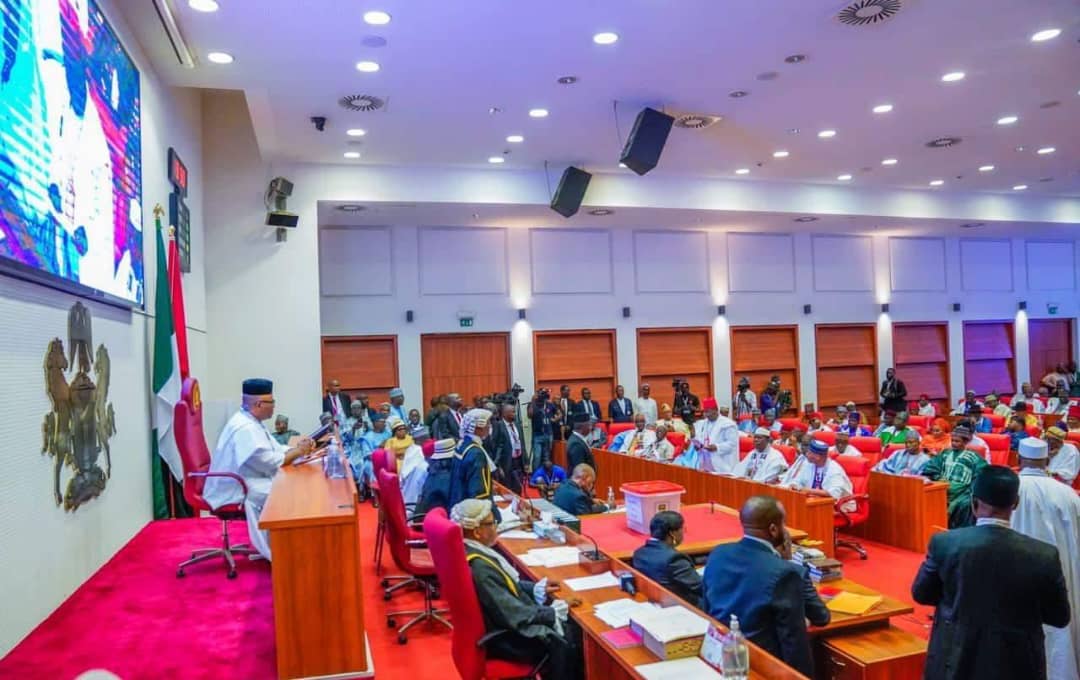
The Nigerian Senate has raised serious concerns regarding vulnerabilities within the nation’s rapidly growing digital financial ecosystem. During a session on October 19, 2023, senators warned that without urgent legislative action, certain large fintech and technology-enabled financial service providers could evolve into systemic risks that threaten national economic stability. This discussion was sparked by a proposed amendment to the Banks and Other Financial Institutions Act (BOFIA) 2020, led by Senator Adetokunbo Abiru and backed by the entire Senate Committee on Banking, Insurance and Other Financial Institutions.
The proposed amendment aims to empower the Central Bank of Nigeria (CBN) to formally designate and impose enhanced supervision on Systemically Important Institutions (SIIs), including non-bank fintech firms critical to Nigeria’s financial stability. Senator Abiru emphasized that the financial landscape in Nigeria has transformed dramatically over the past decade. Mobile money operators, digital lenders, and payment service banks now engage tens of millions of citizens and process vast volumes of transactions, all while managing sensitive data.
Abiru noted that the existing laws no longer reflect the influence of these entities. The current BOFIA Act allows the CBN to identify systemically important banks, but it lacks provisions for non-bank fintech platforms that may pose risks equal to or greater than traditional financial institutions due to their market dominance and data control. He stated, “Some fintechs now operate at scales that rival mid-sized banks. Their data holdings carry national security implications, yet we cannot say with certainty where all such data is stored or who has access to it.”
The senator highlighted issues such as foreign ownership structures and offshore servers that complicate regulatory oversight. He pointed to the regulatory halt in April 2024 that affected customer onboarding for several fintech firms due to concerns surrounding KYC and AML compliance. This situation exemplified the limitations of existing regulatory frameworks, indicating that these institutions have outgrown current tools.
In response to these challenges, the amendment proposes several key reforms. These include creating a statutory framework for designating fintechs as SIIs, establishing a national registry for traceability and beneficial ownership, and enhancing the CBN’s regulatory tools tailored to digital institutions. Additionally, the proposal seeks to strengthen data sovereignty and bolster consumer protection measures.
Senator Abiru dismissed calls for a separate regulatory agency for fintech, arguing that such a move would lead to duplication and increased costs. He advocated for integrating fintech oversight within existing central bank structures and enhancing collaboration with other regulatory bodies like the SEC, NCC, NITDA, CAC, and the Office of the National Security Adviser.
Adding a social dimension to the debate, Senator Natasha Akpoti-Uduaghan highlighted the widening income disparities affecting young Nigerians working on global digital platforms. She pointed out the “huge discrepancies” in payments to Nigerian content creators on platforms like Facebook, which could be as low as $0.50 for 1,000 views compared to $10-$30 for their American counterparts. Akpoti-Uduaghan warned that these inequities threaten financial inclusion and undermine the earning potential of Nigeria’s burgeoning digital entrepreneur population.
The bill has been referred to the Senate Committee on Banking, Insurance and Other Financial Institutions for further legislative work after successfully passing its second reading. As the discussions progress, the urgency for comprehensive regulatory measures in Nigeria’s fintech sector is clear, underscoring the need for effective governance in an increasingly digital economy.