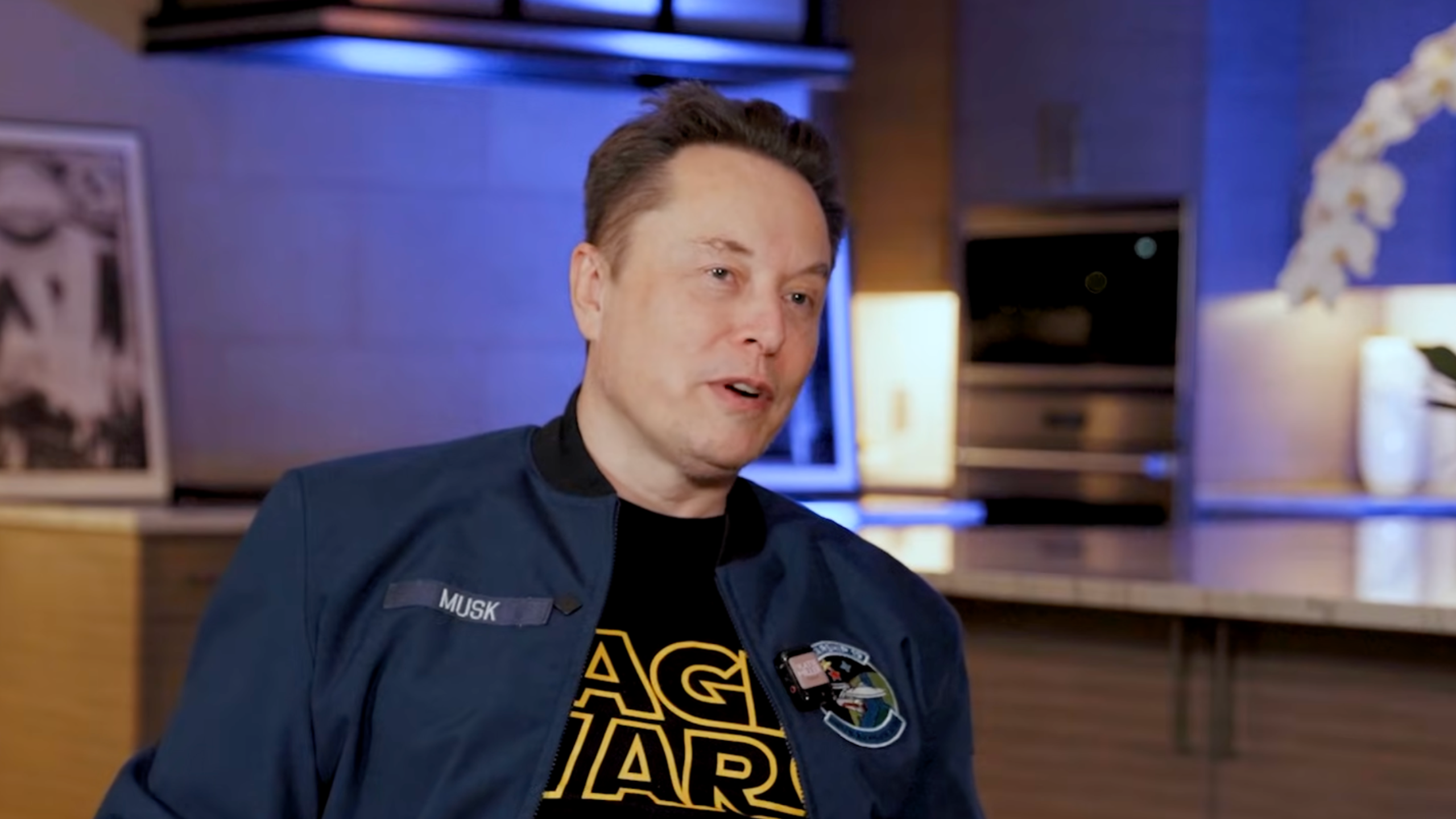
Elon Musk, the CEO of Tesla and founder of SpaceX, has made headlines with his recent assertion that saving money may soon become a thing of the past. Speaking in response to billionaire investor Ray Dalio’s support for the upcoming “Trump Accounts” initiative, Musk suggested that advancements in technology, particularly in artificial intelligence and robotics, will lead to a future where poverty is eliminated and universal high income becomes the norm.
In a statement on X, Musk remarked, “It is certainly a nice gesture of the Dells, but there will be no poverty in the future, and so no need to save money. There will be universal high income.” His comments come as he nears a milestone net worth of £450 billion ($600 billion), positioning him as one of the wealthiest individuals in the world. With the potential for SpaceX to go public, some analysts predict Musk’s wealth could soar even higher, possibly reaching £475.8 billion ($638 billion).
Universal Income and Its Implications
The “Trump Accounts” initiative aims to provide American newborns with a financial foundation that grows over time, allowing them to access funds for significant expenses like higher education or home purchases upon reaching adulthood. Supporters argue that this program could foster long-term savings and investment habits, ultimately promoting financial stability for future generations. However, Musk’s perspective challenges the very premise of such savings.
He believes that as AI and robotics enhance productivity, the concept of money will transform drastically. According to Musk, this could result in a scenario where financial stability is guaranteed for everyone, making traditional savings obsolete. He likened the future of money to oxygen, suggesting it will be abundant and thus less valued.
While Musk’s vision of a future free from poverty and financial stress is ambitious, many have responded with skepticism. Critics point to Musk’s immense wealth as a contrast to his statements. An online user commented, “Eliminating poverty is a technological issue at its core. However, the human mind becomes accustomed to things very quickly.” This highlights a concern that even if relative poverty is addressed, the mindset surrounding wealth may persist.
Public Reaction and Concerns
Musk’s tweets have sparked a mixture of disbelief and critique among the public. Some individuals have questioned the practicality of a world without money, wondering about production and distribution in such a scenario. One user on X noted that while technological advancements may reduce poverty, the shifting standards of what constitutes a “high” quality of life complicate the notion of universal income.
Another commenter pointed out the irony in Musk advocating for a world where money is irrelevant while simultaneously pushing for a trillion-dollar package for his ventures. This disparity raises questions about the feasibility of his claims, especially in light of ongoing economic challenges faced by many.
As Musk continues to navigate the complexities of wealth and technology, his statements serve as a catalyst for broader discussions about the future of money and income. Whether or not his predictions come to fruition, the dialogue surrounding financial security and the role of technology in shaping our economies remains vital.
In conclusion, while Musk envisions a future where saving is unnecessary, the realities of economic disparities and shifting societal values suggest that achieving such a world may require much more than technological advancements alone.