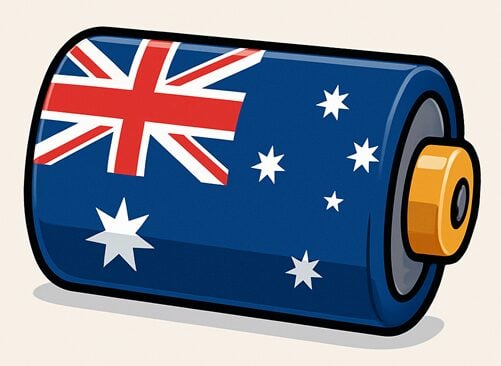
The Australian government has announced an expansion of its Cheaper Home Batteries Program, aiming to add an estimated 40GWh of new energy storage capacity by 2030. This initiative, which provides significant rebates for homeowners purchasing battery systems, has already facilitated over 160,000 installations, contributing to a total of more than 3.6GWh added to the national grid. The program is part of a broader commitment to renewable energy, aligning with the Labor Party’s election pledge led by Prime Minister Anthony Albanese.
Launched in July 2025, the Cheaper Home Batteries Program allows eligible customers to receive approximately 30% off the upfront costs of battery systems through small-scale technology certificates (STCs). To date, more than 21 million STCs have been purchased, contributing to the program’s rapid uptake among homeowners. The Department of Climate Change, Energy, the Environment and Water (DCCEEW) plans to allocate AU$7.2 billion (US$4.76 billion) to support this initiative through 2030.
Impact on Households and Communities
This expansion will enable around two million households to access home battery systems, which range in capacity from 5kWh to 100kWh. The annual review of the rebate will reflect market changes, with discounts decreasing as battery prices drop. DCCEEW described the program as an “unprecedented success” for reducing the costs associated with owning battery systems that store solar electricity.
In Australia, over 4.2 million rooftop solar photovoltaic (PV) systems are currently installed. Energy Minister Chris Bowen noted that the initiative has nearly doubled the country’s home energy storage capacity, with many first-time solar PV installations occurring alongside battery purchases. Bowen emphasized the significance of this program for Australian households: “Australia is a solar nation – we’ve got more solar on our roofs than pools in our backyards, and we want to match that success with home batteries to cut bills for everyone, for good.”
The Cheaper Home Batteries Program is now integrated into the government’s extended Small-scale Renewable Energy Scheme (SRES), which generates STCs for solar, wind, hydro, or low-carbon hot water systems. The initiative aims to bring more affordable and accessible energy solutions to both urban and remote areas, particularly where centralized transmission and distribution networks may be weaker.
Adjustments and Future Goals
As part of ongoing improvements to the program, DCCEEW will implement changes effective from 1 May 2026. These adjustments will ensure households receive appropriately sized battery systems while maintaining sustainable funding for the initiative. Speaking at the All-Energy Australia 2025 conference, Carl Binning, executive general manager at the Clean Energy Regulator, shared insights on the importance of these developments for the future of energy storage in Australia.
The focus on enhancing home battery systems reflects Australia’s commitment to renewable energy and the ongoing transition towards a more sustainable energy landscape. With the government’s backing, the Cheaper Home Batteries Program is set to continue transforming energy consumption patterns, ultimately benefiting both consumers and the environment.