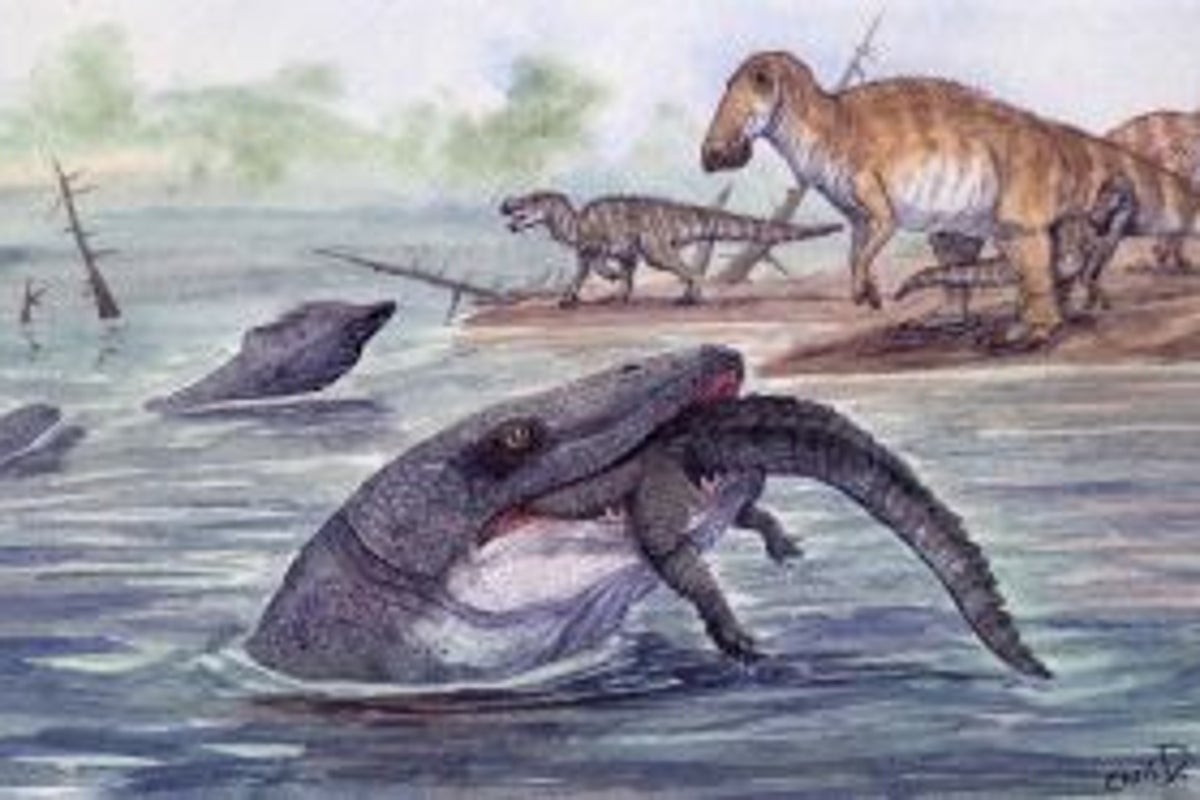
A recent discovery in North Dakota has revealed that a massive prehistoric predator, previously thought to have exclusively hunted in the ocean, may also have roamed freshwater rivers. Researchers from Uppsala University announced that a tooth fossil belonging to a mosasaur, a lizard-like marine reptile that reached lengths of up to 12 metres (approximately 40 feet), displays evidence suggesting it inhabited both marine and freshwater environments.
The tooth was uncovered in the Hell Creek Formation, a geological formation known for its rich fossil deposits dating back approximately 66 million years. The findings, published in the journal BMC Zoology, indicate that the mosasaur may have occupied a niche similar to that of modern-day saltwater crocodiles, adapting to various habitats throughout its life.
Chemical analysis of the tooth indicated the presence of elements typically associated with freshwater environments, specifically variations of oxygen and strontium. This evidence implies that the mosasaur not only survived in freshwater settings but may have also preyed on freshwater animals. Researchers propose that the area where the tooth was found could have been part of an ancient river system connected to the Western Interior Seaway, a vast inland sea that existed during the Late Cretaceous period.
New Insights into Mosasaur Behavior
The tooth fossil exhibited no signs of transportation, leading scientists to believe that the mosasaur lived and died in the Hell Creek region. Until now, no other mosasaur teeth from this time period have been identified in North Dakota. Previous studies of mosasaur fossils from the Western Interior Seaway suggest a transition from saltwater to freshwater habitats, highlighting a gradual decrease in salinity over time.
Researchers theorize that, as salt levels diminished in the ancient sea, mosasaurs may have adapted to thrive in freshwater environments, gradually moving into river channels like those found in Hell Creek. They noted, “This adaptability may indicate that large rivers of the Hell Creek Formation paleoenvironment could support large-bodied taxa, despite it being more likely for younger, smaller individuals to exploit these nearshore to riverine habitats.”
The study underscores the ecological versatility of mosasaurs during this period, revealing their ability to occupy diverse environments. The findings not only enhance our understanding of mosasaur behavior but also raise intriguing questions about the ecological dynamics of prehistoric ecosystems.
In conclusion, the discovery of the mosasaur tooth fossil in North Dakota provides new insights into the life of these ancient reptiles. It suggests that they were more versatile than previously believed, adapting to various habitats and revealing the complexity of their ecological roles in the Late Cretaceous.