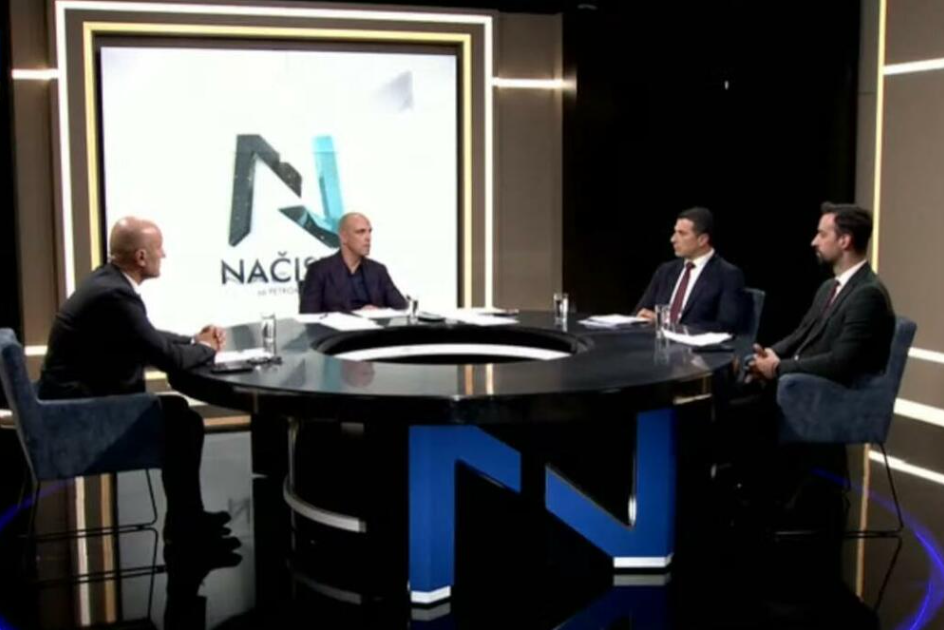
UPDATE: In a striking announcement, former Democratic Party of Socialists (DPS) member Nikola Janović revealed he may establish his own political platform in the future. Speaking on the “Načisto” program on Televizija Vijesti, Janović emphasized his growing divergence from party lines, stating, “The public has witnessed my differing views over the past months.”
This development comes at a critical time as Montenegro grapples with increasing political tensions. Janović, now an independent opposition member, stated he has already conveyed all his thoughts while part of the DPS. His next steps remain uncertain, but the possibility of a new political initiative could reshape the country’s political landscape.
During the same broadcast, Miodrag Laković, chair of the Parliamentary Committee for Security and Defense, discussed the potential influence of foreign intelligence services in Montenegro. He referenced the case involving “Do Kwon” and recent events in the village of Gornje Zaostro, where a monument was erected to war criminal Pavle Đurišić. Laković suggested that such actions could be part of a broader strategy to exploit crises within Montenegrin society.
Laković mentioned that the recent incident in the Zabjelo neighborhood of Podgorica may have attracted the interest of foreign agencies seeking to complicate security conditions in Montenegro. He noted, “While there is no concrete evidence, all actions point to interference in our national security.”
Adding to the conversation, Nikola Zirojević of the Social Democrats highlighted a familiar pattern in these events, linking the monument’s installation and the Zabjelo incident to the Serbian secret police, the Security-Information Agency (BIA). Zirojević called for urgent action, sharing insights with the Committee for Security and Defense.
Janović echoed these concerns, stressing that Montenegro is under significant foreign influence due to its geopolitical position and internal divisions. He stated, “Montenegro is a primary candidate for malignant foreign influence.”
The discussion also touched on environmental issues surrounding the construction of a wastewater treatment plant in Botun. Laković acknowledged genuine local protests aimed at preserving the environment but warned that certain individuals are exploiting these protests to destabilize the political situation. He asserted that actions against the construction project directly oppose Montenegro’s national interests.
Zirojević remarked on the politicization of the wastewater treatment issue, while Janović criticized the ruling politicians for behaving like party leaders rather than national representatives. “Botun is just another topic used to undermine the political climate in the country,” he said.
As this situation unfolds, all eyes will be on how Janović’s potential political move and the responses to foreign influences will shape Montenegro’s future. Stay tuned for more updates on this developing story.