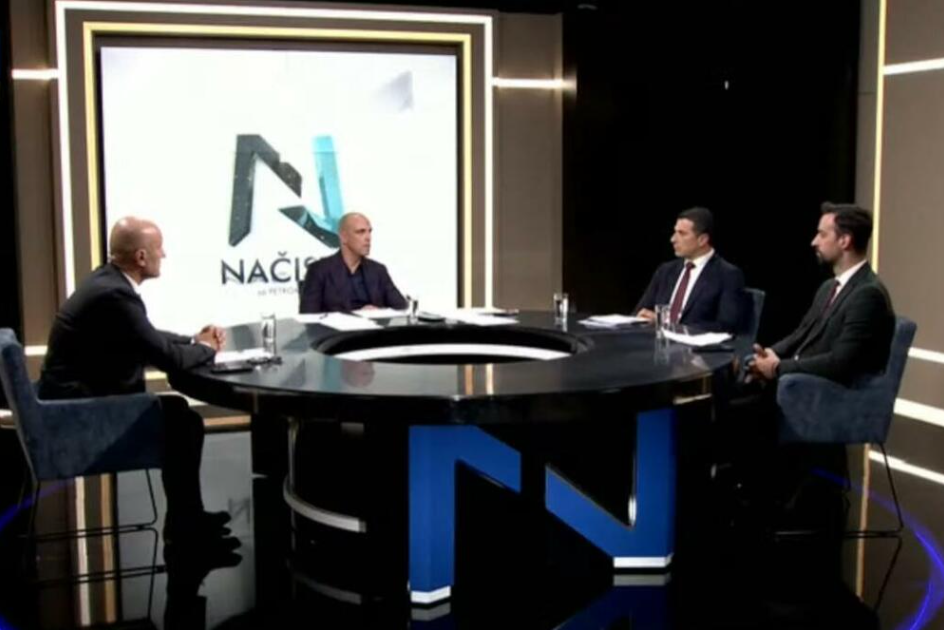
Former member of the Democratic Party of Socialists (DPS) in Montenegro, Nikola Janovic, has indicated that he may establish his own political platform in the future. In an appearance on the program “Načisto” aired by Televizija Vijesti, Janovic expressed that the public has observed his divergence from party lines over the past few months. He confirmed that he has conveyed all his views while still affiliated with the DPS and is now proceeding as an independent opposition deputy.
Janovic’s comments come at a time of heightened political tension in Montenegro, which has been grappling with various issues, including foreign influence. Miodrag Lakovic, the President of the Assembly’s Committee on Security and Defence, discussed potential foreign intelligence activities related to recent events, including the installation of a monument to war criminal Pavle Đurišić in the village of Gornje Zaostro. Lakovic suggested that foreign agencies might exploit crises within Montenegrin society to complicate the security situation.
In this context, Lakovic remarked, “Foreign services capitalize on crises in Montenegrin society, and the incident in the Podgorica neighborhood of Zabjelo was certainly of interest to complicate the security landscape.” While he acknowledged the lack of concrete evidence, his remarks pointed to a pattern of suspicion concerning foreign involvement in internal matters.
The issue of the monument to Đurišić has resonated with Nikola Zirojević, a member of the Social Democrats, who asserted that the hallmark of foreign influence is evident in both the monument’s placement and the Zabjelo incident. He specifically referenced the Security-Information Agency (BIA) of Serbia, suggesting that information has been shared with the Committee on Security and Defence, urging immediate action.
Janovic echoed concerns regarding Montenegro’s vulnerability to foreign influence, citing the country’s geostrategic position and internal divisions as key factors making it susceptible to malign external pressures.
Environmental Protests and Political Manipulation
The discussion also touched upon recent protests in Botun regarding the construction of a wastewater treatment plant. Lakovic noted that while some residents are genuinely concerned about environmental preservation, others are leveraging these protests for political destabilization. “Those opposing the construction of the collector in Botun are acting directly against Montenegrin national interests,” he stated.
Zirojevic added that the debate surrounding the collector’s construction has become politicized. Janovic criticized current politicians for behaving as though they lead parties rather than the state, suggesting that they cater to their voter base instead of addressing national issues. He argued that Botun represents yet another issue manipulated to undermine the political situation in Montenegro.
As Montenegro navigates these complex and multifaceted challenges, Janovic’s potential move toward establishing his own political platform may signal a shift in the country’s political landscape. His commitment to acting independently of established party lines suggests a growing desire among some politicians to address the pressing issues facing Montenegrin society.