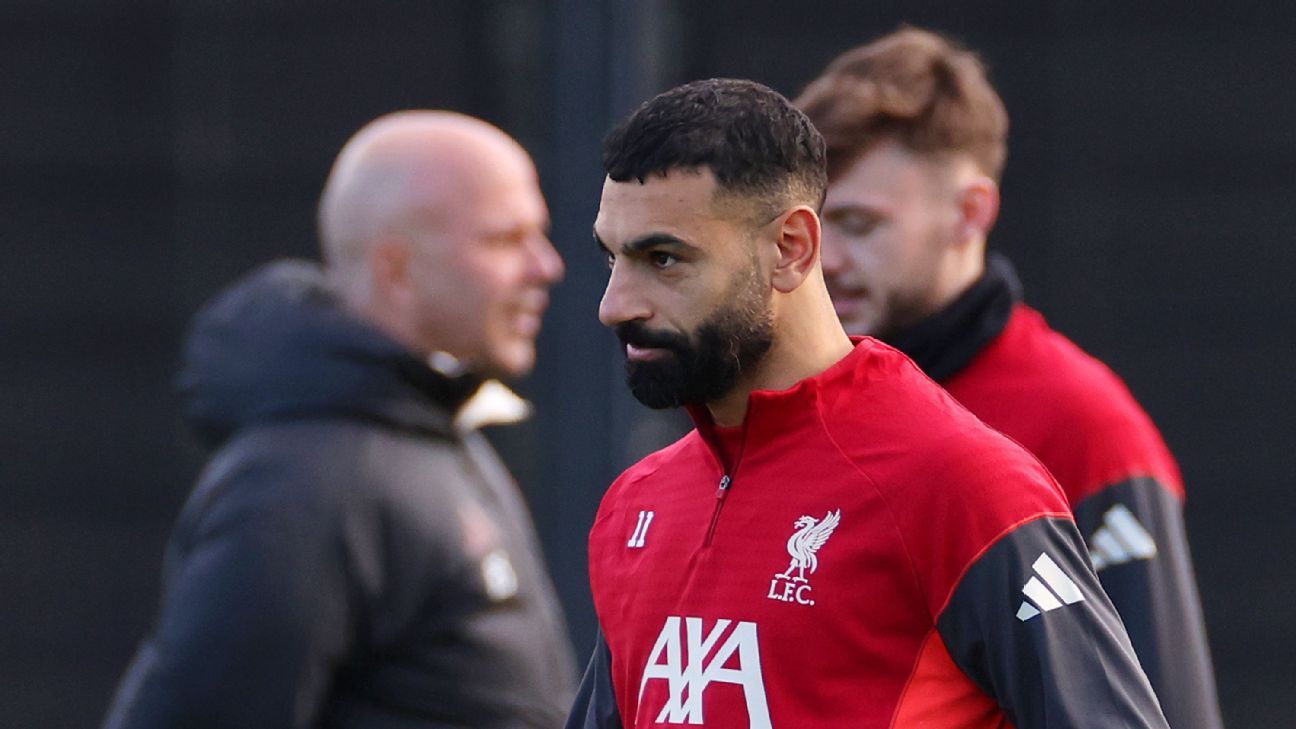
Tensions at Liverpool Football Club have escalated, centering around a disagreement between manager Arne Slot and star player Mohamed Salah. This conflict has drawn considerable attention as both parties navigate a situation that has become increasingly fraught with implications for the club’s future.
Slot recently addressed the media, stating, “I haven’t said I’m not going to talk to him. The next question is should the initiative come from me or from him?” This statement highlights the ongoing stalemate, where both Slot and Salah appear hesitant to take responsibility for mending their fractured relationship. The dynamics resemble a schoolyard dispute, with fans and commentators playing the role of mediators, while the actual decision-makers at Liverpool remain conspicuously silent.
The club’s hierarchy, particularly Michael Edwards, the CEO of Football, and Richard Hughes, the sporting director, have yet to publicly intervene. Their lack of communication is unusual in English football, where executive voices are often heard in times of crisis. Salah, who has expressed his frustrations, placed blame not solely on Slot but on the club as a whole, stating that it was the “club” that failed to uphold promises made during the summer.
This assertion raises questions about the management’s strategic planning. Salah mentioned that he once had a “good” relationship with Slot, but now feels disconnected and uncertain about his role within the team. He hinted that “someone does not want me in the club,” suggesting deeper issues may be at play.
The root of the conflict may stem from the club’s summer strategy. Salah’s contract extension on April 11, 2025, was a clear indication of the club’s commitment to him. However, it seems that the tactical vision for the team has not materialized as expected. The anticipated integration of Salah into a new 4-2-3-1 formation has faltered, leading to Slot frequently altering lineups. The recent match against Inter in the Champions League, where Salah was notably absent, exemplifies the ongoing tactical struggles faced by the manager.
Ultimately, the responsibility for the current predicament cannot rest solely on Slot’s shoulders. The club’s leadership team—Edwards and Hughes—were instrumental in the decisions that led to this situation. Their failure to secure essential signings and to implement a cohesive game plan has contributed to the growing discord. As Liverpool’s management grapples with these internal challenges, they must consider the implications of their decisions on team morale and performance.
In professional sports, accountability is essential. Liverpool, a club with a rich history and a commitment to excellence, must confront this crisis collectively. The days of a single omnipotent manager are long gone; modern clubs thrive on collaboration and shared responsibility.
As the situation unfolds, both Slot and Salah will need to navigate their differences with the assistance of the club’s leadership. Fan expectations and media scrutiny will undoubtedly continue to mount, pressing the organization to address the underlying issues that have led to this public dispute.
In the end, Liverpool’s ability to resolve this conflict will determine not only the future of their star player but also the direction of the club as it seeks to reclaim its status among the elite in European football.