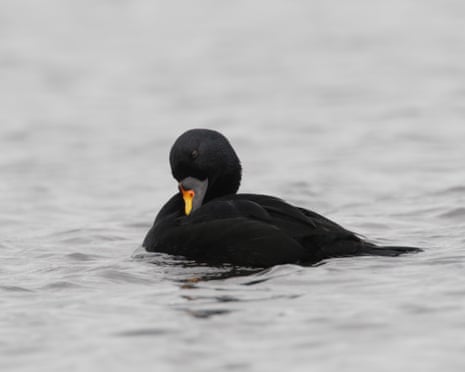
UPDATE: Common scoter sightings are increasing in Dundrum Bay, a significant development for bird watchers and conservationists. The handsome duck, known for its striking black plumage and unique migration patterns, is making its winter appearance along the coast after departing its summer breeding grounds in the boreal lakelands of Scandinavia.
Reports confirm that large flocks are gathering in this area, but spotting them remains a challenge. The scoters rely on patchy mollusc populations, diving to feed on shellfish. This behavior leads to unpredictable sightings as they drift between feeding areas, creating a compelling spectacle for observers.
Today, one lucky birdwatcher was able to capture a male common scoter soaring above a mixed-sex flock against the bright backdrop of crashing waves. “With every surging wave, the thrill of spotting these birds is unmatched,” said Mary Montague, a local naturalist and bird enthusiast.
However, the excitement is accompanied by a somber reality. The common scoter population in Lough Erne, County Fermanagh, where the first breeding records were documented in 1905, faced a devastating decline, disappearing entirely by 1993 due to various ecological threats, including predation by invasive species like the mink.
Montague reminisces about her childhood, recalling a pivotal moment during a school visit to a local RSPB reserve. “The joy of seeing scoters nesting on Lough Erne was overshadowed by the knowledge that their numbers were plummeting,” she noted.
As the sun shines on a sea teeming with life today, the contrast between the thrill of spotting these ducks and the memories of their lost population weighs heavily on many local bird enthusiasts.
NEXT STEPS: Birdwatchers and conservationists are urged to monitor these developments closely, as sightings may indicate a shift in the migratory behavior of the common scoter. The situation calls for ongoing observation and advocacy for the protection of their habitats to prevent further declines.
Stay tuned for more updates on this developing story as communities rally to understand and protect the common scoter and its environment.