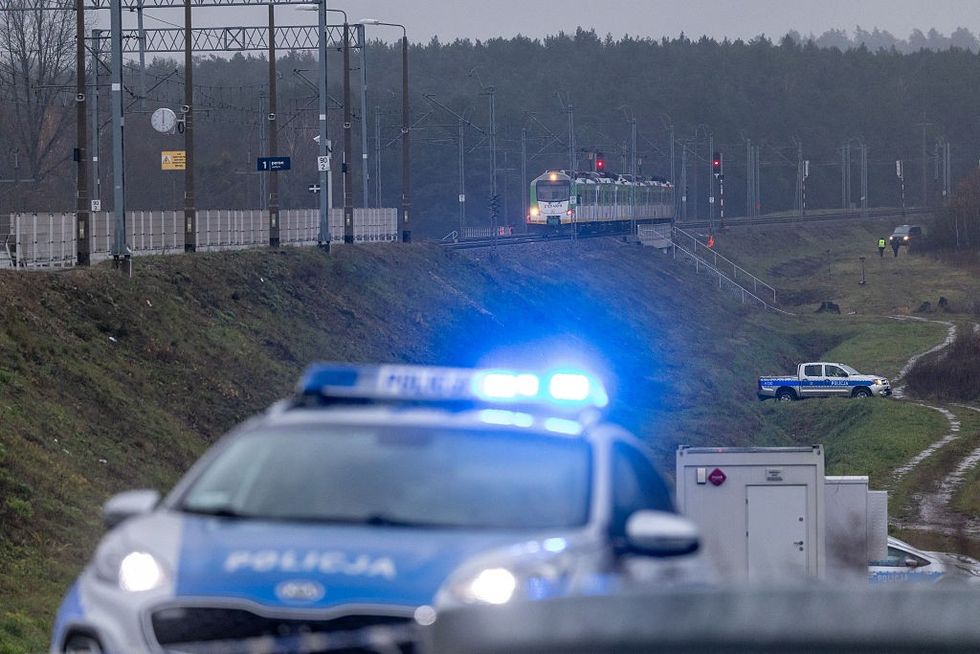
UPDATE: A massive explosion on the Warsaw-Lublin railway near Mika, Poland, on November 15, 2025, has raised alarms over an escalating sabotage campaign purportedly orchestrated by Russia. The blast, caused by a C-4 explosive device, severely damaged critical infrastructure, disrupting military supply routes to Ukraine and highlighting the growing threat to European security.
Polish authorities have confirmed the incident as an act of sabotage, charging three Ukrainian nationals—Oleksandr K., Yevhenii I., and Volodymyr B.—with executing the plot under Russian direction. This attack is part of a broader wave of covert operations targeting vital transportation networks across Europe, aimed at weakening support for Kyiv.
Officials emphasize the chilling precision of this operation. Just months prior, in September, Volodymyr B. scouted the area, enabling the selection of the explosive’s placement. After planting the device and a metal clamp intended to derail a train, the perpetrators fled to Belarus. Following the attack, Polish Foreign Minister Radoslaw Sikorski condemned the act as “state terror,” prompting the closure of Russia’s consulate in Gdansk and the deployment of thousands of troops to protect critical infrastructure.
The Kremlin has dismissed the allegations as “Russophobia” and threatened to sever diplomatic ties with Poland, but the incident underscores a larger trend of sophisticated sabotage aimed at undermining NATO unity and disrupting European support for Ukraine. Analysts warn that such operations are designed to create a strategic shock without triggering a direct military escalation.
Russia’s tactics involve using proxies—local citizens and displaced individuals—to carry out attacks while maintaining plausible deniability. Alarmingly, Ukrainian security services report a surge in recruitment, with over 170 minors reportedly entrapped by Russian operatives via social media platforms like Telegram. These individuals, often economically vulnerable, are lured into performing seemingly innocuous tasks that escalate into acts of sabotage.
In a recent tragic incident in Ivano-Frankivsk, two teenagers were promised $1,700 each to embed an explosive that ultimately led to a fatal detonation, underscoring the grave risks involved. Experts warn that the recruitment strategy blurs political narratives and complicates responses from NATO member states.
As Europe grapples with these threats, recent operations have escalated. In October, Romanian authorities intercepted a parallel operation involving bomb components smuggled into Bucharest, aimed at a Ukrainian courier firm. Additionally, Poland has detained eight individuals connected to planned infrastructure attacks, attributed to Russia’s elite sabotage unit, GRU Unit 29155.
The implications of these actions are profound. Experts assert that Russia seeks to undermine public support for Ukraine among Western nations by demonstrating the risks associated with continued aid. Analyst Alexander Graef contends that while these sabotage acts aim to disrupt logistics, they may inadvertently reinforce the perception of Russia as a significant threat, prompting increased support for Ukraine.
As the situation evolves, Europe is taking steps to fortify its defenses. Following September’s airspace violations, EU defense ministers are accelerating the deployment of a “drone wall” along the eastern flank. However, analysts like Maksym Skrypchenko warn that current measures are insufficient against a sophisticated Russian threat.
The urgency of this situation cannot be overstated. As Russia continues its hybrid warfare tactics, the need for a unified and decisive response from NATO becomes increasingly critical. Without a clear strategy to counter these low-cost but high-impact operations, the risk of escalating tensions and further destabilization in Europe remains high.
As experts continue to analyze the repercussions of these sabotage efforts, the focus must shift to enhancing resilience and ensuring that the collective defense mechanisms of NATO are prepared to respond effectively to these ambiguous threats. The unfolding events underscore that the fight against such hybrid warfare is far from over, and vigilance is paramount.
Stay tuned for more updates on this developing story, as the implications for European security and support for Ukraine are profound and ongoing.