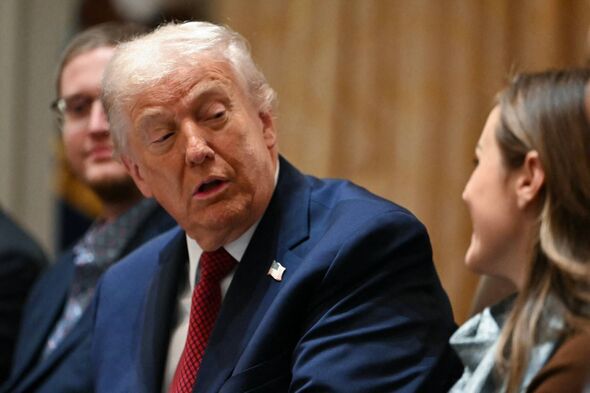
President Donald Trump stirred controversy during a recent event focused on America’s agricultural trade with China. While discussing a $12 billion support package for farmers, Trump made contradictory remarks regarding soybean nutrition that left many attendees perplexed.
The gathering, attended by agricultural producers from various sectors, aimed to address the challenges faced by farmers due to rising costs linked to heightened tariffs amid a protracted trade dispute with China. Trump claimed, “I told this to President Xi, our soybeans are more nutritious than competitors.” He added that Xi questioned the validity of this statement, saying, “Really? I never heard of it.” The president’s comments quickly drew skepticism on social media, with users expressing disbelief at the apparent inconsistencies in his account.
Agricultural producers, who have traditionally supported Trump, are now increasingly frustrated with his trade policies. The ongoing trade conflict has significantly impacted soybean and sorghum exports, with more than half of these crops going to China. Since Trump announced the trade agreement in late October 2023, China has purchased only about 2.8 million metric tons of soybeans—just a quarter of what was initially promised.
During a segment on CBS’ “Face the Nation,” Treasury Secretary Scott Bessent remarked, “The Chinese actually used our soybean farmers as pawns in the trade negotiations,” highlighting the need for the financial support package aimed at mitigating farmers’ losses. In addition to the soybean struggles, rising beef prices have further complicated matters for American farmers. Current beef prices have reached record highs, exacerbated by drought conditions affecting U.S. herds and dwindling imports from Mexico due to a parasite resurgence.
To counteract these challenges, Trump announced plans to increase imports of Argentine beef. He also signed an executive order directing the Justice Department and Federal Trade Commission to investigate “anti-competitive behavior” within food supply chains, including seeds, fertilizer, and machinery.
Prior to the event, Agriculture Secretary Brooke Rollins emphasized the administration’s goal of reducing farmers’ reliance on government support. She stated, “What you’ve been able to do is open those markets up… we do have a bridge payment we’ll be announcing next week, as we’re still trying to recover from the Biden years.”
Despite the administration’s efforts, not all farmers are convinced that government aid is the solution. Mark Read, District 5 director for the Illinois Soybean Association, expressed a common sentiment among producers: “Farmers don’t want free aid. We want free trade.”
Trump has dismissed concerns about affordability as a Democratic “hoax,” but his latest relief package aims to alleviate the financial strain on farmers while continuing to promote his economic policies. As numerous farmers express dissatisfaction with the current state of trade relations, the long-term impact of Trump’s approach remains to be seen.