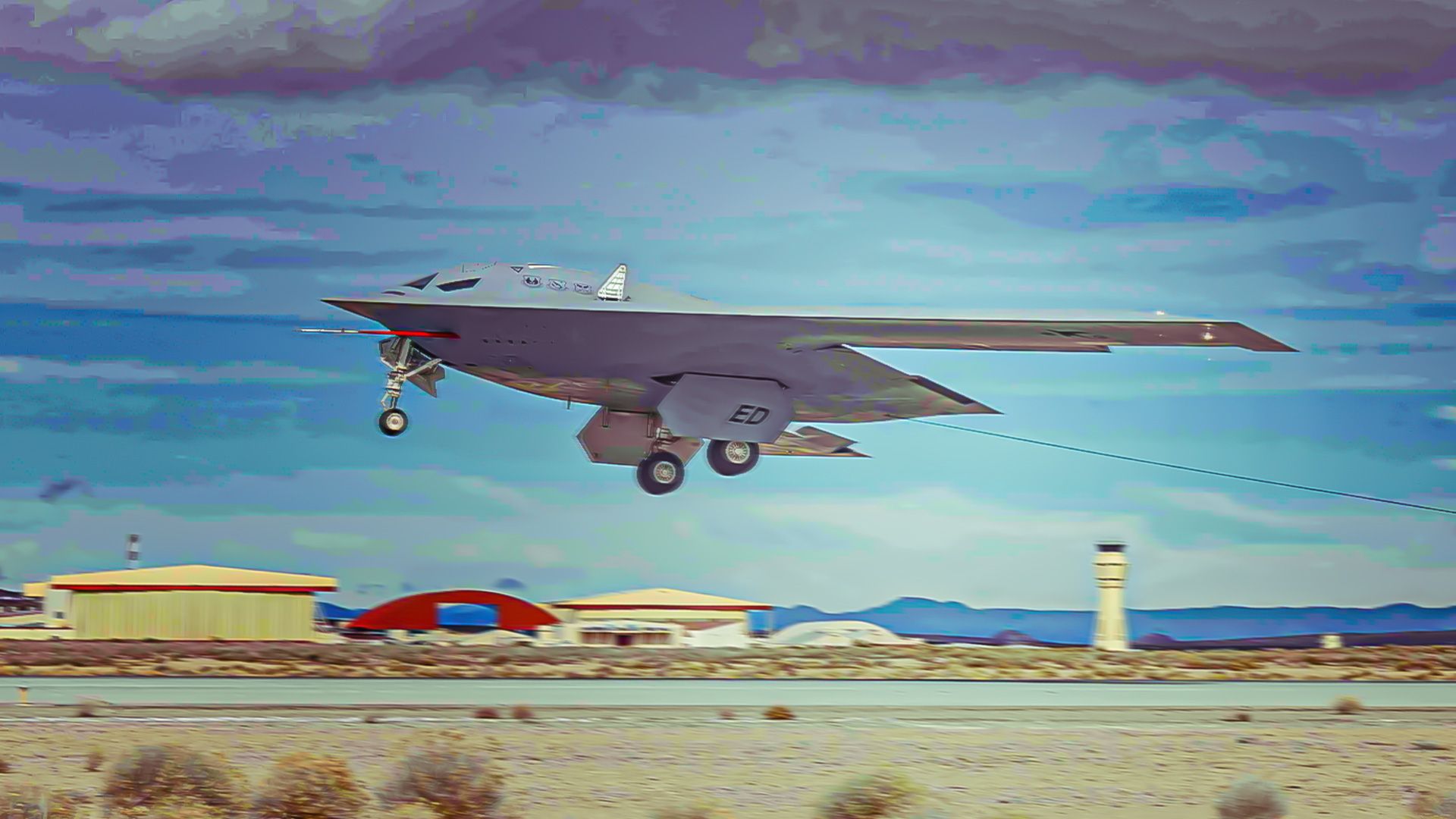
URGENT UPDATE: The US Air Force is set to revolutionize aerial warfare as the B-21 Raider prepares to enter production, promising a new era of stealth and strategic capabilities. This groundbreaking sixth-generation bomber, developed by Northrop Grumman, is designed to replace the aging B-2 Spirit, and its first flight is anticipated to be a pivotal moment in military aviation history.
The B-21 is engineered to enhance the Air Force Global Strike Command’s (AFGSC) operational effectiveness. It is expected to have a lower maximum payload and fewer engines than the B-2, with only two engines compared to the B-2’s four. However, early reports suggest it may boast a longer range, although this remains unconfirmed. The emphasis on multispectral stealth will make the B-21 a formidable asset in modern combat, allowing it to operate alongside unmanned platforms and advanced aircraft like the forthcoming Boeing F-47.
As the Air Force transitions to a new fleet strategy, it plans to acquire around 100 B-21 bombers, dwarfing the B-2 fleet size. This shift will not only increase the number of operational bombers but also allow for a more flexible deployment strategy that incorporates unmanned systems. The B-2 may remain the more powerful bomber in terms of raw firepower, but the B-21’s technological superiority positions it as the future of strategic air warfare.
The B-21 Raider aims for superior fuel efficiency and maintenance costs, addressing the B-2’s notorious upkeep challenges. With a target average unit procurement cost of approximately $692 million (in 2022 dollars), the B-21 is designed for affordability, utilizing commercial off-the-shelf parts to enhance reliability and reduce costs.
Unlike the B-2, which required extensive maintenance hours and specialized hangars, the B-21 can operate from simpler facilities, enhancing its mission-capable rate and reducing logistical footprints. This design shift supports the Air Force’s Agile Combat Employment (ACE) doctrine, allowing for dispersed basing and operational unpredictability—key factors in modern military strategy.
Despite a lower ordinance payload than the B-2, the B-21 reflects a critical shift in combat philosophy where precision trumps volume. It can deploy a range of advanced munitions, including the Long-Range Stand-Off (LRSO) nuclear-capable missile, aligning with the evolving demands of the 21st-century battlefield.
The B-21 Raider will integrate cutting-edge stealth technology that makes it virtually invisible to enemy radar and detection systems. This includes advanced thermal management systems and a refined aerodynamic design that minimizes radar signatures and heat emissions. As adversaries enhance their detection capabilities, the B-21’s all-aspect low observability is designed to counter these threats effectively.
The operational landscape is changing rapidly. The B-21 is expected to achieve its first flight in 2024 at Edwards Air Force Base, marking a significant milestone in the Air Force’s roadmap to streamline its bomber fleet. Once operational, the B-21 will become the backbone of the AFGSC, eventually phasing out older bombers and solidifying the Air Force’s role in global power projection.
As developments unfold, the B-21 Raider is not just a step forward in aircraft technology; it represents a transformational shift in how the US Air Force will conduct warfare in the future. Stay tuned for further updates on this groundbreaking aircraft as it prepares to redefine aerial combat strategies globally.