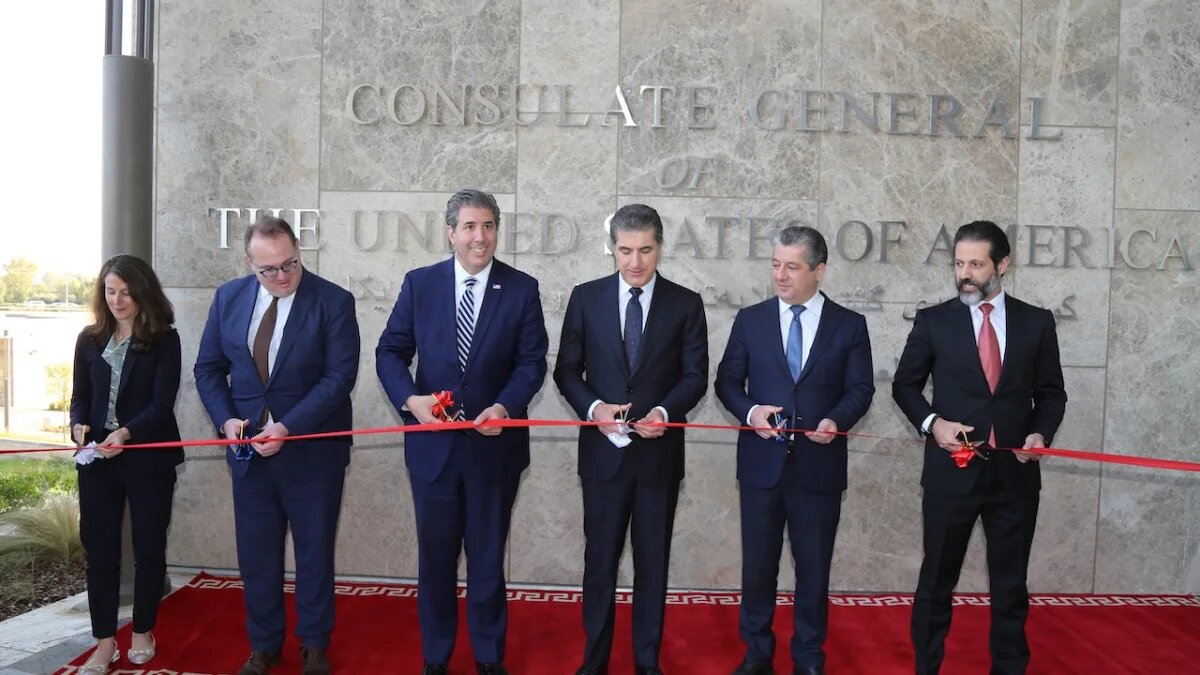
The United States has inaugurated a significant new consulate in Erbil, the capital of Iraq’s semi-autonomous Kurdish region. This facility, which spans 206,000 square meters, is now the largest US consulate worldwide, highlighting America’s evolving role in the region as it reduces its military presence in other parts of Iraq. The consulate’s construction began in 2018 with an estimated cost of $800 million, according to a 2019 US government report.
The new diplomatic compound marks a pivotal shift in US operations, particularly as the military transitions from countering the Islamic State (IS) group to establishing a mutual defense partnership with the Iraqi government. Earlier this year, US military officials announced the completion of operations against IS in Iraq. Reports from the Iraqi news site Kurdistan 24 indicate that most remaining US forces will now be stationed in Erbil.
The presence of US troops in Iraq has long been a contentious issue. Many Americans express frustration over prolonged military engagements, while Iraqis carry the weight of the 2003 US invasion and subsequent conflicts. In a recent interview, Iraqi Prime Minister Mohammed Shia al-Sudani stated that he could only disarm Iranian-backed militias after foreign troops depart. His political bloc won the most seats in the upcoming elections, but ongoing negotiations may affect his leadership position.
At the consulate’s opening ceremony, Michael Rigas, US Deputy Secretary of State for Management and Resources, emphasized that the new building represents America’s enduring commitment to Iraq and the Kurdistan Region. Rigas noted that the diplomatic center reflects the strong partnership between the US and both the Iraqi and Kurdish governments. Furthermore, Nechirvan Barzani, President of the Kurdistan Region, echoed this sentiment, stating, “The existence of this diplomatic centre here is a clear political message regarding the importance of Erbil.”
The US views the Kurdistan Region as a vital entry point for American businesses looking to engage with Iraq’s markets. Numerous US companies, including oil giant ExxonMobil, have substantial investments in the area. Following a two-year absence, ExxonMobil has returned to Iraq, underscoring the region’s economic potential.
Historically, Erbil has been at odds with the central government in Baghdad over access to Iraq’s oil resources. In response, the US has advocated for the reopening of a crucial pipeline that runs from the Kurdistan Region to Turkey’s Ceyhan port. This pipeline had been shut down in 2023 due to a dispute over oil sales profits between Erbil and Baghdad. Although it reopened earlier this year, its operational status remains uncertain amid ongoing negotiations involving Erbil, Ankara, and Baghdad.
Security remains a pressing concern in the region. In July, a drone attack attributed to Iranian-backed Iraqi militias targeted oil fields in the Kurdistan Region. More recently, a rocket attack on the Khor Mor gas field disrupted production and caused power outages. The Erbil government has actively sought stronger US security ties, including requests to acquire its own air defense systems, a move that faces opposition from both Baghdad and Iran.
As the political landscape shifts in Iraq, the establishment of this new consulate in Erbil signifies a strategic pivot for the US, illustrating its commitment to the Kurdish region and its broader geopolitical interests in Iraq. The evolving relationship between the US, Iraq, and the Kurdistan Region will continue to unfold as all parties navigate the complexities of security, economics, and political stability.