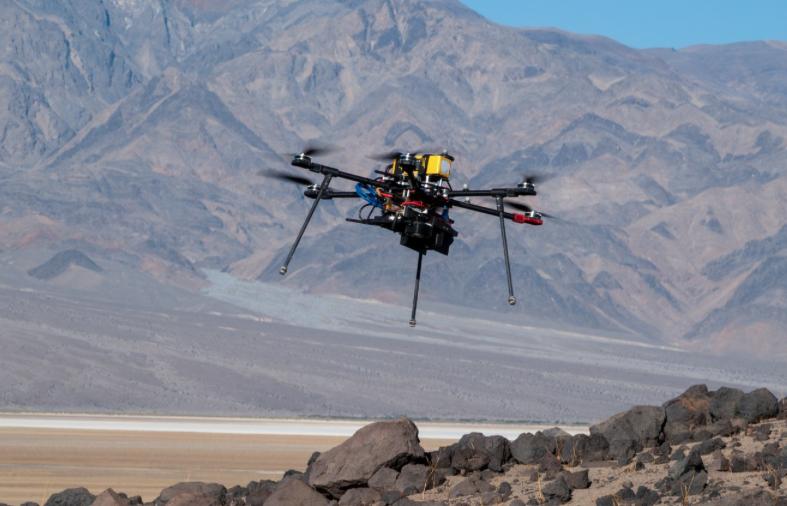
UPDATE: NASA has just announced that it is conducting urgent tests with three drones in Death Valley, California, to prepare for future missions to Mars. This critical testing aims to address challenges faced by the Ingenuity Space Helicopter during its groundbreaking operations on the Red Planet.
The tests, which kicked off earlier today, are designed to simulate the harsh conditions of Mars. The team is specifically focusing on areas in Death Valley where temperatures can soar to 113°F (45°C). These extreme environments mimic the Martian surface, providing invaluable data for upcoming missions.
Earlier this year, NASA also evaluated the drones in the Mojave Desert, focusing on barren, featureless landscapes that closely resemble Martian terrain. This comprehensive testing strategy is crucial as the agency seeks to enhance drone operations on Mars after Ingenuity’s mission concluded with a crash in January 2024, following a record-breaking 72nd flight.
The tests in Death Valley are vital for developing new algorithms and camera filters that help drones accurately gauge their proximity to the surface, especially in featureless areas. Nathan Williams from the Jet Propulsion Laboratory (JPL) emphasized that these tests are key to improving the safety and effectiveness of future Martian explorations.
NASA’s Ingenuity helicopter initially aimed for just five flights during the Perseverance mission launched in 2020. However, it surpassed expectations, completing numerous successful flights and providing unique aerial perspectives of Mars. Unfortunately, it ultimately failed to detect its distance from the Martian surface, leading to its crash.
As NASA pushes forward with these critical tests, the outcomes could redefine drone capabilities on Mars, paving the way for extended exploration missions. The space agency is committed to learning from past mistakes, ensuring that future drones do not encounter similar issues.
Stay tuned for further updates on this developing story as NASA works to solve these challenges and enhance its operations for future Mars missions. The implications of this research are significant for our understanding of Mars and the potential for human exploration.