Belgium has voiced strong opposition to the European Union’s proposal to utilize frozen Russian assets to financially support Ukraine. The plan, which has garnered significant backing from other EU member states, involves converting approximately €140 billion (£123 billion) in Russian state assets currently held in Europe into a “reparations loan” for Kyiv. Belgian Foreign Minister Maxime Prévo criticized the EU for not adequately addressing Belgium’s concerns about the potential legal and financial ramifications of such a move.
The proposal, championed by German Chancellor Friedrich Merz, has faced resistance primarily due to Belgium’s significant stake in the frozen assets. Most of the EU’s frozen assets, totaling around €185 billion, are secured at Euroclear, a central securities depository based in Brussels. Belgium fears that any legal challenges from Russia could lead to severe financial consequences for the country, particularly if the EU’s plan is enacted.
Belgium’s leadership contends that the proposed use of these assets could jeopardize peace negotiations with Russia and expose the nation to extensive litigation. “If Russia takes us to court, it will have every chance of winning,” Prévo stated, emphasizing the potential for Belgium to face bankruptcy if forced to repay the €200 billion associated with the assets.
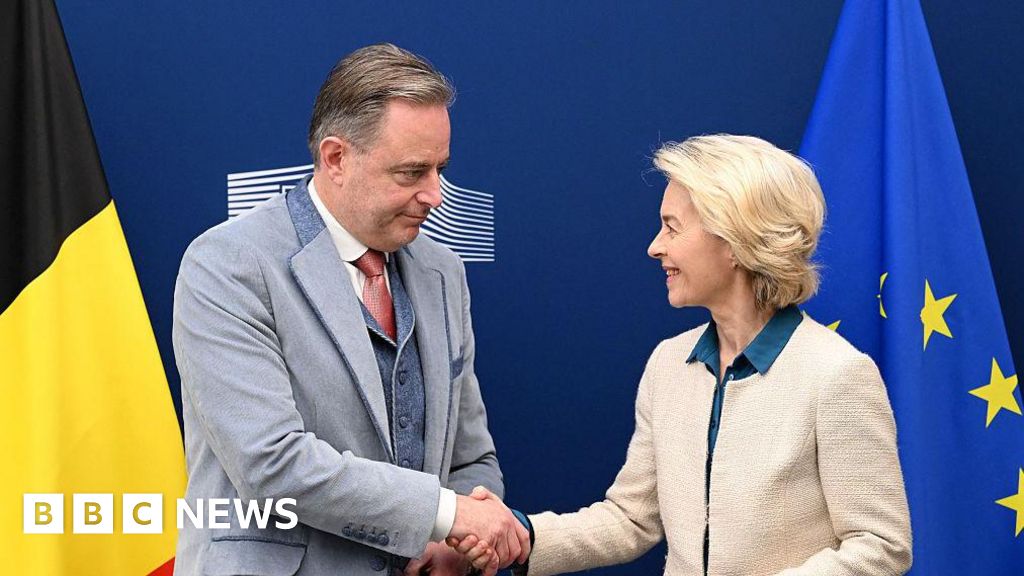
As EU leaders prepare to vote on the reparations loan at a summit in Brussels later this month, the likelihood of reaching a consensus remains uncertain. Belgium’s Prime Minister Bart De Wever has already reached out to European Commission President Ursula von der Leyen, arguing that the plan is “fundamentally wrong.”
In a coordinated effort, Euroclear’s head, Valérie Urbain, has echoed concerns regarding the legal obligations tied to the assets. According to experts, including Veerle Colaert, a professor of financial law at KU Leuven University, Belgium’s apprehensions are justified. Euroclear has a contractual duty to return the funds to the Russian central bank upon request, and using these assets for loans could create significant financial risk if sanctions are lifted.
Russian officials have condemned the EU’s proposal, with prominent banker Andrei Kostin warning of potential legal battles lasting up to 50 years if the plan is approved. Kostin, who leads Vneshtorbank (VTB), stated, “The only problem is that this money might be used for war, not peace.”
The EU has previously utilized profits from frozen Russian assets, estimated at €210 billion, to support Ukraine’s defense following Russia’s full-scale invasion in February 2022. Nonetheless, the direct use of these assets remains contentious.
As discussions continue, the European Commission is expected to propose solutions to resolve the current deadlock. The upcoming legal framework, intended to clarify the reparations loan’s structure, has faced delays due to public disagreements among member states. Despite external pressures from both Washington and Moscow, EU countries are grappling with the complexities of funding their ally amid ongoing conflict.
The path forward remains uncertain, but the urgency of the situation is clear. Chancellor Merz has emphasized the need for immediate action, stating that “Ukraine needs our support” as winter approaches. Whether the EU can reconcile Belgium’s concerns with the collective goal of aiding Ukraine remains to be seen.